What Is Seedance 2.5? The Complete Guide to ByteDance's AI Video Model
KEY TAKEAWAYS
- Seedance 2.5 is ByteDance's third-generation video creation model, released July 31, 2026
- Generates 30-second audio-video clips in a single pass — double the 15-second limit of Seedance 2.0
- Supports up to 50 multimodal references (30 images + 10 videos + 10 audio clips) per generation
- Introduces timestamp-level editing, green screen replacement, and clay render 3D referencing
- API access available via BytePlus ModelArk, with integration through platforms like AICC
What if you could generate a 30-second, fully-produced video clip — complete with synchronized audio, multiple camera angles, and coherent storytelling — from a single prompt? That's not a future capability. It's shipping today.
ByteDance's Seed team officially launched Seedance 2.5 on July 31, 2026, marking a significant leap in AI video generation. This isn't an incremental update. The model doubles single-pass video length, introduces timestamp-level editing, supports 50 multimodal references, and delivers 20-language lip-sync — all within a unified architecture.
In this guide, you'll learn what Seedance 2.5 is, how it compares to its predecessor, its real-world applications, and how to access it through APIs and platforms.
What Is Seedance 2.5?
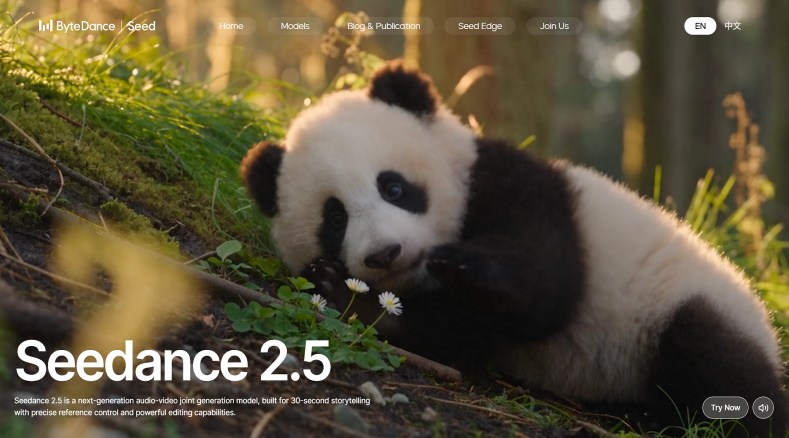
Seedance 2.5 is a next-generation audio-video joint generation model developed by ByteDance's Seed team. It builds on the unified multimodal architecture introduced in Seedance 2.0, but centers on foundational generation and reference-based generation to deliver major breakthroughs in long-form storytelling, multimodal reference, and editing.
Where previous AI video models focused on generating short clips, Seedance 2.5 is designed as a creative production engine. It can organize multiple logically connected shots within a single 30-second generation, preserving characters, environments, voices, and narrative pacing across scene changes.
The model is currently available through:
- Jimeng AI — ByteDance's AI creative platform
- Doubao Pro — ByteDance's AI assistant with video capabilities
- CapCut — ByteDance's video editing platform (launched in Korea on August 6)
- BytePlus ModelArk — API access for developers (documentation already live)
ByteDance showcased the model's capabilities with a 12-minute short film produced entirely within Seedance 2.5, demonstrated at a Singapore event. The film maintained consistent audiovisual language across multiple scenes without manual clip assembly.
Key Features of Seedance 2.5
30-Second Single-Pass Generation
The headline feature is simple but transformative: Seedance 2.5 generates 30 seconds of synchronized audio and video in a single pass, exactly double the 15-second ceiling of Seedance 2.0.
This isn't just "longer." The model can coordinate multiple shots within a single generation, organizing a narrative arc with setup, development, turning points, and resolution. For example, in a demonstration clip of a singer's stage performance, Seedance 2.5 portrayed the full story — the singer interacting with staff in the dressing room, walking through the backstage corridor, meeting dancers, and stepping onto stage — in one continuous sequence.
The model also supports multi-round extension, allowing creators to append subsequent shots while preserving character, environment, and pacing continuity across joins. This enables production of videos lasting several minutes from a single starting generation.
50-Reference Multimodal Input
Seedance 2.5 accepts up to 50 reference inputs in a single generation pass:
- 30 images — character designs, locations, storyboards
- 10 video clips — motion references, camera language, action sequences
- 10 audio files — voices, music, ambient sound, dialogue
This is more than a numerical upgrade from Seedance 2.0's 15 references. The expanded reference budget enables production-level control over complex videos with multiple subjects, scenes, and shot changes.
Clay render referencing is a notable addition. Users can feed a textureless 3D model as reference material, and Seedance 2.5 uses its spatial information — camera angles, subject positioning, motion paths — to generate the final video with full textures and physically accurate lighting. This opens a workflow where teams block scenes in 3D software and let the AI handle surfacing, materials, and illumination.
Timestamp-Level Editing
Seedance 2.5 introduces precise content editing via timestamps, a capability that fundamentally changes the editing workflow.
During generation, creators can use natural-language commands to control narrative, camera perspective, movement, and rhythm for specific time frames. For example: "have the person turn around at 5 seconds and switch the screen at 7 seconds."
After generation, the model supports targeted modifications to characters, actions, or plot elements within specific clips — all while maintaining continuity and realism before and after edits. Additional editing capabilities include:
- Green screen replacement — swap backgrounds while preserving subject physics (clothing flutter, hair movement, lighting interaction)
- Camera perspective editing — change viewpoints without regenerating the full sequence
- Reference-based editing — use external materials to guide specific sections
20-Language Lip-Sync
Seedance 2.5 supports 20 languages with matched lip-sync, localizing dialogue, characters, and settings together rather than dubbing over fixed video.
This eliminates an entire post-production stage for multilingual content. One production can speak natively to audiences in different markets, with mouth movements synchronized to the audio in each language variant.
Improved Visual Quality
The model systematically addresses the "AI look" that has plagued video generation:
- Directional lighting physics — near eye catches more light than far eye, shadows fall where they should
- Realistic impact physics — shattering glass, collisions, and material impacts resolve with realistic force and debris
- Skin and eye detail — micro-expressions read as genuine feeling rather than animation
- Reduced artifacts — minimized uncontrolled occurrences in subtitles and background music
The overall result is described as more cinematic and natural — videos that look "shot, not rendered."
Seedance 2.5 vs Seedance 2.0: What Changed?
| Feature | Seedance 2.5 | Seedance 2.0 |
| Single-pass duration | 30 seconds | 15 seconds |
| Max references | 50 (30 images + 10 video + 10 audio) | 15 |
| Editing precision | Timestamp-level, per-second control | Full-clip regeneration |
| 3D referencing | Clay render (textureless 3D → full render) | Not supported |
| Lighting model | Directional light physics, per-feature | Uniform illumination |
| Language support | 20 languages with lip-sync | Multilingual audio |
| Multi-round extension | Yes, preserves continuity | Yes |
| API availability | BytePlus ModelArk (documented) | BytePlus ModelArk |
The most significant shifts are in duration (enabling complete narrative scenes), reference capacity (enabling production-level control), and editing precision (enabling targeted modifications without full regeneration).
Real-World Use Cases
Film and Advertising
Seedance 2.5's ability to generate coherent, multi-shot sequences makes it viable for professional production workflows. ByteDance demonstrated a 12-minute short film produced entirely within the model, showcasing consistent character appearance, voice, and pacing across scenes.
Neill Blomkamp, director of "District 9," previously used Seedance 2.0 to create "Nightborne," a 13-minute AI-generated short film. Seedance 2.5's expanded capabilities further reduce the gap between AI-generated and traditionally produced content.
For advertising, the model enables rapid prototyping of commercial concepts, multilingual campaign production through lip-sync, and consistent brand asset deployment across multiple reference inputs.
Education
The model has begun entering real learning settings. Seedance 2.5 can transform historical context, characters, and storylines into vivid, immersive visuals. It also helps teachers produce instructional videos more efficiently, converting abstract content — scientific principles, historical events, experimental procedures — into dynamic demonstrations.
Industrial and Autonomous Driving
In manufacturing and autonomous driving sectors, Seedance 2.5 generates high-quality synthetic video data for training robot perception and manipulation skills. The model simulates long-tail scenarios — extreme weather, complex traffic conditions — providing diverse samples for system testing without real-world data collection.
How to Use Seedance 2.5
Direct Platform Access
The simplest way to experiment with Seedance 2.5 is through Jimeng AI or Doubao Pro, both of which provide browser-based interfaces for text-to-video and image-to-video generation.
API Integration
For developers building video generation into products, Seedance 2.5 is accessible through BytePlus ModelArk's Video Generation API — the same task-based API that already served Seedance 2.0.
A dedicated Seedance 2.5 tutorial and prompt guide went live on ModelArk within days of launch. The API supports:
- Create, Retrieve, List, and Cancel/Delete endpoints
- Token-based resource-pack pricing
- Same integration pattern as Seedance 2.0
Integration tip: Keep your video generation logic behind a provider-agnostic interface. This allows switching between Seedance versions or swapping providers entirely with minimal code changes.
Through AICC
For teams already using multiple AI providers, AICC's unified API provides a single integration point for accessing ByteDance models alongside OpenAI, Anthropic, Google, and 300+ other models. This eliminates the need to manage separate API keys and authentication flows for each provider.
Pricing and Availability
Seedance 2.5 is currently available on Jimeng AI and Doubao Pro. API access through BytePlus ModelArk uses token-based resource-pack pricing, following the same billing model as Seedance 2.0.
Third-party platforms including Picsart have announced plans to integrate Seedance 2.5, though rollout timelines vary by platform.
Important: ByteDance has not published official resolution figures for Seedance 2.5. Some third-party platforms report 4K capability for the Seedance line, but this should be verified against current ModelArk documentation before production commitments.
Limitations and Considerations
Copyright Pressure
The Seedance line faces unresolved copyright concerns. In February 2026, the Motion Picture Association sent ByteDance a cease-and-desist letter alleging that Seedance 2.0 generated material copying protected characters from major studios including Disney, Warner Bros., Paramount, Netflix, and Sony Pictures.
The Seedance 2.5 launch focuses on creative controls and does not detail training sources, licensing arrangements, or safeguards governing reference materials. The ability to ingest dozens of images, videos, and audio files makes the model useful for maintaining approved brand assets — but the same capability can reproduce material a user does not own.
Technical Gaps
ByteDance acknowledges remaining room for improvement in physical plausibility of complex motions and stability of scenes involving interactions among multiple subjects. The model's performance on these dimensions was not validated by independent evaluation at launch.
API Coverage
Not all Seedance 2.5 capabilities may be exposed through the API today. Features like clay render referencing and timestamp-level editing may still be limited to the Jimeng/Doubao interfaces. Developers should check ModelArk's current documentation before assuming full API feature parity.
Frequently Asked Questions
What is Seedance 2.5?
Seedance 2.5 is ByteDance's third-generation AI video generation model, released July 31, 2026. It generates 30-second audio-video clips in a single pass with support for 50 multimodal references, timestamp-level editing, and 20-language lip-sync. It builds on the unified multimodal architecture of Seedance 2.0.
How long can Seedance 2.5 videos be?
Seedance 2.5 generates up to 30 seconds in a single pass, double the 15-second limit of Seedance 2.0. Multi-round extension allows creators to append subsequent shots while maintaining continuity, producing videos lasting several minutes from a single starting generation.
How many references does Seedance 2.5 support?
Seedance 2.5 accepts up to 50 reference inputs per generation: 30 images, 10 video clips, and 10 audio clips. This is more than three times the 15-reference limit of Seedance 2.0, enabling production-level control over complex multi-subject videos.
What's the difference between Seedance 2.5 and 2.0?
Seedance 2.5 doubles single-pass duration from 15 to 30 seconds, expands reference capacity from 15 to 50 inputs, adds timestamp-level editing with green screen and camera perspective controls, introduces clay render 3D referencing, and supports 20 languages with matched lip-sync versus Seedance 2.0's general multilingual audio.
Is Seedance 2.5 available via API?
Yes. Seedance 2.5 is accessible through BytePlus ModelArk's Video Generation API, the same task-based API that served Seedance 2.0. A dedicated tutorial and prompt guide are documented on ModelArk. For teams using multiple providers, AICC's unified API also supports ByteDance models through a single integration point.
Conclusion
Seedance 2.5 represents a meaningful step forward in AI video generation. The model moves beyond short clip generation toward a production-ready creative tool — with 30-second single-pass output, 50 multimodal references, timestamp-level editing, and 20-language lip-sync.
For video creators, it reduces the gap between concept and finished product. For developers, it provides API-accessible video generation that can be integrated into applications and workflows. For enterprises, it opens possibilities in training data synthesis, multilingual content production, and rapid prototyping.
The model isn't perfect — copyright questions remain open, and some capabilities may not yet be fully exposed through the API. But the direction is clear: AI video generation is evolving from novelty to production tool, and Seedance 2.5 is at the forefront of that shift.
Ready to integrate ByteDance's video models into your applications? Explore AICC's unified API to access Seedance 2.5 alongside 300+ AI models through a single connection.