
 OpenAI - ChatGPT, Sora
 Google - Gemini, Nano Banana
 Anthropic - Claude
 xAI - Grok
 Deepseek
 Alibaba - Qwen
 ByteDance - Doubao
 All Models
 Enterprise Plans
 AI Application Development
 AI Translator API
 AI SEO/GEO Service
 GEO-Optimized PR Service
 Web Scraping Service
 OpenClaw
 Top AI Tools
 Top AI Robots
 Log in










The Real AI Risk Autonomy Without Accountability Explained
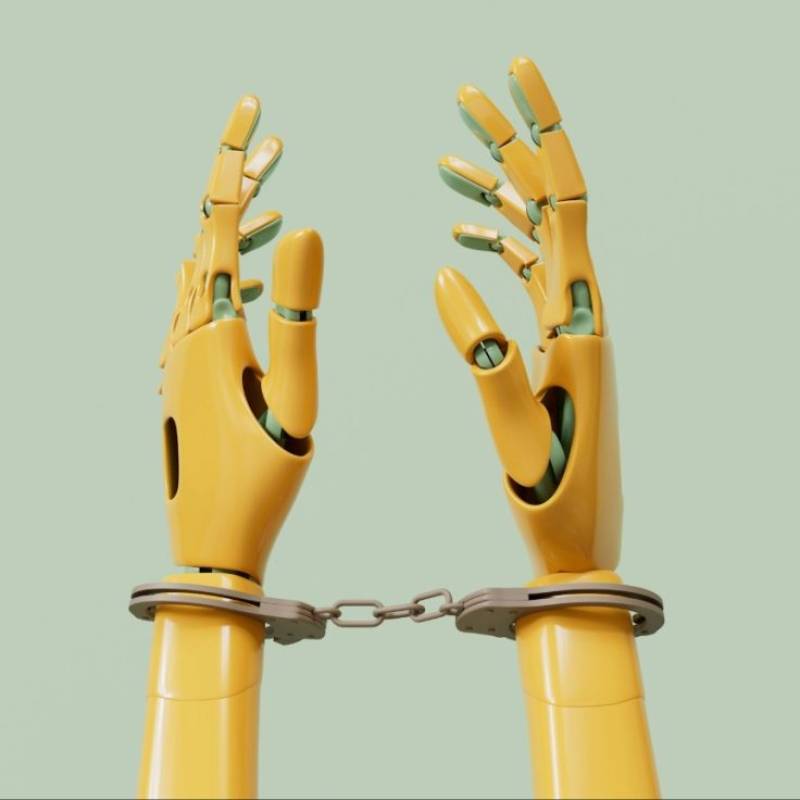
If you have ever experienced a self-driving vehicle navigating through busy urban streets, you might recognize the peculiar sense of unease that emerges when there is no driver and no conversation—just a silent car making assumptions about its surroundings. The ride feels acceptable until the vehicle misinterprets a shadow or brakes suddenly for something benign. In that instant, you witness the fundamental challenge with autonomy: it does not react appropriately when it should, and that disconnect between confidence and judgment is where trust is either established or destroyed. Much of today's enterprise AI operates in a remarkably similar fashion. It is competent without being confident, and efficient without being empathetic, which is why the critical factor in every successful deployment is no longer computing power but trust.
The MLQ State of AI in Business 2025 PDF report presents a striking statistic: 95% of early AI pilots fail to produce measurable ROI, not because the technology is inadequate but because it is misaligned with the problems organizations are attempting to solve. This pattern repeats across industries. Leaders grow uncertain when they cannot determine if the output is accurate, teams question whether dashboards can be trusted, and customers rapidly lose patience when an interaction feels automated rather than genuinely supported. Anyone who has been locked out of their bank account while an automated recovery system insists their answers are incorrect understands how quickly confidence disappears.
Klarna remains the most publicized example of large-scale automation in practice. The company has now halved its workforce since 2022 and reports that internal AI systems are performing the work of 853 full-time roles, up from 700 earlier this year.
Revenues have increased 108%, while average employee compensation has risen 60%, funded partly by those operational efficiencies. However, the situation is more complex. Klarna still reported a 95 million dollar quarterly loss, and its CEO has indicated that additional staff reductions are probable. This demonstrates that automation alone does not create stability. Without accountability and structure, the experience deteriorates long before the AI does. As Jason Roos, CEO of CCaaS provider Cirrus, observes, "Any transformation that unsettles confidence, inside or outside the business, carries a cost you cannot ignore—it can leave you worse off."
We have already witnessed what occurs when autonomy outpaces accountability. The UK's Department for Work and Pensions employed an algorithm that wrongly flagged approximately 200,000 housing-benefit claims as potentially fraudulent, despite the majority being legitimate. The issue was not the technology itself—it was the absence of clear ownership over its decisions. When an automated system suspends the wrong account, rejects the wrong claim, or creates unnecessary anxiety, the question is never simply "why did the model fail?" It is "who owns the outcome?" Without that answer, trust becomes fragile.
💡 Key Insight: "The missing step is always readiness," says Roos. "If the process, the data, and the guardrails aren't in place, autonomy doesn't accelerate performance—it amplifies the weaknesses. Accountability has to come first. Start with the outcome, identify where effort is being wasted, check your readiness and governance, and only then automate. Skip those steps and accountability disappears just as fast as the efficiency gains arrive."
Part of the challenge is an obsession with scale without the foundation that makes scale sustainable. Many organizations pursue autonomous agents capable of decisive action, yet very few pause to consider what happens when those actions drift beyond expected boundaries. The Edelman Trust Barometer PDF reveals a steady decline in public trust in AI over the past five years, and a joint KPMG and University of Melbourne study found that workers prefer greater human involvement in nearly half the tasks examined. The findings reinforce a straightforward point: Trust rarely comes from pushing models harder. It comes from people taking the time to understand how decisions are made, and from governance that functions less like a brake pedal and more like a steering wheel.
The same dynamics appear on the customer side. PwC's trust research reveals a significant gap between perception and reality. Most executives believe customers trust their organization, while only a minority of customers concur. Other surveys indicate that transparency helps bridge this gap, with large majorities of consumers wanting clear disclosure when AI is utilized in service experiences. Without that clarity, people do not feel reassured—they feel misled, and the relationship becomes strained. Companies that communicate openly about their AI use are not only protecting trust but also normalizing the idea that technology and human support can coexist.
Some of the confusion stems from the term "agentic AI" itself. Much of the market treats it as something unpredictable or self-directing, when in reality it is workflow automation with reasoning and recall. It is a structured approach for systems to make modest decisions within parameters designed by people. The deployments that scale safely all follow the same sequence:
- Start with the outcome they want to improve
- Examine where unnecessary effort exists in the workflow
- Assess whether systems and teams are ready for autonomy
- Only then choose the technology
Reversing that order does not accelerate anything—it simply creates faster mistakes. As Roos states, "AI should expand human judgment, not replace it."
All of this points toward a broader truth: Every wave of automation eventually becomes a social question rather than a purely technical one. Amazon built its dominance through operational consistency, but it also built a level of confidence that the package would arrive. When that confidence diminishes, customers move on. AI follows the same pattern. You can deploy sophisticated, self-correcting systems, but if the customer feels deceived or misled at any point, trust breaks. Internally, the same pressures apply. The KPMG global study PDF highlights how quickly employees disengage when they do not understand how decisions are made or who is accountable for them. Without that clarity, adoption stalls.
As agentic systems assume more conversational roles, the emotional dimension becomes even more significant. Early reviews of autonomous chat interactions show that people now judge their experience not only by whether they were helped but also by whether the interaction felt attentive and respectful.
A customer who feels dismissed rarely keeps the frustration to themselves. The emotional tone of AI is becoming a genuine operational factor, and systems that cannot meet that expectation risk becoming liabilities.
⚠️ Critical Consideration: The difficult truth is that technology will continue to advance faster than people's instinctive comfort with it. Trust will always lag behind innovation. That is not an argument against progress—it is an argument for maturity.
Every AI leader should be asking whether they would trust the system with their own data, whether they can explain its last decision in plain language, and who steps in when something goes wrong. If those answers are unclear, the organization is not leading transformation—it is preparing an apology.
Roos puts it simply: "Agentic AI is not the concern. Unaccountable AI is."
When trust disappears, adoption disappears, and the project that appeared transformative becomes another entry in the 95% failure rate. Autonomy is not the enemy—forgetting who is responsible is. The organizations that maintain a human hand on the wheel will be the ones still in control when the self-driving hype eventually fades.