
 OpenAI - ChatGPT, Sora
 Google - Gemini, Nano Banana
 Anthropic - Claude
 xAI - Grok
 Deepseek
 Alibaba - Qwen
 ByteDance - Doubao
 All Models
 Enterprise Plans
 AI Application Development
 AI Translator API
 AI SEO/GEO Service
 GEO-Optimized PR Service
 Web Scraping Service
 OpenClaw
 Top AI Tools
 Top AI Robots
 Log in

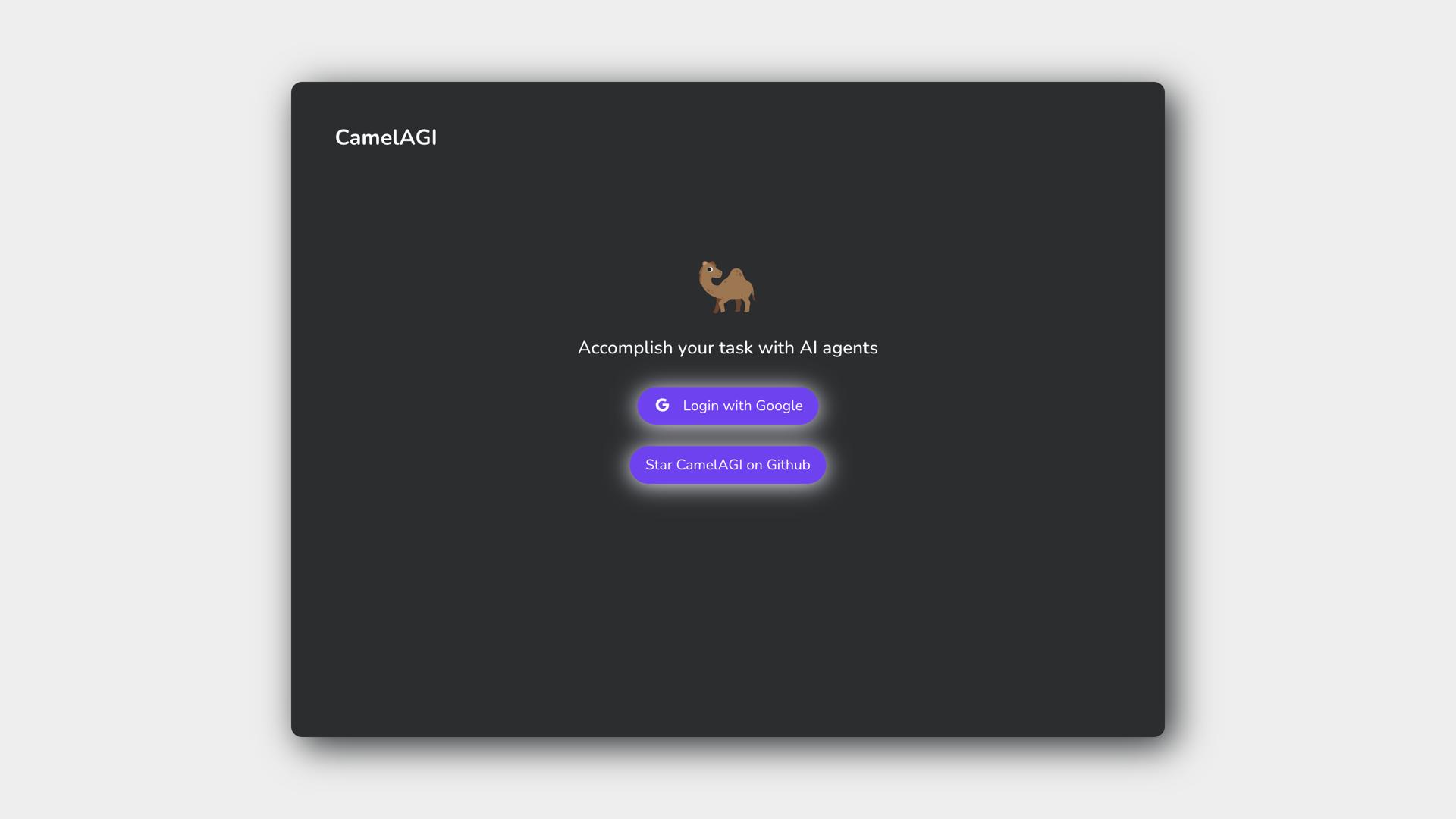

What is Camel AGI?
Camel AGI is like a role-playing method for loop architecture of BabyAGI & AutoGPT.
With CAMEL, you get two agents, and you assign them special roles. After that, just watch them collaborate and work together to solve your task.
Special thanks to Guohao Li for his work on Camel.
Use-cases of CAMEL AGI
🤖 Conversational AI: Enhancing dialogue systems by making them more dynamic and context-aware through collaboration between specialized agents.
🎮 Gaming: Developing non-player characters (NPCs) that can interact with players and each other in complex and engaging ways.
📚 Education & Training: Simulating discussions between experts to help students learn from different perspectives and thought processes.
🏭 Collaborative Problem Solving: Creating agents that can work together to tackle complex problems in areas like engineering, business, and science.
Use Cases And Features
1. Research: Researchers can use Camel AGI to create a collaborative environment for AI agents to discuss and solve specific research questions. They can monitor the agents' discussions and progress towards the solution.
2. Conversational AI: Enhancing dialogue systems by making them more dynamic and context-aware through collaboration between specialized agents.
3. Training: Camel AGI can be used to create a virtual training environment where AI agents can collaborate to learn new skills or solve complex problems. The agents can learn from each other and improve their performance over time.
Tool Website Engagement
Last Update: 2 years ago
Disclaimer: Statistics sourced from third-party providers. Accuracy may fluctuate.
Total Monthly Visits: 84K
Bounce Rate: 41%
Visit Duration (avg): 38.28 seconds
Pages Per Visit: 1.07
Country Rank: 840
Global Rank: 608,448
Monthly Traffic
Traffic Sources
Traffic Share By Country
- United States: 17.29%
- United Kingdom: 3.40%
- Germany: 2.58%
- India: 2.54%
- China: 2.48%