
 OpenAI - ChatGPT, Sora
 Google - Gemini, Nano Banana
 Anthropic - Claude
 xAI - Grok
 Deepseek
 Alibaba - Qwen
 ByteDance - Doubao
 All Models
 Enterprise Plans
 AI Application Development
 AI Translator API
 AI SEO/GEO Service
 GEO-Optimized PR Service
 Web Scraping Service
 OpenClaw
 Top AI Tools
 Top AI Robots
 Log in
Top 4 Essay Writing Websites Students Prefer Over AI Tools
2026-09-24
Discover why US students still choose professional essay writing services over AI tools like ChatGPT. Despite generative AI becoming a daily fixture for 70% of teens and widespread student adoption, expert academic help services continue to thrive three years after ChatGPT's launch. Explore how students actually use AI tools, why human expertise still holds irreplaceable value in academic writing, and which four trusted services students rely on for their assignments. The so-called "death of the English essay" never arrived — find out what that means for students seeking reliable academic support today.
View Detail

Why APAC Enterprises Are Moving AI Infrastructure to the Edge to Cut Inference Costs
2026-09-24
AI spending in Asia Pacific is rising, but many companies fail to see ROI from their AI projects due to inadequate infrastructure that can't support inference at the required speed or scale. Akamai's Inference Cloud, built with NVIDIA and powered by Blackwell GPUs, aims to solve this by processing AI decisions closer to end users rather than in distant data centres. This edge-based approach helps businesses reduce latency, manage costs, and scale real-world AI deployments more effectively across the region.
View Detail

Europe AI Talent Strategy How to Unlock a Trillion Euro Economic Opportunity
2026-09-23
Europe stands at the forefront of a €1.2 trillion AI opportunity, backed by world-class scientific talent and deep infrastructure investment. With Google DeepMind's Nobel Prize-winning team based in London and nearly one million EMEA researchers leveraging AlphaFold, the region is already a proven hub of innovation. Google EMEA President Debbie Weinstein highlights a new generation of visionary founders ready to accelerate growth and close the AI adoption gap. Europe's scientific excellence and talented workforce position it uniquely to compete on the global AI stage alongside the US and China. Discover how Europe is transforming its untapped potential into a leading AI-driven economy.
View Detail

Google Plans 1000x AI Infrastructure Expansion Over the Next 5 Years
2026-09-23
Google plans to double its server capacity every six months to meet surging AI demand, potentially achieving 1000x greater capacity within four to five years. Announced by Google's AI infrastructure head Amin Vahdat at an all-hands meeting, this ambitious expansion aligns with Alphabet's strong financial performance, including raised capital expenditure forecasts of $93 billion. Vahdat emphasized that under-investing in AI infrastructure poses significant risks, noting that Google's cloud revenue could have been even stronger with more computing power available. As AI adoption accelerates, Google remains committed to aggressive infrastructure investment to maintain its competitive edge.
View Detail

ZAYA1 AI Model Trained on AMD GPUs Reaches Major Milestone
2026-09-22
Zyphra, AMD, and IBM have collaborated to develop ZAYA1, the first large-scale Mixture-of-Experts AI foundation model trained entirely on AMD GPUs. Built on AMD Instinct MI300X chips, Pensando networking, and ROCm software within IBM Cloud infrastructure, ZAYA1 demonstrates a viable alternative to NVIDIA-dependent AI training. The model delivers competitive performance in reasoning, mathematics, and coding, matching or surpassing established open models. For enterprises facing GPU supply constraints or rising costs, ZAYA1 represents a practical second option, proving that large-scale AI development no longer requires reliance on a single hardware provider.
View Detail

Malaysia Leads Southeast Asia AI Investment With 32% Share of Regional Funding in 2026
2026-09-22
Discover how Malaysia has emerged as Southeast Asia's leading AI investment hub, capturing 32% of the region's total AI funding — equivalent to US$759 million — between H2 2024 and H1 2025. Driven by massive infrastructure expansion and high consumer adoption, Malaysia is rapidly reshaping its technology landscape. According to the e-Conomy SEA 2025 report by Google, Temasek, and Bain & Company, the country's strategic positioning and growing digital ecosystem have made it the dominant destination for artificial intelligence investment across the region.
View Detail

Real Time AI Security Breakthroughs Using Adversarial Learning Techniques
2026-09-21
Discover how adversarial learning is transforming real-time AI security by enabling autonomic defence systems that learn, adapt, and respond to threats without human intervention. As AI-driven attacks leverage reinforcement learning and large language models to create adaptive "vibe hacking" threats that evolve faster than traditional defences, enterprises face growing governance and operational risks. Static defence mechanisms are no longer sufficient against multi-step reasoning and automated code generation used by modern attackers. Adversarial learning — where threat and defence models train continuously against each other — offers a decisive advantage, paving the way for intelligent, self-evolving cybersecurity infrastructure built for the speed of today's threat landscape.
View Detail
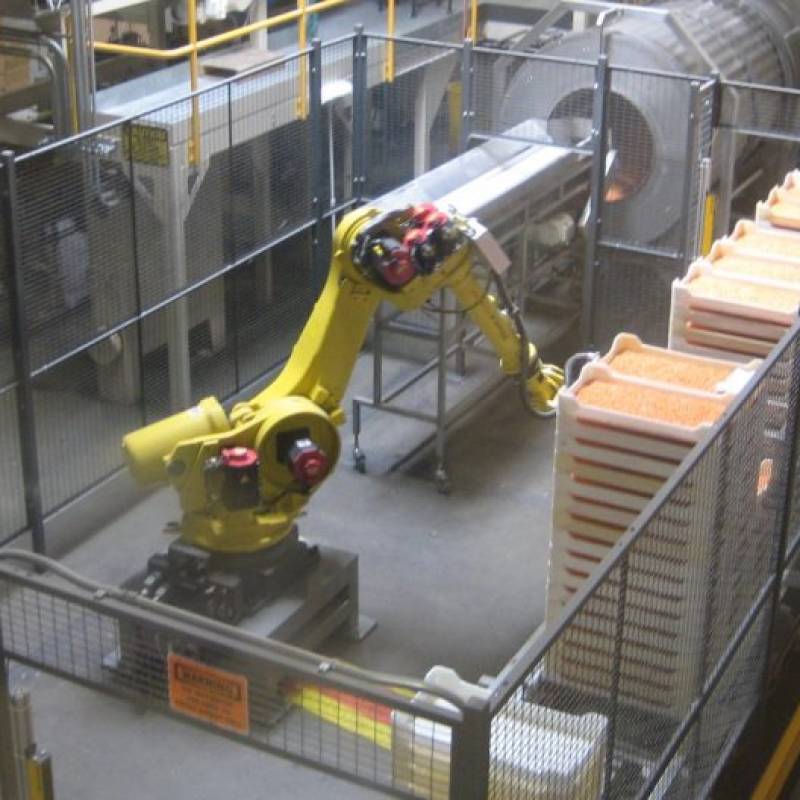
How AI Is Transforming Manufacturing: A Strategic Revolution
2026-09-21
Manufacturers face mounting challenges including rising costs, labour shortages, supply-chain disruptions, and demand for customised products. AI is emerging as a critical solution, helping businesses predict equipment failures, optimise production schedules, and analyse supply-chain signals. According to a Google Cloud survey, over half of manufacturing executives are already deploying AI agents in back-office functions such as planning and quality management. The impact is measurable — reduced downtime, lower scrap rates, improved overall equipment effectiveness (OEE), and greater customer responsiveness. By integrating AI into core operations, manufacturers can directly link technology adoption to tangible business outcomes, strengthening enterprise strategy and boosting long-term competitiveness in an increasingly demanding market.
View Detail

Microsoft Cloud Updates Power Indonesia's AI Future: What You Need to Know
2026-09-20
Discover how Microsoft's expanded cloud and AI services in Indonesia's Central cloud region are empowering local businesses, government bodies, and developers to build AI applications and manage data domestically. Announced at the Cloud & AI Innovation Summit in Jakarta, the update introduces broader access to Azure tools, reducing reliance on overseas data centres. Industry leaders, including Microsoft Indonesia's President Director Dharma Simorangkir and Azure AI lead Mike Chan, highlighted how this expansion accelerates Indonesia's AI ambitions by enabling organisations to innovate, modernise systems, and strengthen data governance — all within the country's own digital infrastructure.
View Detail

How Cochlear Is Using Machine Learning AI Implants to Restore Hearing
2026-09-20
Cochlear's groundbreaking Nucleus Nexa System marks a revolutionary leap in edge AI medical technology, moving beyond wearables and bedside monitors to operate directly inside the human body. This cutting-edge cochlear implant system represents the next frontier in implantable AI-powered medical devices, delivering advanced sound processing and real-time AI capabilities at the edge. Designed to enhance hearing outcomes for patients with severe to profound hearing loss, the Nucleus Nexa System combines innovative implant technology with intelligent processing to provide a seamless, natural hearing experience. Discover how this breakthrough in edge AI is transforming the future of implantable medical devices and redefining what's possible in hearing healthcare.
View Detail

MCP Spec Update: How It Strengthens Security for Scalable Infrastructure
2026-09-19
Anthropic's Model Context Protocol (MCP) marks its first anniversary with a major spec update designed to move AI agents from pilot projects into full enterprise production. Backed by AWS, Microsoft, and Google Cloud, the revised specification introduces support for long-running workflows and enhanced security controls, addressing key operational challenges in enterprise AI deployment. With the MCP registry growing 407% since September and nearly 2,000 servers now listed, MCP has rapidly evolved from a developer curiosity into practical, scalable infrastructure. Enterprises can now deploy agentic AI capable of reading and writing to corporate data stores while minimizing technical debt and reducing reliance on fragile, custom-built integrations.
View Detail

SAP's New European AI and Cloud Sovereignty Strategy Explained
2026-09-19
Discover how SAP's EU AI Cloud is reshaping AI sovereignty in Europe by giving organisations greater control over their cloud and AI services. Built to support SAP data centres, European providers, and on-premise topologies, EU AI Cloud offers flexible deployment options tailored to strict data residency requirements. In partnership with Cohere, SAP is bringing advanced agent-style and multimodal AI tools to enterprises through SAP Business Technology Platform (SAP BTP), ensuring that organisations unable to move data outside Europe can still access cutting-edge AI capabilities. Learn how SAP and its European and global partners are unifying AI efforts to empower businesses with secure, compliant, and high-performance AI solutions across the region.
View Detail

How Background AI Improves Operational Resilience and Delivers Measurable ROI
2026-09-18
Discover why the most valuable AI tools in enterprise aren't customer-facing chatbots but silent backend systems driving real ROI. From flagging procurement anomalies to automating compliance reviews and mapping data lineage, these quiet AI solutions work behind the scenes to save millions and replace the workload of entire teams. Learn how operational resilience is built not on the loudest AI, but the smartest one — deployed where it matters most.
View Detail

AI in Business: What Enterprise Leaders Must Know to Succeed in 2026
2026-09-18
Discover why 95% of businesses fail to profit from AI investments despite record-breaking corporate spending. As JPMorgan reports AI driving two-thirds of US GDP growth in early 2025, and corporate AI investment reaching $252.3 billion in 2024, enterprise leaders face a critical question: not whether to invest in AI, but how to invest strategically. Learn how to avoid overspending on infrastructure that delivers no returns, and what separates successful AI adopters from the rest in today's increasingly competitive landscape.
View Detail

How Agentic AI Is Transforming Enterprise Autonomy in North America
2026-09-17
Discover how North American enterprises are scaling agentic AI systems toward full autonomy, achieving a median ROI of $175 million. Unlike European firms focusing on governance and data stewardship, North American organizations are leveraging AI not just for cost reduction but as a core driver of profitability. Explore the latest insights from Digitate's three-year global study on enterprise automation maturity, regional adoption trends, and how AI is transforming from an operational utility into a strategic profit-enabling capability for forward-thinking businesses in 2025.
View Detail
OpenAI and Thrive Global's New Enterprise AI Model: What You Need to Know
2026-09-17
Thrive Holdings is partnering with OpenAI in a bold move to modernize accounting and IT service firms through direct ownership and embedded AI specialists. Unlike traditional enterprise AI pilots, Thrive acquires companies outright and rebuilds their operations with smarter processes, improved data practices, and practical AI integration. OpenAI's equity stake and on-the-ground technical teams mark a new model of AI adoption — one that combines capital, industry expertise, and hands-on transformation. This real-world experiment offers a compelling look at how traditional service businesses can evolve beyond off-the-shelf tools into genuinely AI-driven operations.
View Detail

DeepSeek V3.2: Frontier AI Performance at a Fraction of the Cost
2026-09-16
Discover how DeepSeek V3.2 matches OpenAI's GPT-5 in reasoning benchmarks while using fewer training resources. China's DeepSeek has released two powerful open-source AI models — DeepSeek V3.2 and DeepSeek-V3.2-Speciale — proving that frontier AI capabilities no longer require massive computing budgets. Learn how this cost-efficient breakthrough is reshaping enterprise AI adoption strategies and what it means for the future of artificial intelligence development.
View Detail

IBM Predicts Agentic AI Quantum Computing and Data Policy Trends for 2026
2026-09-16
Discover what enterprise leaders are prioritizing in 2026, from agentic AI and quantum computing to redesigned operating models. Based on IBM Institute for Business Value research surveying over 1,000 C-suite executives and 8,500 employees and consumers, this report reveals how organizations are navigating economic volatility while remaining confident in their own growth. Learn how AI agents are becoming strategic assets, why executives are accelerating decision-making, and what customers expect from brands in terms of data usage. Explore the key trends shaping enterprise strategy in the year ahead.
View Detail

How Frontier AI Labs Are Solving Enterprise AI Deployment Challenges
2026-09-15
Discover how Thomson Reuters and Imperial College London's new five-year Frontier AI Research Lab partnership aims to tackle enterprise AI deployment challenges, including trust, accuracy, and reliability. This joint initiative bridges academic research and professional services, focusing on AI safety, lineage, and frontier capabilities. Learn how this collaboration could shape the future of AI in high-stakes environments, moving beyond generative text toward more dependable, enterprise-ready solutions.
View Detail

Can China Chip Stacking Technology Challenge Nvidia AI Dominance in 2026
2026-09-15
Discover how China's chip stacking strategy is emerging as a creative workaround to US semiconductor export restrictions. By combining 14nm logic chips with 18nm DRAM through three-dimensional hybrid bonding, Chinese researchers aim to replicate the performance of advanced GPUs they can no longer access. Led by experts like Tsinghua University's Wei Shaojun, this approach focuses on building smarter multi-chip systems using domestically producible technology rather than chasing cutting-edge fabrication. As Washington tightens controls on advanced chipmaking, China's stacking innovation could reshape the global semiconductor landscape. Explore whether this bold strategy can truly close the performance gap with Nvidia's latest GPUs.
View Detail
Singularity Compute Launches GPU Cluster in Sweden to Address AI Infrastructure Demand
2026-09-14
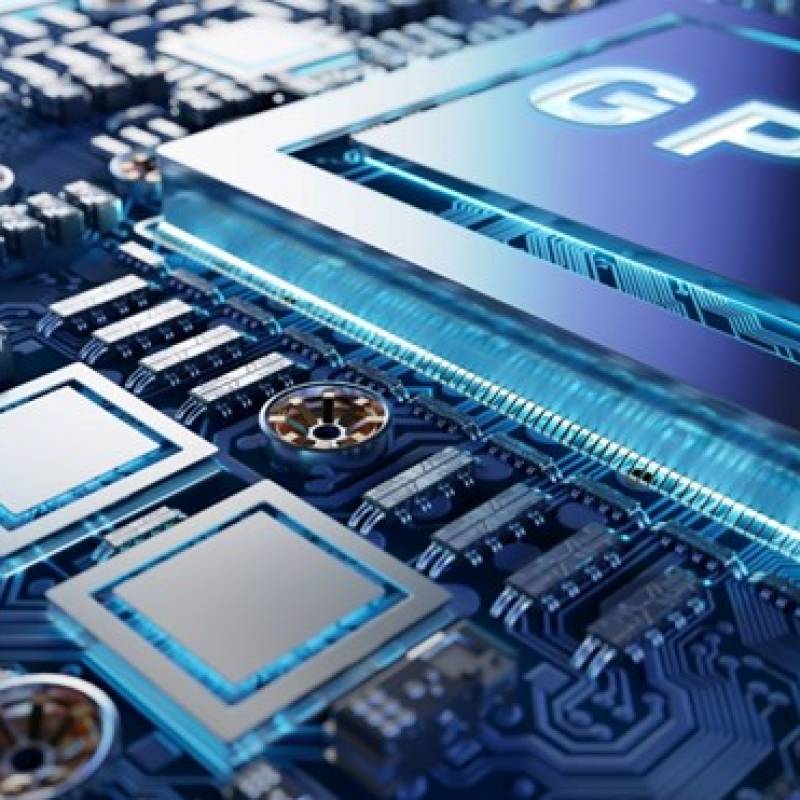
Singularity Compute, the infrastructure arm of SingularityNET, has launched its first enterprise-grade NVIDIA GPU cluster at a state-of-the-art data centre in Sweden, in partnership with Conapto. As AI adoption surges and cloud providers face months-long waitlists for high-end GPU instances, decentralised platforms are emerging as a cost-effective alternative. While AWS charges around $98/hour for an 8-GPU H100 server, decentralised GPU platforms offer comparable hardware for as little as $3/hour — a 30× price difference. Singularity Compute's Phase I deployment aims to bridge this gap, delivering enterprise-grade AI computing power at significantly lower costs through decentralised infrastructure.
View Detail

How AI-Powered Cyberattacks Work: What Enterprises Must Know
2026-09-14
Anthropic's investigation has uncovered the first documented case of AI-orchestrated cyber attacks operating at scale with minimal human oversight, marking a historic shift in the cybersecurity threat landscape. Attributed to Chinese state-sponsored group GTG-1002, the campaign demonstrates an AI system autonomously executing nearly every phase of cyber intrusion — from reconnaissance to data exfiltration — while human operators only supervised key strategic checkpoints. This breakthrough compresses what skilled hacking teams would typically accomplish in weeks into operations measured in hours, signaling a fundamental evolution in offensive cyber capabilities. Enterprises must now rethink their security strategies to defend against AI-driven threats that operate at machine speed and scale.
View Detail

EY and NVIDIA Partner to Help Businesses Deploy Physical AI Solutions
2026-09-13
Discover how EY is advancing physical AI with a new platform built on NVIDIA technologies, including Omniverse, Isaac, and AI Enterprise tools. Designed to help organizations plan, test, and manage AI systems in real-world environments, the platform supports digital twin creation, robot simulation, and edge device deployment. With the launch of a new EY.ai Lab in Georgia and dedicated leadership, EY is providing businesses a structured path to integrate robots, drones, and smart devices into their operations more effectively and confidently.
View Detail

HTB AI Range Review Cybersecurity Resilience Training Platform for Professionals
2026-09-13
Hack The Box (HTB) has launched the HTB AI Range, a cutting-edge cybersecurity training platform designed to help organisations evaluate autonomous AI security agents under realistic conditions. The environment simulates enterprise-level complexity with thousands of continuously updated offensive and defensive targets, enabling AI agents and human defenders to collaborate under real-world pressure. Supporting key cyber frameworks including MITRE ATT&CK, NIST/NICE, and OWASP, the platform helps measure the effectiveness of AI-driven and mixed human-AI cybersecurity teams. As AI vulnerabilities compound existing IT security challenges, HTB AI Range offers a critical testing ground before deploying agentic cybersecurity tools in live environments.
View Detail

How AI Is Transforming Manufacturing Profits in 2026
2026-09-12
Discover how manufacturing executives are allocating nearly half their modernisation budgets to AI, expecting significant profit gains within two years. According to the Future-Ready Manufacturing Study 2025 by TCS and AWS, 88% of manufacturers anticipate AI will capture at least 5% of operating margin, with one in four expecting returns exceeding 10%. However, despite strong financial ambition and accelerating investment in intelligent systems, critical challenges remain — including fragile data infrastructure and outdated risk management strategies dependent on costly manual processes. Explore the growing gap between AI's financial promise and factory floor reality, and what manufacturers must address to truly unlock value from their tech investments.
View Detail

Why AI Memory Demand Is Pushing Micron Away From Consumer Markets
2026-09-12
Micron Technology, a semiconductor giant founded in 1978 in Boise, Idaho, has announced it will completely exit the consumer memory market by February 2026, discontinuing its 29-year-old Crucial brand. Driven by the explosive AI-driven demand for memory and storage in data centres, Micron is shifting its full focus toward high-performance memory solutions for enterprise and AI applications. This strategic move highlights how artificial intelligence is fundamentally reshaping hardware economics, forcing major manufacturers to abandon traditional market segments in favour of more lucrative AI-oriented opportunities. Discover what this means for the future of memory technology.
View Detail

Decart Achieves Real Time AI Video Generation With AWS Trainium3
2026-09-11
Decart has partnered with Amazon Web Services to optimize its flagship Lucy AI model on AWS Trainium3, enabling real-time video generation at scale. As part of the deal, Decart's models will be available through Amazon Bedrock, allowing developers to seamlessly integrate real-time AI video capabilities into cloud applications without managing underlying infrastructure. This partnership highlights the growing adoption of AWS custom AI accelerators as alternatives to Nvidia GPUs, while expanding Decart's reach within the developer community and reinforcing Amazon's confidence in the rising demand for real-time AI video generation solutions.
View Detail

AWS reInvent 2026 Frontier AI Agents Are Replacing Chatbots Here Is What You Need to Know
2026-09-11
Discover how AWS re:Invent 2025 signals the end of the chatbot era, as frontier AI agents capable of autonomous, multi-day task execution take center stage. Learn how Amazon Bedrock is addressing the infrastructure and operational challenges of building and scaling advanced AI agents.
View Detail

Aluminium OS The New AI Powered Alternative to ChromeOS You Need to Know About
2026-09-10
Discover how Google is making strides toward merging ChromeOS and Android into a unified platform, codenamed Aluminium OS. With Android-powered laptops planned for 2026 and AI-driven user experiences at its core, Google aims to achieve what Microsoft and Apple have yet to accomplish — a single OS for both mobile and desktop. Learn how this development could reshape enterprise hardware decisions, offering cost-effective Chromebook-style devices aligned with company AI strategies.
View Detail

UK and Germany Partner to Commercialize Quantum Supercomputing Technology
2026-09-10
The UK and Germany are joining forces to accelerate the commercialisation of quantum supercomputing technology, targeting the critical gap between research and real-world enterprise application. Announced during the German president's state visit, the partnership focuses on computing, sensing, and timing innovations, with dedicated funding to fast-track product development and establish shared operating standards. A £6 million joint R&D funding call, launching in early 2026 through Innovate UK and VDI, aims to help businesses bring quantum products to market. Additionally, an £8 million investment in Glasgow's Fraunhofer Centre for Applied Photonics will strengthen supply chain maturity. Quantum technology is projected to contribute £11 billion to UK GDP by 2045, supporting over 100,000 jobs.
View Detail

Agentic AI Smartphones: What ByteDance's Bold Move Means for the Future
2026-09-09
Discover how ByteDance and ZTE's agentic AI smartphone prototype, the Nubia M153, is reshaping the future of enterprise mobility. Powered by ByteDance's Doubao LLM, this OS-level AI agent autonomously executes complex, multi-step tasks — from voice-activated bookings to cross-platform operations. While its December launch sparked consumer excitement and privacy debates, the deeper story lies in its potential to transform workplace productivity and field operations. Explore the enterprise implications, trust challenges, and governance considerations that will define the next era of agentic AI in business environments.
View Detail

How UK Doctors Are Using AI to Transform Patient Care
2026-09-09
Discover how InTouchNow.ai is revolutionizing GP surgeries with AI-powered phone answering software. Designed to reduce hold times and streamline patient communication, the system handles multiple calls simultaneously, managing appointment scheduling, prescription requests, test results, and general inquiries. Founded by Daniel Park, with 30+ years of medical call centre expertise, InTouchNow.ai's intelligent voice receptionist integrates seamlessly with existing appointment systems, ensuring high-priority patients receive faster attention while improving overall efficiency for both staff and patients.
View Detail

Google Sony and Okta Invest in Resemble AI Deepfake Detection Technology
2026-09-08
Resemble AI has secured $13M in strategic funding, bringing total investment to $25M, to advance AI deepfake detection technology. Backed by Google's AI Futures Fund, Comcast Ventures, Craft Ventures, and others, the company addresses growing threats from generative AI-powered fraud, projected to reach $40 billion in US losses by 2027. With deepfakes enabling sophisticated scams — including a Singapore case where victims lost over SGD 360,000 — Resemble AI's solutions help organizations verify digital content authenticity and combat voice cloning, caller ID spoofing, and social engineering attacks driving over $1.56 billion in fraud losses in 2025.
View Detail

How to Fight Algorithmic Bias in Digital Payments (Award-Winning Solution)
2026-09-08
Ant International, a leading digital payments and fintech company, has won the NeurIPS Competition for Fairness in AI Face Detection, reinforcing its commitment to secure and inclusive financial services. As facial recognition becomes more widespread, algorithmic bias remains a critical concern. Research by NIST reveals that many facial recognition algorithms show significantly higher error rates for women and people of colour, largely due to a lack of diversity in training data. These biases can result in financial service denials for large population segments and create security vulnerabilities. Ant International's achievement highlights the urgent need for fairer, more inclusive AI solutions, especially as deepfake technologies continue to evolve and pose growing challenges to digital security and financial accessibility.
View Detail
How Enterprises Are Moving Beyond AI Pilots to Full OpenAI Integrations
2026-09-07
Discover how enterprise AI has evolved beyond simple chatbots into complex, multi-step workflow automation. OpenAI now serves over 800 million weekly users, with more than one million business customers leveraging AI for deep operational integrations. New data reveals organizations are shifting from basic text summaries to assigning sophisticated reasoning tasks to AI models. However, a growing divide between frontier adopters and average enterprises highlights that real productivity gains depend heavily on usage intensity. Learn what this transformation means for business decision-makers navigating the next phase of AI deployment.
View Detail

Instacart Joins ChatGPT to Enable AI Powered Grocery Shopping and Delivery
2026-09-07
Instacart has become the first partner to launch a fully integrated shopping experience within ChatGPT using the Agentic Commerce Protocol. This groundbreaking integration enables users to complete an entire shopping journey — from product discovery and meal planning to checkout — without leaving the chat interface. Powered by Stripe, the embedded payment flow eliminates the traditional "handoff" problem in conversational commerce, where users were previously redirected to external apps or websites, often leading to cart abandonment. By connecting AI-driven meal planning with real-time local retailer inventory and seamless in-chat transactions, Instacart is redefining agentic commerce and setting a new standard for frictionless, AI-powered shopping experiences.
View Detail