
 OpenAI - ChatGPT, Sora
 Google - Gemini, Nano Banana
 Anthropic - Claude
 xAI - Grok
 Deepseek
 Alibaba - Qwen
 ByteDance - Doubao
 All Models
 Enterprise Plans
 AI Application Development
 AI Translator API
 AI SEO/GEO Service
 GEO-Optimized PR Service
 Web Scraping Service
 OpenClaw
 Top AI Tools
 Top AI Robots
 Log in










How AI Is Transforming Manufacturing: A Strategic Revolution
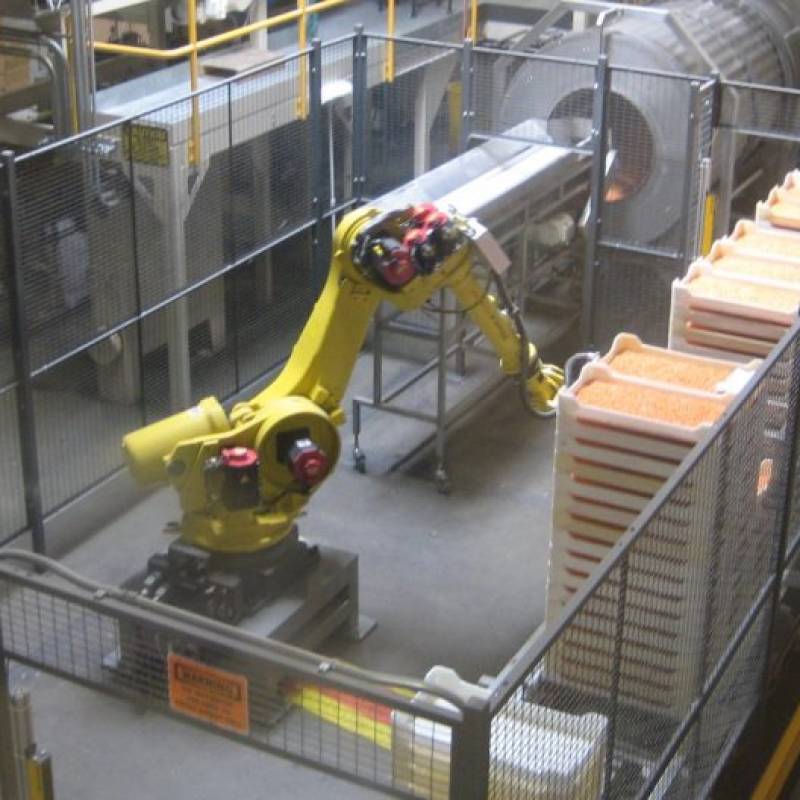
Manufacturers today are working against rising input costs, labour shortages, supply-chain fragility, and growing pressure to deliver more customised products. Artificial intelligence is rapidly becoming a central part of the strategic response to these challenges.
When Enterprise Strategy Depends on AI
Most manufacturers seek to reduce cost while improving throughput and quality. AI supports these aims by predicting equipment failures, adjusting production schedules, and analysing supply-chain signals.
📊 A Google Cloud survey found that more than half of manufacturing executives are already using AI agents in back-office areas such as planning and quality control.
Source: Google Cloud — ROI of AI in Manufacturing ↗
The shift matters because AI use links directly to measurable business outcomes — reduced downtime, lower scrap rates, better OEE (Overall Equipment Effectiveness), and improved customer responsiveness all contribute to a stronger competitive position.
What Recent Industry Experience Reveals
🏭 Motherson Technology Services
Motherson Technology Services reported major operational gains after adopting agent-based AI, data-platform consolidation, and workforce-enablement initiatives:
- ✅ 25–30% reduction in maintenance costs
- ✅ 35–45% reduction in unplanned downtime
- ✅ 20–35% improvement in production efficiency
⚙️ ServiceNow
ServiceNow has described how manufacturers are unifying workflows, data, and AI on common platforms. It reported that just over half of advanced manufacturers now have formal data-governance programmes in support of their AI initiatives — a clear signal that AI deployment is moving well beyond the pilot stage and into core operations.
What Cloud and IT Leaders Should Consider
📊 Data Architecture
Manufacturing systems depend on low-latency decisions, especially for maintenance and quality control. Leaders must determine how to combine edge devices (often OT systems with supporting IT infrastructure) with cloud services. Microsoft's maturity-path guidance highlights that data silos and legacy equipment remain a significant barrier — standardising how data is collected, stored, and shared is often the essential first step.
🔍 Use-Case Sequencing
ServiceNow advises starting small and scaling AI roll-outs gradually. Focusing on two or three high-value use-cases helps teams avoid the "pilot trap". Strong starting points include:
- 🔥 Predictive maintenance
- ⚡ Energy optimisation
- 👀 Quality inspection
These areas are prioritised because benefits are relatively straightforward to measure and demonstrate to stakeholders.
🔒 Governance and Security
Connecting operational technology (OT) equipment with IT and cloud systems increases cyber-risk, as many OT systems were never designed to be exposed to the wider internet. Leaders should define data-access rules and monitoring requirements carefully.
⚠️ Important: AI governance should not wait until later project phases — it must begin in the very first pilot.
👨🏭 Workforce and Skills
The human factor remains critical. Operator trust in AI-supported systems is essential, and confidence in using AI-underpinned tools must be actively built. According to Automation.com, manufacturing faces persistent skilled-labour shortages, making upskilling programmes an integral part of modern AI deployments — not an afterthought.
🔗 Vendor-Ecosystem Neutrality
Most manufacturing environments include IoT sensors, industrial networks, cloud platforms, and back-office workflow tools. Leaders should prioritise interoperability and avoid lock-in to any single provider. The goal is to build an architecture that supports long-term flexibility, tailored to each organisation's unique workflows.
📈 Measuring Impact
Manufacturers should define and continuously monitor clear metrics, which may include:
- ⏱ Downtime hours
- 💰 Maintenance-cost reduction
- 🚀 Production throughput
- 🔥 Yield rates
The Motherson results provide realistic benchmarks and demonstrate the outcomes achievable through careful, consistent measurement.
The Realities: Beyond the Hype
Despite rapid progress, real-world challenges remain. Skills shortages slow deployment, legacy machinery produces fragmented data, and costs are often difficult to forecast accurately. Sensors, connectivity, integration work, and data-platform upgrades all add up — both in time and budget.
Security risks also grow as production systems become more connected. And critically, AI must coexist with human expertise — operators, engineers, and data scientists need to collaborate closely, not operate in isolation.
💡 Recent industry publications confirm these challenges are manageable with the right management structures. Clear governance, cross-functional teams, and scalable architectures make AI easier to deploy and sustain over time.
Strategic Recommendations for Leaders
- Tie AI initiatives to business goals. Link every project to KPIs such as downtime, scrap rate, and cost per unit.
- Adopt a hybrid edge-cloud approach. Keep real-time inference close to machines; use cloud platforms for training and analytics.
- Invest in people. Build mixed teams of domain experts and data scientists, and offer training for operators and management alike.
- Embed security from day one. Treat OT and IT as a unified environment under a zero-trust framework.
- Scale gradually. Prove value in one plant, then expand with confidence.
- Choose open ecosystem components. Open standards preserve flexibility and prevent vendor lock-in.
- Monitor and adjust continuously. Refine models and workflows as conditions evolve, guided by pre-defined performance metrics.
Conclusion
Internal AI deployment is now a core element of manufacturing strategy. Recent insights from Motherson, Microsoft, and ServiceNow demonstrate that manufacturers are achieving measurable, real-world benefits by combining data, people, workflows, and technology in a structured way.
The path is not simple — but with clear governance, the right architecture, a strong security posture, business-focused project selection, and a genuine commitment to people, AI becomes a practical and sustainable lever for competitiveness.
📷 Image source: "Jelly Belly Factory Floor" by el frijole, licensed under CC BY-NC-SA 2.0.
🌟 Want to learn more about AI and big data from industry leaders?
Check out the AI & Big Data Expo — taking place in Amsterdam, California, and London. The event is part of TechEx and co-located with other leading enterprise technology events.
AI News is powered by TechForge Media. Explore other upcoming enterprise technology events and webinars here ↗.