
 OpenAI - ChatGPT, Sora
 Google - Gemini, Nano Banana
 Anthropic - Claude
 xAI - Grok
 Deepseek
 Alibaba - Qwen
 ByteDance - Doubao
 All Models
 Enterprise Plans
 AI Application Development
 AI Translator API
 AI SEO/GEO Service
 GEO-Optimized PR Service
 Web Scraping Service
 OpenClaw
 Top AI Tools
 Top AI Robots
 Log in









Agentic AI Smartphones: What ByteDance's Bold Move Means for the Future
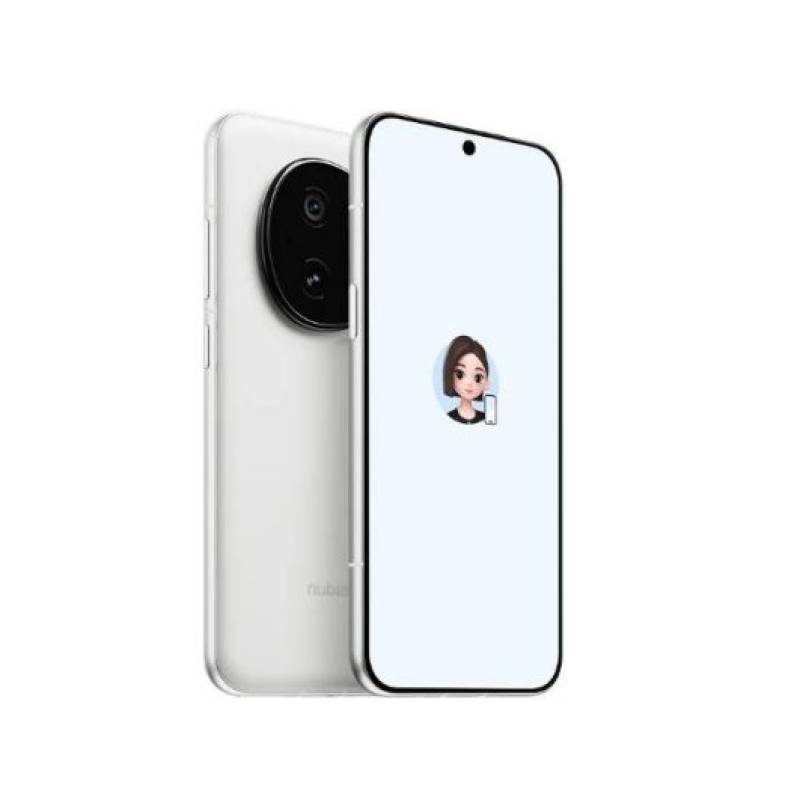
ByteDance's December 2 launch of an agentic AI smartphone prototype — developed in partnership with ZTE — sparked immediate consumer enthusiasm, and just as quickly triggered serious privacy concerns that forced the company to roll back key capabilities. But beneath the headline-grabbing sell-out and subsequent controversy lies a far more significant story: the enterprise implications of operating-system-level AI agents that can autonomously execute complex, multi-step tasks within device ecosystems.
The ZTE Nubia M153, powered by ByteDance's Doubao large language model, represents both a consumer gadget experiment and a preview of how agentic AI smartphones could reshape workplace productivity, field operations, and enterprise mobility strategies — if the technology can overcome the fundamental trust and governance challenges that enterprise adoption demands.
📈 From Consumer Curiosity to Enterprise Necessity
The consumer appeal is obvious: voice-activated restaurant bookings, automatic photo editing, cross-platform price comparisons. But the enterprise stakes are far greater.
📌 According to Gartner projections, by 2028, 33% of enterprise software applications will include agentic AI capabilities — up from less than 1% in 2024.
The smartphone, as the most ubiquitous computing device in enterprise workflows, becomes a critical testing ground. As Nicholas Muy, CISO of Scrut Automation, explains:
💬 "Agentic AI in industries like manufacturing, construction, healthcare, and energy will enhance decisions, boost safety, and streamline tasks."
However, Muy cautions that early adopters must navigate real risks around AI errors and security gaps. McKinsey research further indicates that 23% of organisations are already scaling agentic AI systems in at least one business function, with an additional 39% actively experimenting.
Yet enterprise adoption differs fundamentally from consumer use. It demands governance frameworks, audit trails, role-based permissions, and compliance mechanisms — features that ByteDance's consumer-focused prototype notably lacked.
🌎 China's Strategic Advantage in Software-Hardware Integration
ByteDance's approach — partnering with ZTE rather than building proprietary hardware — mirrors successful enterprise AI strategies. The company positions Doubao as a system-level integration that any manufacturer can adopt, similar to how Google deployed Android.
📌 With 157 million monthly active users as of August 2025 (QuestMobile data), Doubao already dominates China's consumer AI market — more than doubling Tencent's Yuanbao at 73 million users.
The software-over-hardware strategy addresses what Morgan Stanley analysts identify as a key weakness: major smartphone manufacturers — including Apple, Huawei, and Xiaomi — possess strong enough technology capabilities to self-develop AI assistants rather than relying on third-party providers.
ByteDance's realistic target market appears to be second-tier manufacturers and, potentially, enterprise device management platforms seeking differentiated capabilities. For enterprise buyers, this fragmentation presents both opportunity and challenge: organisations can select device manufacturers based on hardware requirements while standardising on AI capabilities — but only if governance and security frameworks prove robust enough for regulated industries.
🔒 The Privacy Panic That Revealed Enterprise Requirements
The swift backlash following entrepreneur Taylor Ogan's viral social media demos of the M153's capabilities illuminated exactly what enterprise adoption demands. When users witnessed an AI agent with deep system privileges autonomously accessing apps, processing payments, and manipulating data, the immediate concern wasn't convenience — it was control.
💬 "The trust gap is enormous. While AI agents can perform tasks with remarkable efficiency, their outputs are based on statistical probabilities rather than inherent truths."
— Jonah Midanik, General Partner, Forum Ventures
According to a Forum Ventures survey of 100 senior enterprise IT decision-makers, trust remains the primary adoption barrier. ByteDance's reported rollback of capabilities demonstrates an understanding that enterprise-grade agentic AI smartphones require:
- ✅ Granular permission systems
- ✅ Comprehensive logging and audit trails
- ✅ Strict, configurable operational boundaries
These features were notably absent from the consumer prototype.
💼 Enterprise vs. Consumer: Different Use Cases, Different Requirements
Enterprise use cases for agentic AI smartphones diverge sharply from consumer applications. Consider the following real-world scenarios:
🔧 Field Service
AI agents proactively surface equipment histories, recommend optimal routes based on real-time conditions, and guide complex procedures — without manual searches.
🏥 Healthcare
Providers access patient context and decision support without navigating multiple disparate systems.
💵 Financial Services
Professionals receive compliance-checked recommendations and automated workflow orchestration.
📌 PwC research finds that 79% of organisations have implemented AI agents at some level, with 96% of IT leaders planning expansions in 2025.
However, Cloudera's survey of 1,484 IT decision-makers revealed that successful enterprise deployment requires industry-specific data integration, transparent decision-making processes, and phased rollouts with comprehensive testing.
The consumer smartphone market — projected by IDC to ship 912 million generative AI-enabled units by 2028 — emphasises personalisation and convenience. Enterprise deployments, by contrast, prioritise auditability, compliance, and risk mitigation — requirements that consumer-focused agentic AI smartphones have not yet fully addressed.
🌐 Global Competitive Dynamics and Regional Strategies
The US-China technology divide adds significant complexity. Apple's delayed Apple Intelligence rollout in mainland China created an opening that ByteDance, Alibaba, Baidu, and Tencent are competing aggressively to fill.
Apple's approach differs fundamentally: tight hardware-software integration with on-device processing prioritises user privacy — a stance that resonates strongly with enterprise security requirements. ByteDance's licensing strategy, meanwhile, positions Doubao for rapid market penetration among Chinese manufacturers, potentially establishing de facto standards before Western competitors can match operating-system-level integration.
📌 According to Counterpoint Research, Asia-Pacific represents the fastest-growing market for AI agents, with the US currently holding 40.1% revenue share.
For multinational enterprises operating across regions, this creates device management challenges around data sovereignty, compliance frameworks, and consistent user experiences — potentially requiring separate device strategies for different regulatory environments.
💡 The Path Forward: Solutions Over Hype
For enterprise leaders evaluating agentic AI smartphones, ByteDance's prototype offers valuable lessons in what to demand from vendors:
① Comprehensive Governance Frameworks
Define decision boundaries, log all autonomous actions, and provide role-based access controls. Anthropic's enterprise solution — featuring centralised provisioning, audit logs, and role-based permission granting — demonstrates these requirements in practice.
② Hybrid Processing Approaches
Balance on-device processing for sensitive operations with cloud capabilities for complex reasoning. Enterprise deployments require flexibility to meet varying data residency and compliance requirements across jurisdictions.
③ Phased Rollouts Starting with Low-Risk Use Cases
Amazon's deployment of AI agents for Java application modernisation illustrates how enterprises can capture measurable value while carefully managing risk.
The ByteDance-ZTE collaboration ultimately previews an inevitable convergence: agentic AI capabilities will become standard smartphone features, not premium differentiators. Enterprise adoption will follow proven patterns — pilot programmes in controlled environments, rigorous security validation, and gradual expansion as governance frameworks mature.
📌 Gartner projects that at least 15% of work decisions will be made autonomously by agentic AI by 2028 — compared with none in 2024.
The question facing enterprise technology leaders isn't whether agentic AI smartphones will affect workplace productivity — it's whether they'll shape deployment strategies proactively, or react to consumer technologies retrofitted with enterprise features after the fact.
The privacy panic that followed ByteDance's launch makes one thing clear: the winners won't be those who deploy fastest, but those who deploy most thoughtfully — with security and scalable governance built in from day one.