
 OpenAI - ChatGPT, Sora
 Google - Gemini, Nano Banana
 Anthropic - Claude
 xAI - Grok
 Deepseek
 Alibaba - Qwen
 ByteDance - Doubao
 All Models
 Enterprise Plans
 AI Application Development
 AI Translator API
 AI SEO/GEO Service
 GEO-Optimized PR Service
 Web Scraping Service
 OpenClaw
 Top AI Tools
 Top AI Robots
 Log in









Google Plans 1000x AI Infrastructure Expansion Over the Next 5 Years
In order to meet the massive demand for AI, Google wants to double the overall size of its servers every six months — a growth rate that would create a 1,000x greater capacity in the next four or five years.
The statement came from the head of Google's AI infrastructure, Amin Vahdat, during an all-hands meeting on November 6, according to CNBC. Alphabet, Google's parent company, is certainly performing well — it reported strong Q3 figures at the end of October and has raised its capital expenditure forecast to $93 billion, up from $91 billion.
💬 "The risk of under-investing is pretty high … the cloud numbers would have been much better if we had more compute."
— Amin Vahdat, Head of Google AI Infrastructure
Vahdat addressed employee concerns about an 'AI bubble' by reiterating the risks of not investing aggressively enough. Google's cloud business continues to grow at around 33% per year, creating an income stream that positions the company to be "better positioned to withstand misses than other companies."
With more efficient hardware — including the seventh-generation Tensor Processing Unit (TPU) — and increasingly optimized large language models (LLMs), Google remains confident in its ability to deliver value for enterprise users accelerating their AI adoption.
⚠️ Infrastructure: The Biggest Barrier to AI Success
According to Markus Nispel of Extreme Networks, writing on TechRadar.com, it is IT infrastructure — not AI technology itself — that is causing companies' AI visions to falter. He identifies three key obstacles:
- 🔴 Legacy systems struggling to handle high-demand AI workloads
- 🔴 Lack of real-time and edge computing facilities in current enterprises
- 🔴 Persistent data silos preventing clean, unified data flows
💬 "Even when projects do launch, they're often hampered by delays caused by poor data availability or fragmented systems. If clean, real-time data can't flow freely across the organisation, AI models can't operate effectively, and the insights they produce arrive too late or lack impact."
— Markus Nispel, Extreme Networks
📊 80% of AI projects globally are struggling to deliver on expectations — primarily due to infrastructure limitations rather than flaws in AI technology itself.
💰 Hyperscalers Are Betting Big on AI Infrastructure
Nispel's views are widely shared among major technology decision-makers. Combined capital expenditure by Google, Microsoft, Amazon, and Meta is expected to exceed $380 billion this year, with the majority focused on AI infrastructure.
The message from the hyperscalers is clear: "If we build it, they will come."
Addressing infrastructure challenges is now the key component to successful AI implementation. Agile infrastructure positioned close to the point of compute — combined with unified data sets — is widely regarded as essential to unlocking the full value of next-generation AI projects.
Although some market realignment is expected across the AI sector in the coming months, companies like Google are well-positioned to consolidate their market standing and continue delivering game-changing AI technologies as the landscape evolves.
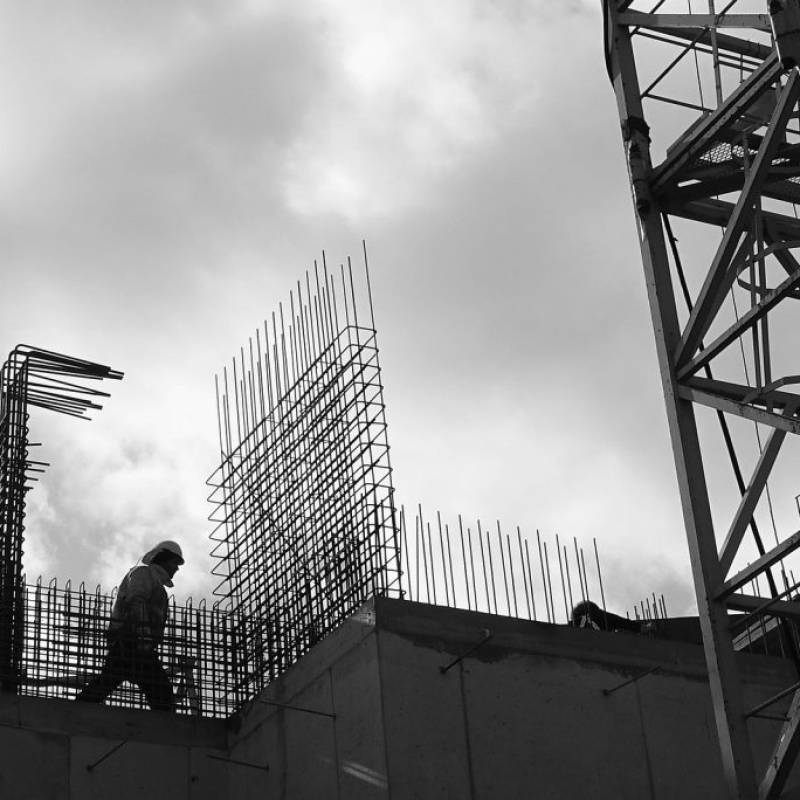
📷 Image source: "Construction site" by tomavim is licensed under CC BY-NC 2.0.
🚀 Want to Learn More About AI & Big Data?
Check out the AI & Big Data Expo taking place in Amsterdam, California, and London. The comprehensive event is part of TechEx and co-located with other leading technology events. Click here for more information.
AI News is powered by TechForge Media. Explore other upcoming enterprise technology events and webinars here.