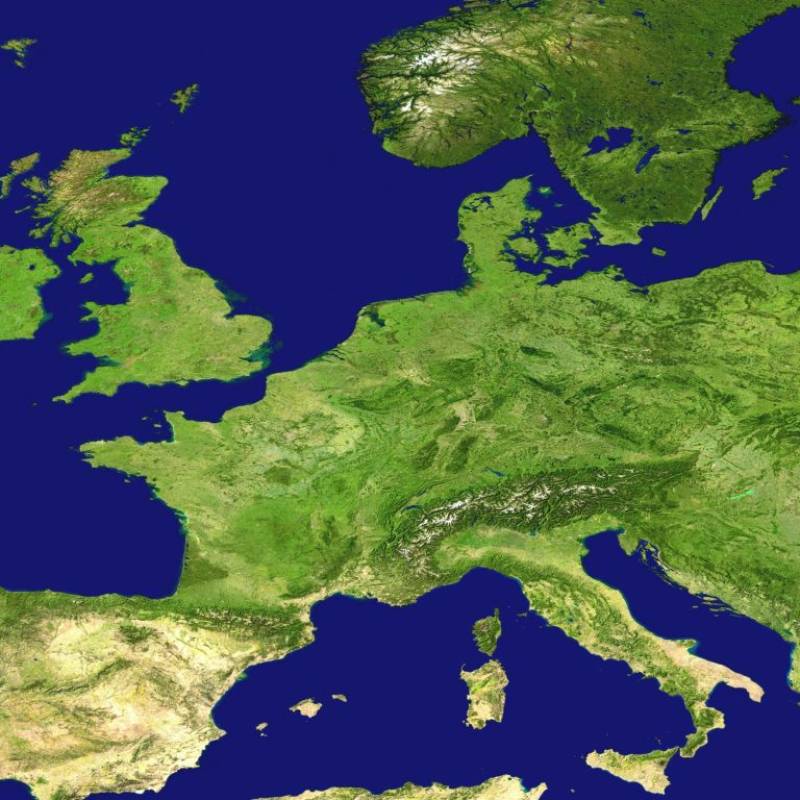
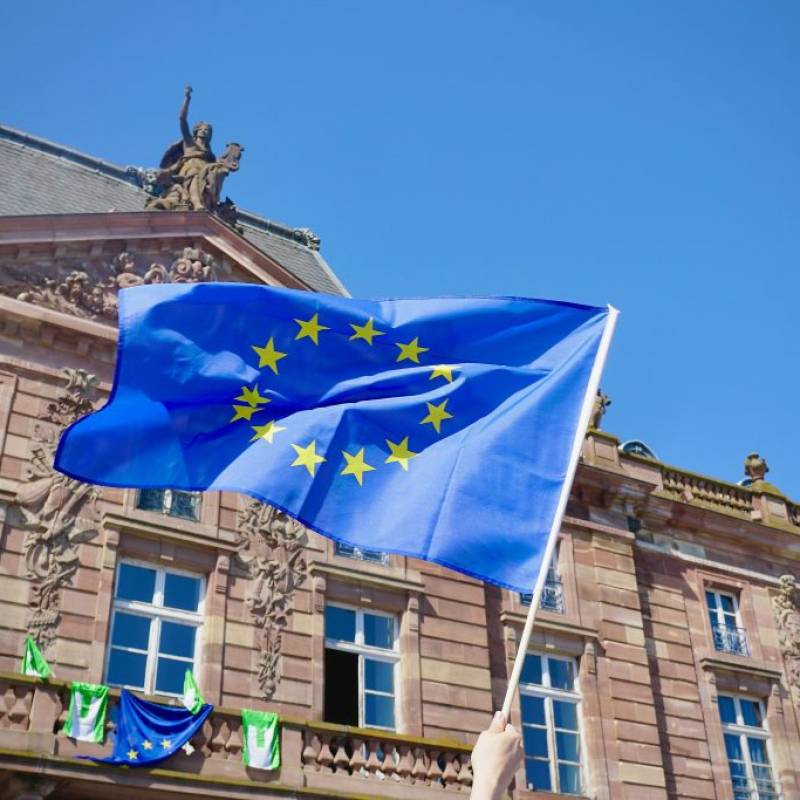
A €1.2 trillion AI prize sits on the table for Europe's economy — and the region has the talent and raw ingredients to claim it.
While the global narrative often focuses on competition with the US and China, the view from the ground in Europe tells a different story: a region of untapped potential, world-class talent, and deep infrastructure investment.
“A new generation of visionary founders is ready to drive the region's future — built on a foundation of scientific excellence and a workforce as bright as anywhere else in the world.”
— Debbie Weinstein, President of Google EMEA
The task now is to leverage Europe's strengths to close the AI adoption gap and accelerate economic growth across the region.
💡 A Foundation of Innovation
Europe is already a powerhouse of scientific breakthrough. The Google DeepMind team — which includes Nobel Prize winners — drives discovery from London, while nearly one million researchers across EMEA use AlphaFold to solve complex biological problems. Europe isn't starting from scratch; it is already a hub of high-level R&D.
That intellectual capital is being matched by hard investment. Google recently announced a €5.5 billion investment in Germany to support connectivity and digital infrastructure.
🔒 The strategic placement of Security Operations Centres in Munich, Dublin, and Malaga underscores Europe's culturally ingrained commitment to privacy and security — a stable and trusted environment for long-term digital strategy.
🌎 The Potential of AI in Europe
Currently, only 14% of European businesses use AI. While some view this as a lag, optimists see it as massive headroom for growth. The businesses that do adopt these tools are already seeing powerful, measurable results.
Weinstein points to Spanish startup Idoven as a prime example of Europe's potential. They are using AI to help doctors detect heart disease earlier — proving that when European founders access the right tools, they build world-changing solutions.
The operational gains are equally tangible in traditional sectors:
- 🚗 Automotive: Upgrading from basic voice assistants to AI co-pilots can prevent accidents by detecting driver fatigue in real time.
- 🛡️ Cybersecurity: Modern AI tools allow security teams to stay ahead of increasingly sophisticated threats.
- ⚡ Productivity: AI acts as a force multiplier, giving businesses the "most powerful toolbox they've ever had."
To fully realise this €1.2 trillion potential, Europe's businesses need access to the same high-performance AI models as their global peers. The latest models are 300 times more powerful than those from just two years ago — offering a massive productivity boost to those who can deploy them.
The release of the Commission's Digital Omnibus is described as a “step in the right direction” — helping businesses compete on a global stage through clearer, simpler regulatory frameworks.
The goal is harmonisation: creating a unified market with clear and sensible rules that allow companies to train AI models responsibly and launch products faster. That unified framework will be the catalyst that turns potential into measurable GDP growth.
👥 Investing in the Workforce
The final piece of the puzzle is people. Seizing this moment requires a workforce that is confident in using AI. Weinstein stresses the need for leaders who can identify opportunities and managers who are genuinely AI-literate.
🏅 Google's Commitment to European Skills
- Already helped over 15 million Europeans learn digital skills
- Rolling out a €15 million AI Opportunity Fund to support vulnerable workers
- Focused on building enterprise-level AI literacy across leadership teams
For enterprise leaders, the message is clear: investing in skills today builds the confidence to take risks and grow tomorrow.
Europe has the talent, the values, and the infrastructure. With the right focus on skills development and a push for harmonised access to cutting-edge tools, Europe is well-positioned to lead the AI era — and capture its full economic value.

 OpenAI - ChatGPT, Sora
 Google - Gemini, Nano Banana
 Anthropic - Claude
 xAI - Grok
 Deepseek
 Alibaba - Qwen
 ByteDance - Doubao
 All Models
 Enterprise Plans
 AI Application Development
 AI Translator API
 AI SEO/GEO Service
 GEO-Optimized PR Service
 Web Scraping Service
 OpenClaw
 Top AI Tools
 Top AI Robots
 Log in