
 OpenAI - ChatGPT, Sora
 Google - Gemini, Nano Banana
 Anthropic - Claude
 xAI - Grok
 Deepseek
 Alibaba - Qwen
 ByteDance - Doubao
 All Models
 Enterprise Plans
 AI Application Development
 AI Translator API
 AI SEO/GEO Service
 GEO-Optimized PR Service
 Web Scraping Service
 OpenClaw
 Top AI Tools
 Top AI Robots
 Log in

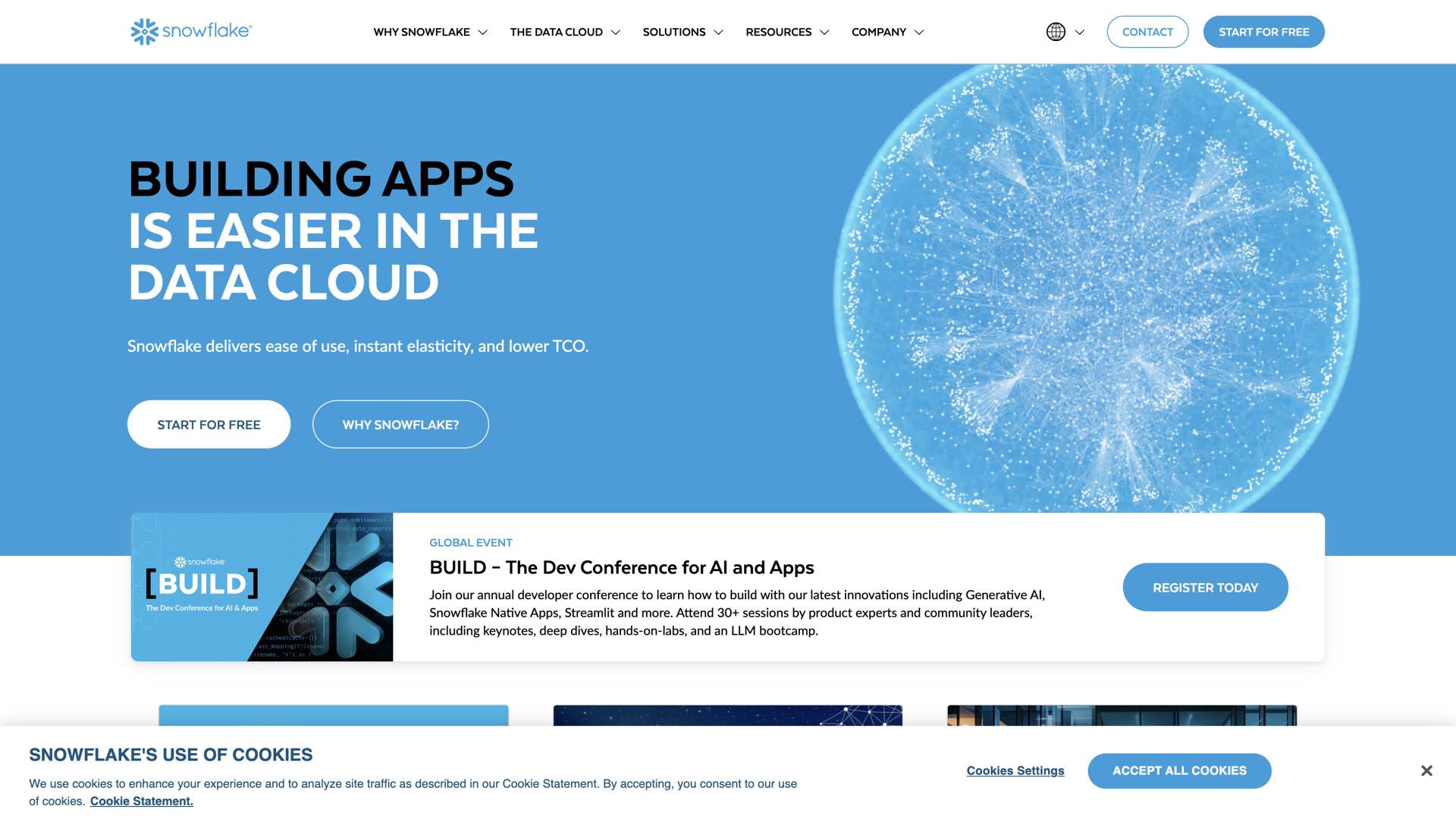

What is Snowflake?
Snowflake is a cloud-based data warehouse with an innovative approach to data warehousing. It provides a secure, fast, and cost-effective solution for enterprise organizations to store and analyze large amounts of data. With Snowflake, organizations can quickly and easily access data from a single, unified platform, without worrying about managing multiple databases.
Snowflake's cloud-based platform makes it easier to scale up or down as needed, allowing organizations to pay only for the data storage and computing power they need. It also offers enhanced data security and performance, with built-in encryption, automated backups, and a distributed system design that helps maximize query performance.
Snowflake also features an advanced query optimizer and support for a variety of programming languages, so users can quickly and easily build powerful data models. Snowflake is designed to make data warehousing simpler and faster for enterprise organizations, enabling them to focus on extracting maximum value from their data.
Use Cases And Features
1. Securely store and analyze large amounts of data
Organizations can consolidate their data in one secure location while maintaining high-performance analytics capabilities.
2. Scale up or down data storage and computing power
Flexible scaling options allow businesses to adjust resources based on current needs without long-term commitments.
3. Enhance data security and performance with built-in encryption and automated backups
Enterprise-grade security features ensure data protection while automated processes reduce administrative overhead.
Tool Website Engagement
Last Update: 2 years ago
Disclaimer: Statistics sourced from third-party providers. Accuracy may fluctuate.
Total Monthly Visits: 5M
Bounce Rate: 42%
Visit Duration (avg): 402.79 seconds
Pages Per Visit: 5.86
Country Rank: 840
Global Rank: 11,498
Monthly Traffic
Traffic Sources
Traffic Share By Country
- United States: 47.53%
- India: 13.93%
- Canada: 3.54%
- Japan: 2.66%
- Australia: 2.45%