
 OpenAI - ChatGPT, Sora
 Google - Gemini, Nano Banana
 Anthropic - Claude
 xAI - Grok
 Deepseek
 Alibaba - Qwen
 ByteDance - Doubao
 All Models
 Enterprise Plans
 AI Application Development
 AI Translator API
 AI SEO/GEO Service
 GEO-Optimized PR Service
 Web Scraping Service
 OpenClaw
 Top AI Tools
 Top AI Robots
 Log in


What is U-Net?
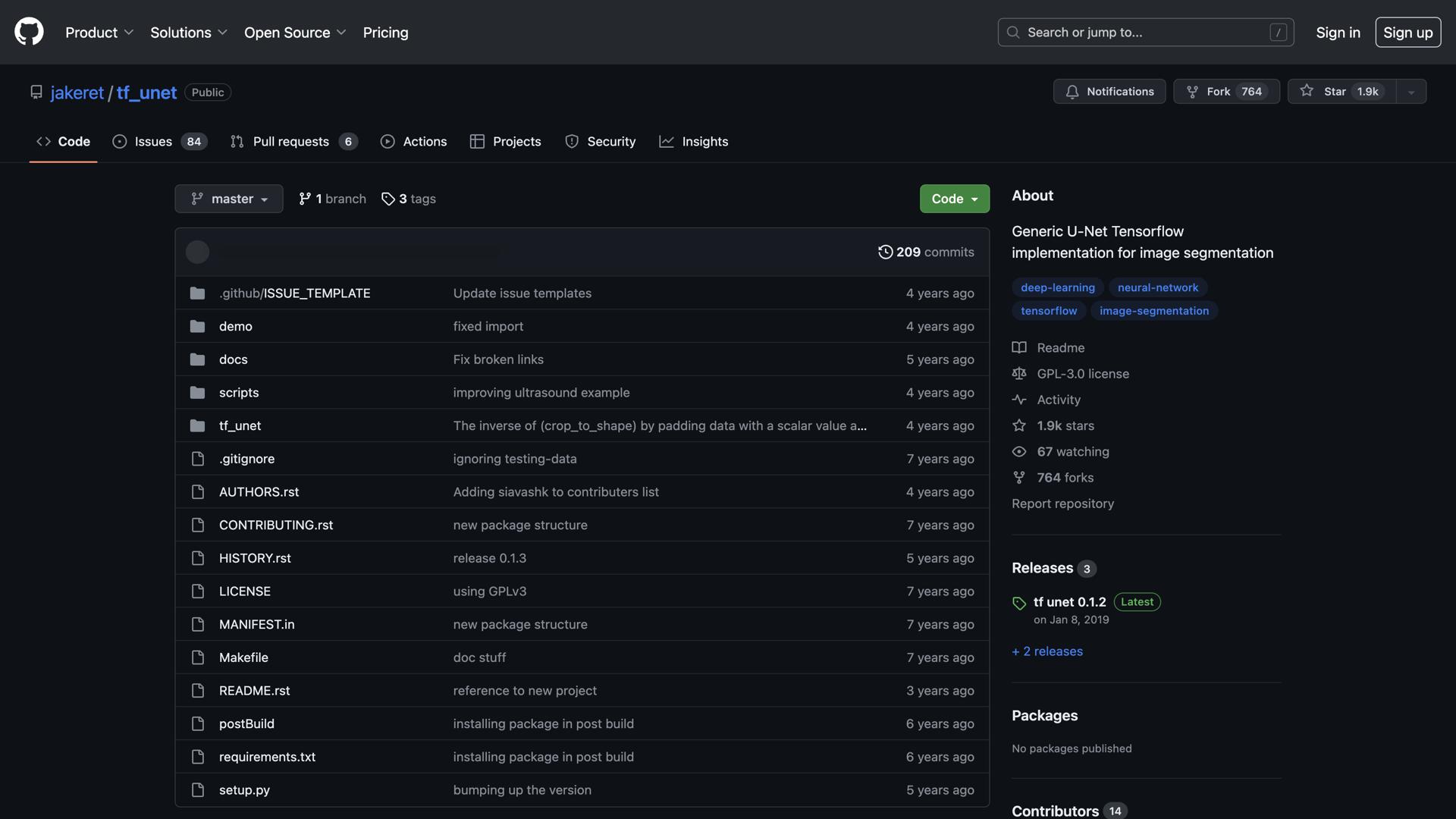
U-Net is an open source deep learning framework specifically designed for medical image segmentation. It provides a powerful, flexible, and user-friendly platform that enables healthcare professionals and researchers to perform accurate image analysis and segmentation tasks efficiently.
With U-Net, users can quickly and precisely segment medical images into different anatomical components with minimal effort. The framework excels at handling complex medical imaging modalities such as MRI scans, X-rays, CT scans, ultrasound images, and histopathology slides.
The user-friendly interface of U-Net makes it straightforward to get started with image segmentation projects. It includes a comprehensive built-in library of pre-trained models and an extensive suite of tools that allow users to easily customize and extend the segmentation process according to their specific requirements.
Additionally, U-Net demonstrates high adaptability and can be effectively applied across various domains beyond medical imaging, including satellite imagery analysis, autonomous driving applications, and scientific research.
U-Net is the ideal solution for medical professionals, clinical researchers, data scientists, and biomedical engineers who require a reliable, efficient, and accurate image segmentation tool for their diagnostic and analytical workflows.
Use Cases And Features
1. Medical Image Segmentation:
Quickly and accurately segment complex medical images including MRI scans, CT images, and X-rays to identify organs, tumors, and anatomical structures with high precision.
2. Customizable Segmentation Workflow:
Customize and extend the segmentation process using a comprehensive suite of advanced tools, allowing for fine-tuning of model parameters and architecture modifications.
3. Versatile Application Support:
Easily adaptable for a diverse range of applications extending from medical imaging and diagnostic radiology to satellite imagery analysis, environmental monitoring, and computer vision tasks.
4. Pre-trained Models Library:
Access to an extensive collection of pre-trained models that accelerate development time and improve segmentation accuracy across different imaging modalities.
5. Scalable Architecture:
Built on a robust deep learning architecture that can scale from small datasets to large-scale clinical studies while maintaining computational efficiency.