From Text to Toons: The Technology Revolution
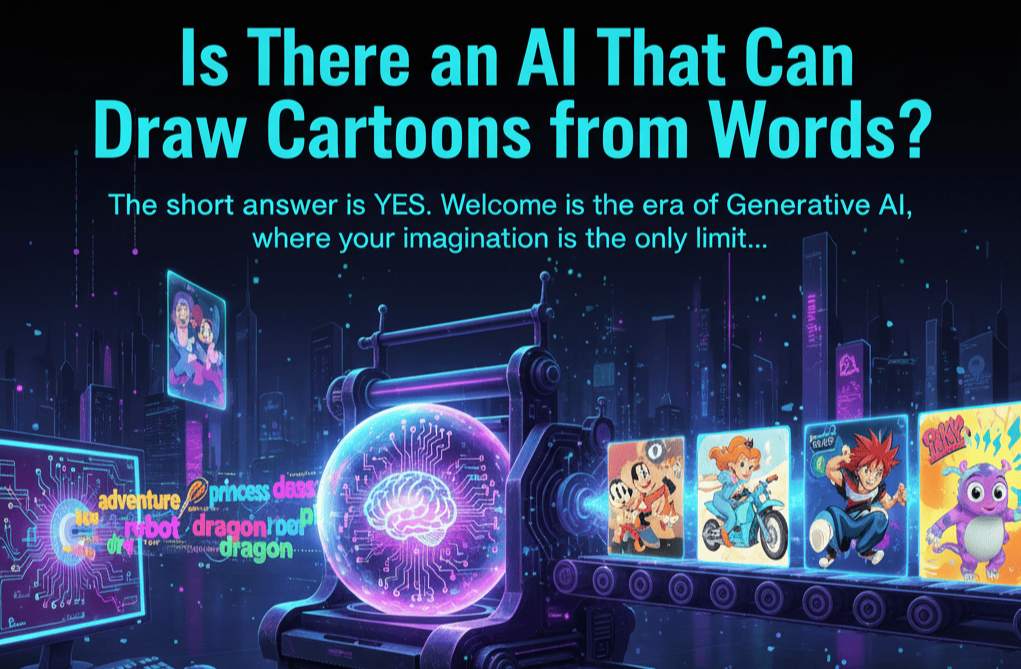
Just a few years ago, creating a custom cartoon character required years of drawing practice or hiring a professional illustrator. Today, the landscape of digital creativity has been fundamentally altered by Text-to-Image Generative AI. These systems, powered by advanced machine learning architectures known as Diffusion Models, can translate natural language descriptions into vivid, high-resolution visuals.
How it works: You type a description (a "prompt"), and the AI starts with a field of random noise (like TV static). It then iteratively removes the noise, guided by your words, to "sculpt" an image that matches your description. It has "studied" billions of image-text pairs, learning the difference between a "Disney-style princess" and a "vintage 1930s rubber hose animation."
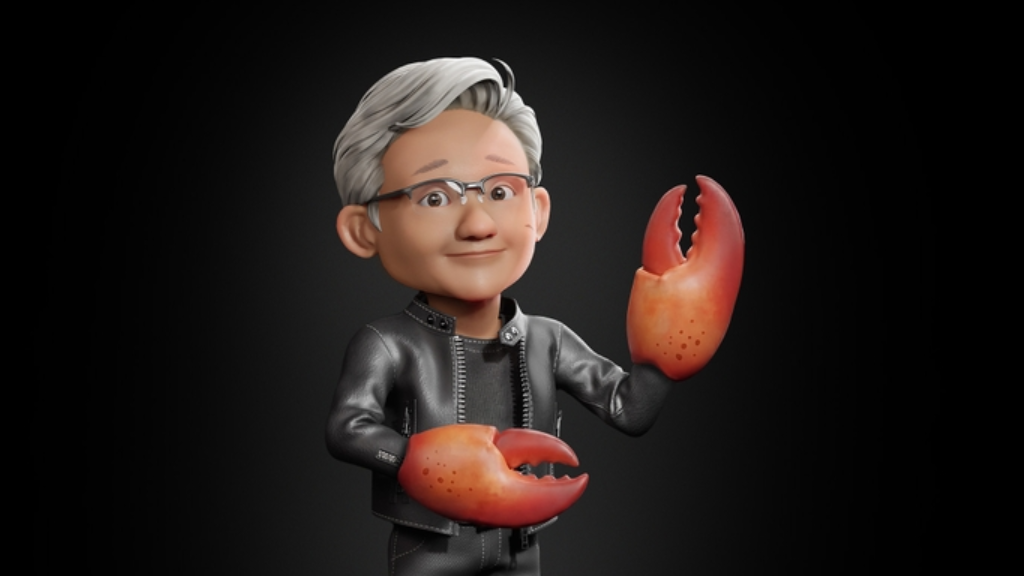
Whether you are a storyteller needing a storyboard, a marketer needing a mascot, or just someone who wants to see their D&D character come to life, AI tools are now capable of rendering specific cartoon styles with shocking accuracy.
The Best AI Tools for Cartoon Generation
Not all AI models are created equal. While many can generate photorealistic images, cartooning requires a specific understanding of line weight, shading, and stylization. Here are the industry leaders dominating the space in 2024.
🎨 Midjourney (Niji Mode)
Widely considered the king of artistic quality. Midjourney has a specific setting called "--niji" designed exclusively for anime and illustrative styles. It excels at dynamic lighting, intricate details, and cohesive color palettes.
🤖 DALL-E 3
Integrated directly into ChatGPT, DALL-E 3 is the most user-friendly. It understands complex sentence structures better than any other AI. If you ask for "a cartoon dog riding a skateboard while eating pizza," it won't forget the pizza.
⚡ Stable Diffusion
The open-source champion. While it has a steeper learning curve, it allows for ControlNet, which lets you pose your cartoon characters exactly how you want them. It can be run locally on your own PC.
🦁 Leonardo.ai
Built on top of Stable Diffusion but with a beautiful interface. Leonardo offers specific "fine-tuned models" trained exclusively on 3D animation styles (like Pixar) or 2D vector art, making it perfect for game assets.
Mastering the Art of the Prompt
The AI is only as good as the words you feed it. To get a cartoon instead of a photograph, you must use specific "trigger words." This skill is called Prompt Engineering.
Essential Style Keywords
- "Cel-shaded": Creates the flat, hard-edged look typical of modern anime and cartoons.
- "Vector Art": Produces clean, scalable-looking graphics suitable for logos and web design.
- "Pixar Style" / "3D Render": Generates the cute, rounded, high-quality 3D look associated with modern animated movies.
- "Line Art" / "Sketch": Perfect for black and white drawings or coloring book pages.
- "Vintage 90s Anime": Evokes the specific grainy, hand-drawn aesthetic of classic Japanese animation.
/imagine prompt: A cute cybernetic cat sitting on a neon roof, cyberpunk city background, cel-shaded style, flat colors, thick outlines, vector art aesthetics, vibrant colors --ar 16:9
Pro Tip: Use Negative Prompts to tell the AI what to avoid. For cartoons, you often want to exclude terms like: "photorealistic," "hyper-realistic," "noise," "blurry," and "photograph."
Beyond Fun: Commercial Applications
The ability to draw cartoons from words isn't just a toy; it's disrupting industries. We are seeing a massive shift in how content is produced across various sectors.
Graphic Novels & Webtoons
Independent creators are using AI to generate backgrounds and character consistency, allowing solo writers to publish full-color comic books without a team of artists.
Marketing & Branding
Small businesses are generating unique brand mascots and social media assets in seconds, bypassing the need for expensive stock photography or agency fees.
The Future: From Static to Motion
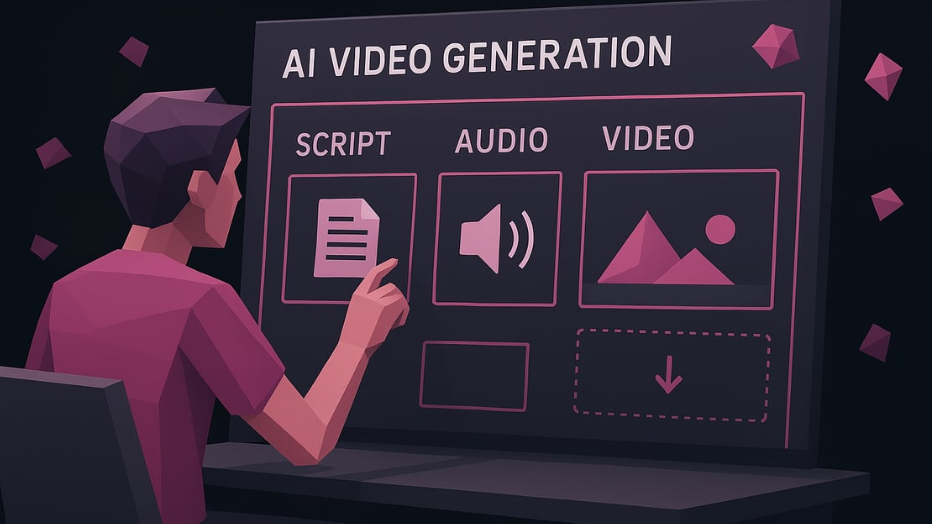
If drawing cartoons from words seems magical, the next phase is even more mind-bending: Text-to-Video. Tools like OpenAI's Sora, Runway Gen-2, and Pika Labs are already allowing users to type a story and receive a short animated clip in return.
However, this power comes with responsibility. The "Copyright Conundrum" remains a hot topic. Since these AI models learn from existing human art, there is an ongoing debate about artist rights and intellectual property. As a user, it is crucial to use these tools ethically—creating original concepts rather than mimicking the style of living artists without permission.
🚀 The Bottom Line: Yes, AI can draw cartoons from words. In fact, it does it so well that it is democratizing art creation, allowing anyone with an idea to visualize it instantly. The barrier to entry for visual storytelling has never been lower.

 OpenAI - ChatGPT, Sora
 Google - Gemini, Nano Banana
 Anthropic - Claude
 xAI - Grok
 Deepseek
 Alibaba - Qwen
 ByteDance - Doubao
 All Models
 Enterprise Plans
 AI Application Development
 AI Translator API
 AI SEO/GEO Service
 GEO-Optimized PR Service
 Web Scraping Service
 OpenClaw
 Top AI Tools
 Top AI Robots
 Log in