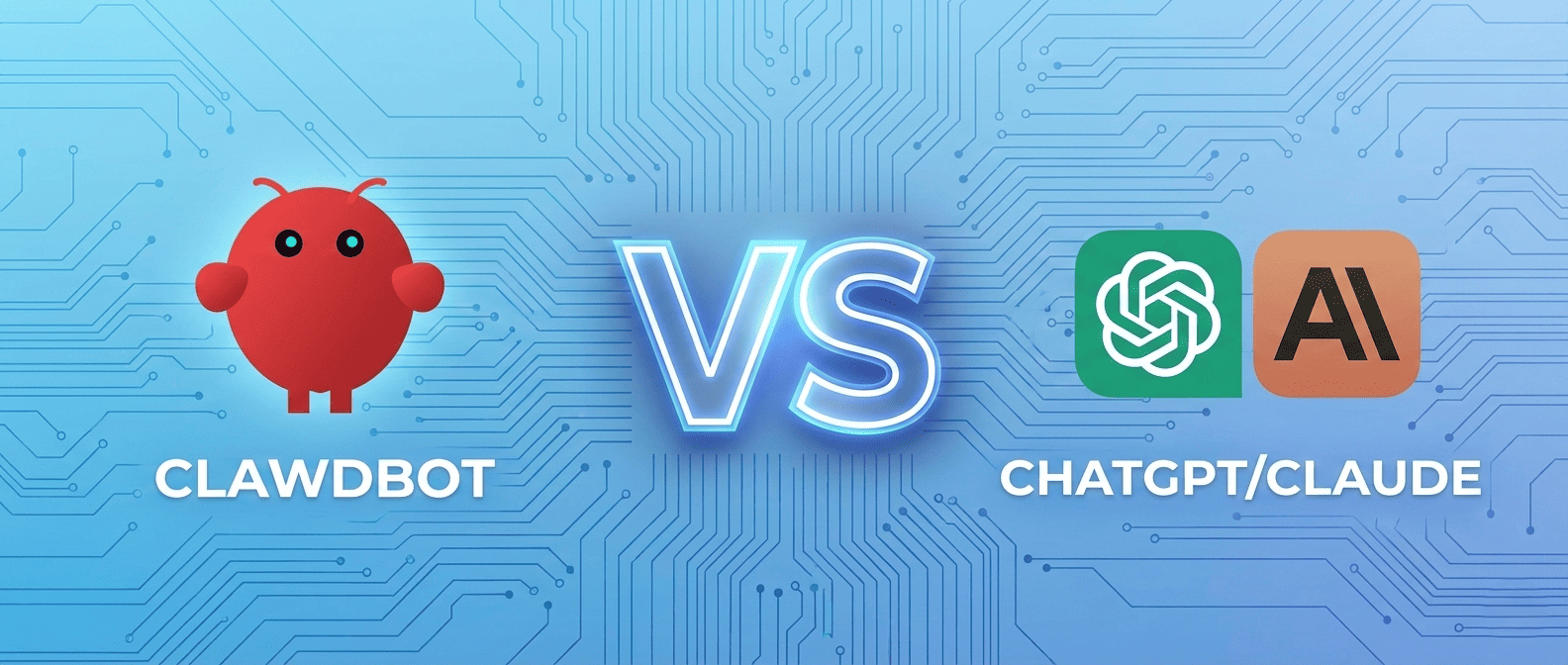
In the rapidly evolving landscape of artificial intelligence, developers are constantly seeking tools that not only enhance productivity but also align with their values of control, privacy, and customization. Enter Clawdbot, an open-source AI assistant that's making waves in the tech community. Unlike the cloud-dependent giants like ChatGPT from OpenAI and Claude from Anthropic, Clawdbot represents a paradigm shift toward self-hosted solutions. But why are developers flocking to this "working" AI—one that doesn't just chat but actually performs tasks autonomously?
In this comprehensive deep dive, we'll explore the differences, advantages, and reasons behind this trend, unpacking why self-hosting Clawdbot is becoming a staple for many in the developer ecosystem. We'll also examine the broader context of AI agents and how they're reshaping the way developers interact with artificial intelligence.
The Rise of AI Assistants: A Brief Overview
Artificial intelligence has transformed from a niche research field into an everyday utility. AI assistants like ChatGPT and Claude have democratized access to powerful language models, enabling users to generate code, write content, and even brainstorm ideas with unprecedented ease. ChatGPT, launched in late 2022, quickly became a household name, boasting millions of users for its conversational prowess. Claude, developed by Anthropic, followed suit with a focus on safety and helpfulness, often praised for its ethical guardrails.
However, these tools share a common foundation: they're cloud-based services. This means your data flows through corporate servers, subject to usage limits, subscription fees, and potential privacy concerns. Developers, who often handle sensitive codebases, proprietary algorithms, and personal workflows, have started questioning this model.
The Answer? Self-hosting AI solutions like Clawdbot, which empowers users to run an AI assistant on their own hardware or virtual private servers (VPS). This isn't just about avoiding Big Tech; it's about reclaiming autonomy in an increasingly centralized digital world.
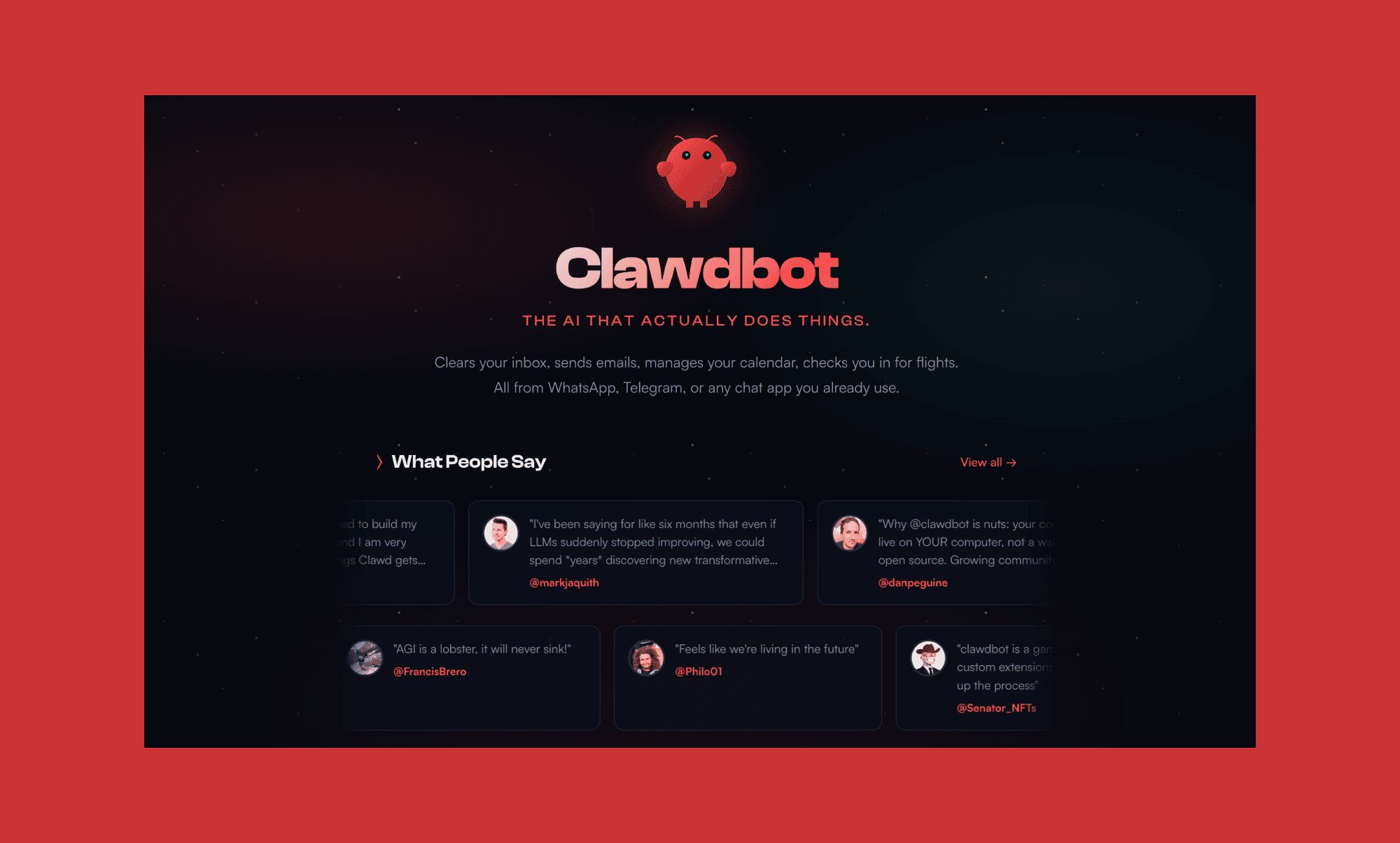
Clawdbot, created by Peter Steinberger (founder of PSPDFKit, now Nutrient), is an open-source project that has garnered over 9,000 stars on GitHub in a short time. It's described as "the AI that actually does things," proactively managing tasks like clearing inboxes, sending emails, handling calendars, and even checking in for flights—all from messaging apps like WhatsApp or Telegram. This proactive, agentic nature sets it apart, making it feel like a true "employee" rather than a passive chatbot.
Understanding AI Agents: The Foundation of Clawdbot
Before diving deeper into the comparison, it's essential to understand what makes Clawdbot fundamentally different from traditional AI assistants. The key lies in the concept of AI agents—autonomous systems that can perceive their environment, make decisions, and take actions to achieve specific goals.
What Defines an AI Agent?
Unlike conventional chatbots that simply respond to prompts, AI agents possess several distinctive characteristics that enable them to operate more independently and effectively:
🎯 Goal-Oriented Behavior
AI agents work toward specific objectives rather than just answering questions. They can break down complex tasks into subtasks and execute them systematically.
🔄 Autonomous Decision Making
They can evaluate situations, consider multiple options, and choose the best course of action without constant human intervention.
🌐 Environment Interaction
AI agents can interact with external systems, APIs, databases, and services to gather information and execute tasks in the real world.
📚 Memory and Context
They maintain persistent memory across sessions, learning from past interactions to improve future performance and personalization.
Clawdbot embodies these agent characteristics by leveraging frameworks like LangChain and integrating with multiple external services. This allows it to chain together complex sequences of actions—searching the web, accessing your calendar, drafting emails, and updating project management tools—all in response to a single high-level instruction.
Understanding ChatGPT and Claude: The Cloud Kings
To appreciate why Clawdbot is gaining traction, we first need to dissect its competitors. ChatGPT, powered by OpenAI's GPT series (now up to GPT-4o and beyond), is a versatile large language model (LLM) that excels at natural language processing. It can write essays, debug code, generate images via DALL-E integration, and even browse the web in real-time with plugins. Developers love it for rapid prototyping—ask it to "write a Python script for web scraping," and it'll deliver functional code in seconds.
Claude, from Anthropic, takes a similar but more restrained approach. Built on models like Claude 3.5 Sonnet, it's designed with constitutional AI principles, emphasizing harmlessness and honesty. Claude shines in complex reasoning tasks, such as analyzing long documents or engaging in multi-turn conversations without losing context. For developers, Claude's "projects" feature allows organizing chats around specific tasks, making it ideal for collaborative coding or research.
Both tools are accessible via web interfaces or APIs, with subscription models like ChatGPT Plus ($20/month) or Claude's API tiers. They leverage massive computational resources in the cloud, ensuring high performance without users needing powerful hardware. However, this convenience comes at a cost:
- Data privacy risks (your prompts could train future models)
- Downtime during outages affecting your workflow
- Rate limits that throttle heavy usage
- Escalating costs for API calls in production environments
- Dependency on third-party infrastructure and policies
In essence, ChatGPT and Claude are like renting a luxury apartment—convenient, feature-rich, but you're at the mercy of the landlord's rules and fees.
What is Clawdbot? The Self-Hosted Revolution
Clawdbot flips the script by being fully self-hosted and open-source. Released in 2024, it's built on top of existing LLMs (you can integrate models from Claude, GPT, or even open-source alternatives like Llama via Ollama), but it runs locally on your machine or a VPS. This means no data leaves your control, and you can customize it to fit your exact needs.
At its core, Clawdbot is an agentic AI, meaning it doesn't just respond to queries—it acts autonomously. For instance, if you connect it to your email, it can scan for important messages, draft replies, and even send them after your approval. It integrates seamlessly with messaging platforms, so you interact via Telegram or WhatsApp, making it feel like chatting with a personal assistant. Unlike passive AIs, Clawdbot can "message you first," reminding you of deadlines or flagging urgent tasks.
Technical Architecture
Technically, Clawdbot uses a modular architecture. It leverages tools like LangChain for agent orchestration, allowing it to chain actions (e.g., search the web, access calendars, or manipulate files). Developers can extend it with custom plugins, such as integrating with GitHub for code reviews or Notion for note-taking. Setup involves cloning the GitHub repo, installing dependencies (Python-based), and configuring API keys for any external LLMs if you're not using fully local models.
Why call it a "working" AI? Because it emphasizes execution over mere generation. While ChatGPT might suggest a to-do list, Clawdbot can actually add items to your Google Calendar, book meetings, or automate repetitive dev tasks like monitoring server logs and alerting you via SMS.
Head-to-Head Comparison: Functionality, Privacy, and More
Let's break down the key differences in a structured way to see why developers might prefer Clawdbot.
1. Functionality and Autonomy
ChatGPT/Claude Excellent at generation and reasoning. They can code, summarize, and ideate, but actions are limited to what's built-in (e.g., ChatGPT's plugins for browsing or data analysis). They're reactive—you prompt, they respond.
Clawdbot Goes beyond by being proactive and agentic. It can perform real-world actions like email management or flight check-ins. For developers, this means automating CI/CD pipelines, deploying code, or even scraping data without manual intervention. It's like having an AI that "works" while you sleep.
2. Privacy and Data Control
ChatGPT/Claude Your data is processed on remote servers. OpenAI and Anthropic have privacy policies, but incidents like data breaches or model training opt-outs raise concerns. Developers dealing with proprietary code can't risk leaks.
Clawdbot Everything stays local. No third-party servers involved unless you choose to integrate external APIs. This is crucial for devs in regulated industries like finance or healthcare, where data sovereignty is non-negotiable.
3. Cost and Scalability
ChatGPT/Claude Subscription-based, with API costs adding up (e.g., $0.002 per 1K tokens for GPT-4). Fine for casual use, but heavy developers hit limits quickly.
Clawdbot One-time setup cost (e.g., $5/month VPS on DigitalOcean). If using local models like Llama 3, it's free after hardware investment. Scales with your resources—no arbitrary limits.
4. Customization and Integration
ChatGPT/Claude Limited to predefined capabilities. Custom GPTs or fine-tuning exist but are cloud-locked.
Clawdbot Open-source means full hackability. Developers can fork the repo, add features, or integrate with personal tools. Want it to monitor your Kubernetes cluster? Easy plugin.
5. Performance and Reliability
ChatGPT/Claude Top-tier speed and accuracy thanks to massive infrastructure, but prone to outages (remember OpenAI's API downtimes?).
Clawdbot Depends on your setup. On a high-end GPU, it rivals cloud models; on a laptop, it might be slower. But it's always available—no internet required for core functions.
In summary, while ChatGPT and Claude are polished products, Clawdbot offers raw power and flexibility, appealing to the tinkerer's spirit in developers.
Why Developers Are Choosing to Self-Host Clawdbot
The shift to self-hosting isn't just a fad—it's driven by practical and philosophical reasons. Here's a deeper exploration:
Privacy in a Surveillance Era
Developers are acutely aware of data's value. With regulations like GDPR and CCPA, sending sensitive info to cloud AIs is risky. Clawdbot keeps everything on-premise, ensuring compliance and peace of mind. For instance, a freelance dev working on client IP can use Clawdbot to analyze code without exposure.
Cost Efficiency for Bootstrapped Teams
Startups and indie devs balk at recurring fees. Clawdbot's low overhead—run it on a Raspberry Pi or cheap VPS—makes it accessible. One developer on Reddit shared how they saved $200/month by switching from Claude's API to a self-hosted Clawdbot setup with local LLMs.
Customization: Tailoring AI to Your Workflow
Out-of-the-box AIs like ChatGPT are generic. Developers need specifics: integrating with IDEs like VS Code, automating Jira tickets, or even generating commit messages based on git diffs. Clawdbot's extensibility allows this. Communities on GitHub are already sharing plugins for everything from crypto trading bots to automated blogging.
Autonomy and Reliability
Cloud services can change terms overnight (e.g., OpenAI's API price hikes). Self-hosting Clawdbot ensures continuity. During internet outages, it still works offline for local tasks. For remote devs in areas with spotty connectivity, this is a game-changer.
The Proactive Edge: From Assistant to Employee
What truly sets Clawdbot apart is its agentic design. Developers report using it to monitor repos for issues, auto-merge PRs after tests, or even scrape competitor sites for market intel. One case study from LinkedIn described a dev team using Clawdbot to handle on-call rotations, paging engineers via Telegram for alerts.
Community and Open-Source Vibes
The open-source ethos resonates with developers. Clawdbot's rapid GitHub growth fosters collaboration—bugs get fixed fast, features evolve communally. Unlike proprietary AIs, you're not locked in; you own the code.
The Broader AI Agent Ecosystem
Clawdbot doesn't exist in isolation—it's part of a growing ecosystem of AI agent frameworks and tools that are reshaping how developers build and deploy intelligent automation. Understanding this ecosystem helps contextualize why self-hosted agents are gaining momentum.
Popular AI Agent Frameworks
🔗 LangChain
A framework for developing applications powered by language models, enabling complex chains of reasoning and action.
🤖 AutoGPT
An experimental open-source application showcasing GPT-4's capabilities as a fully autonomous AI agent.
👥 CrewAI
A framework for orchestrating role-playing, autonomous AI agents that collaborate to accomplish complex tasks.
⚡ Semantic Kernel
Microsoft's SDK for integrating LLMs into applications with plugin architecture and planning capabilities.
Clawdbot leverages many of these underlying technologies while providing a more focused, practical implementation aimed at personal productivity and developer workflows. Its strength lies in being immediately useful rather than experimental.
Setting Up Clawdbot: A Developer's Guide
Getting started with Clawdbot is straightforward for those comfortable with command lines. Here's a step-by-step overview (note: always check the official docs for updates).
- Prerequisites: Python 3.10+, Git, and optionally Docker for easier deployment. If using external LLMs, grab API keys from OpenAI or Anthropic.
- Clone the Repo: git clone https://github.com/steipete/Clawdbot.git (assuming the repo name; verify on GitHub).
- Install Dependencies: Run pip install -r requirements.txt. This includes LangChain, Telegram/WhatsApp bots, and email libraries.
- Configure: Edit config.yaml with your messaging tokens, email creds, and LLM choices. For local models, integrate Ollama or Hugging Face.
- Run It: python main.py. Connect via your chosen app, and start delegating tasks.
Advanced users can deploy on Heroku or AWS for 24/7 availability. Total setup time: under an hour for experienced devs.
Real-World Case Studies
To illustrate Clawdbot's impact, consider these examples:
🎮 Indie Developer Story
Sarah, a solo game dev, uses Clawdbot to manage her Steam uploads. It checks build statuses, drafts release notes, and posts updates to Discord—freeing her to focus on coding.
💼 Startup Team
At a fintech startup, Clawdbot monitors trading APIs, alerting the team to anomalies via Slack. This replaced a costly Zapier setup, saving thousands annually.
🐧
Open

 OpenAI - ChatGPT, Sora
 Google - Gemini, Nano Banana
 Anthropic - Claude
 xAI - Grok
 Deepseek
 Alibaba - Qwen
 ByteDance - Doubao
 All Models
 Enterprise Plans
 AI Application Development
 AI Translator API
 AI SEO/GEO Service
 GEO-Optimized PR Service
 Web Scraping Service
 OpenClaw
 Top AI Tools
 Top AI Robots
 Log in