
 OpenAI - ChatGPT, Sora
 Google - Gemini, Nano Banana
 Anthropic - Claude
 xAI - Grok
 Deepseek
 Alibaba - Qwen
 ByteDance - Doubao
 All Models
 Enterprise Plans
 AI Application Development
 AI Translator API
 AI SEO/GEO Service
 GEO-Optimized PR Service
 Web Scraping Service
 OpenClaw
 Top AI Tools
 Top AI Robots
 Log in











Why Google's Course Is Still the Gold Standard in 2026
Google's AI experts and DeepMind built this self-paced program on Coursera and Google Skills Boost. It's free to audit, takes under 10 hours total, and ends with a shareable certificate.
The secret sauce? A repeatable 5-step loop that turns vague questions into precise, high-quality outputs every single time.
Google's Official 5-Step Prompting Framework
This is the core of the entire course. Memorize these five words and you've already graduated.
- Task — Clearly describe what you want, and specify a persona and format.
- Context — Provide all necessary background so the model understands the situation.
- References — Add examples, data, or documents for the AI to draw from.
- Evaluate — Assess the output to determine if it actually helps you.
- Iterate — Refine with one clear follow-up instruction until it's just right.

Good Prompt vs. Bad Prompt — Real Examples
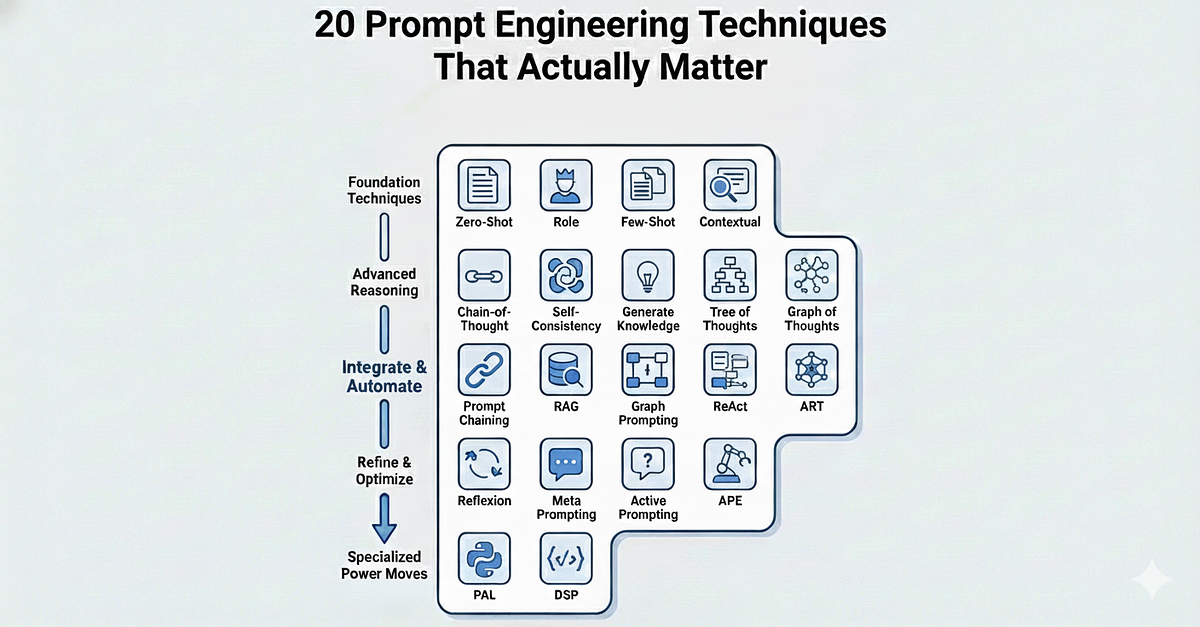
Advanced Techniques from the Later Modules
Google doesn't stop at the basics. The course dives deep into techniques that compound your results:
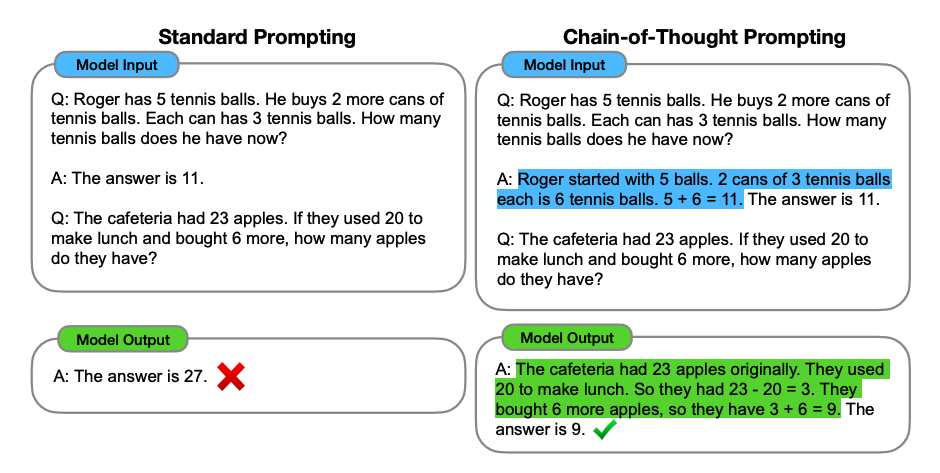
- Chain-of-Thought (CoT) — Force the AI to "think step by step" for complex reasoning tasks.
- Prompt Chaining — Break large tasks into smaller, sequentially linked prompts.
- Meta-Prompting — Ask the AI to write or improve your prompt for you.
- AI Agents — Turn one prompt into a mini-team of specialized personas working in parallel.
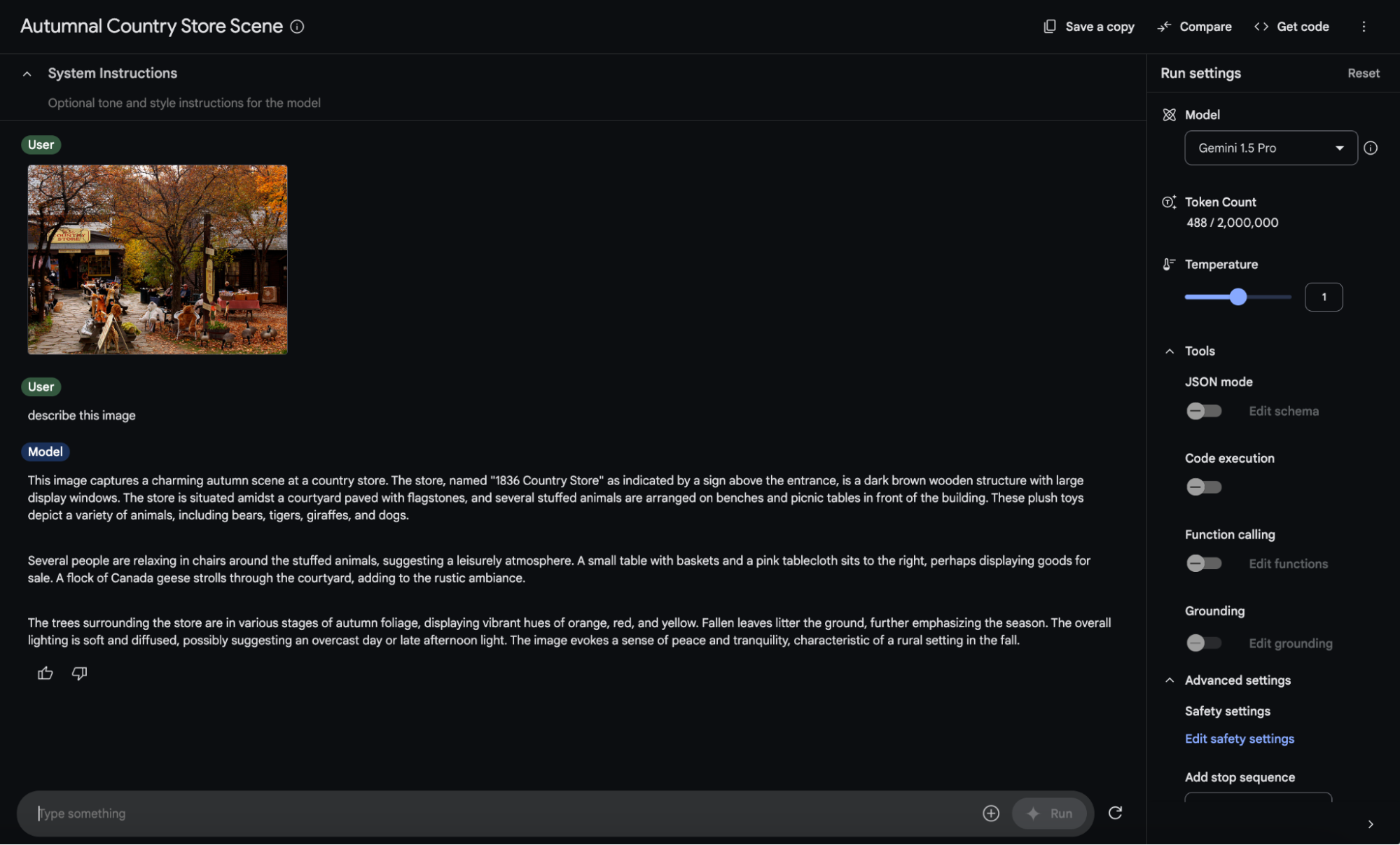
- Multimodal Prompting — Upload images, PDFs, or charts and instruct Gemini to analyze them.
Pro Tips Straight from Google's Experts
- Always assign a persona — "You are a world-class copywriter…"
- Specify format upfront — "Output as a table with columns: Task, Deadline, Owner"
- Add constraints — "Use only 2026 data" or "Maximum 200 words"
- Use few-shot examples when you want a specific style replicated consistently
- Never stop at the first output — always iterate at least once
Ready to Get the Official Google Certificate?
The full Google Prompting Essentials Specialization is free to start on Coursera and Google Skills Boost. Finish the hands-on exercises, build your personal prompt library, and add the certificate to your LinkedIn or résumé.

Frequently Asked Questions
Is Google's Prompting Essentials course really 6 hours?
The core path is around 4–6 hours; the full specialization takes under 10. Most people finish the essentials in one focused weekend.
Is the course free?
Yes — audit for free on Coursera or Google Skills Boost. The certificate is also free in most regions.
Does the T-C-R-E-I framework work with ChatGPT and Claude?
Absolutely. The 5 steps are entirely model-agnostic and become even more powerful when combined with Gemini's multimodal features.
What's the best way to practice?
Build a personal prompt library in Google Docs or Notion using the T-C-R-E-I template. Test one new technique every day and track what works.