
 OpenAI - ChatGPT, Sora
 Google - Gemini, Nano Banana
 Anthropic - Claude
 xAI - Grok
 Deepseek
 Alibaba - Qwen
 ByteDance - Doubao
 All Models
 Enterprise Plans
 AI Application Development
 AI Translator API
 AI SEO/GEO Service
 GEO-Optimized PR Service
 Web Scraping Service
 OpenClaw
 Top AI Tools
 Top AI Robots
 Log in








AI Agent Governance Best Practices and Challenges in 2026

AI systems are evolving beyond simple response mechanisms. Across numerous organizations, AI agents are now being tested to plan tasks, make decisions, and execute actions with minimal human intervention. The focus has shifted from whether a model provides accurate answers to understanding the implications when that model is empowered to act autonomously.
Autonomous systems require clearly defined boundaries. They need comprehensive rules that specify access permissions, allowable actions, and mechanisms for tracking their operations. Without these controls, even well-trained systems can generate problems that are difficult to detect or reverse.
One company addressing this challenge is Deloitte. The firm has been developing governance frameworks and advisory approaches to help organizations manage AI systems effectively.
From Tools to AI Agents
Most AI systems currently deployed still depend on human prompts. They generate text, analyze data, or make predictions, but a person typically decides the next steps. Agentic AI fundamentally changes this pattern. These systems can decompose goals into actionable steps, select appropriate actions, and interact with other systems to complete tasks independently.
This increased autonomy introduces new challenges. When a system acts independently, it may follow unexpected paths or utilize data in unintended ways.
Deloitte's work concentrates on helping organizations prepare for these risks. Rather than treating AI as an isolated tool, the firm examines how it integrates into business processes, including decision-making frameworks and data flow patterns.
Building Governance Into the Lifecycle
Governance should not be an afterthought following deployment. It must be integrated throughout the entire lifecycle of an AI system.
This begins at the design stage. Organizations need to define system permissions and limitations. This may include establishing rules around data usage and outlining how the system should respond in uncertain situations.
The next phase is deployment. At this point, governance focuses on access control and system connectivity, including user permissions and integration points. Once the system is operational, monitoring becomes the primary concern. Autonomous systems can evolve over time as they interact with new data. Without regular audits, they may drift from their original purpose.
The Role of Transparency and Accountability
As AI systems assume greater responsibility, tracing decision-making processes becomes increasingly complex. This creates demand for enhanced transparency. Deloitte's work emphasizes the importance of tracking system operations, including logging actions and documenting decisions. These records help organizations determine what occurred if issues arise. When an autonomous system takes action, there must be clarity regarding accountability.
📊 Key Statistics: Research from Deloitte reveals that AI agent adoption is outpacing the development of necessary controls. Approximately 23% of companies already deploy them, with projections indicating this figure will reach 74% within two years. However, only 21% report having robust safeguards in place to oversee their behavior.
Real-Time Oversight for AI Agents
Once an autonomous system is activated, attention shifts to its behavior in real-world conditions. Static rules are insufficient, and systems require continuous observation during operation.
Deloitte's approach incorporates real-time monitoring, enabling organizations to track AI system activities as tasks are performed. If the system exhibits unexpected behavior, teams can intervene quickly. This may involve pausing specific actions or adjusting permissions. Real-time oversight also supports compliance requirements. In regulated industries, companies must demonstrate that systems adhere to applicable rules and standards.
In practice, these controls are emerging in operational environments. Deloitte describes scenarios where AI systems monitor equipment performance across multiple sites. Sensor data can indicate early failure signs, triggering maintenance workflows and updating internal systems. Governance frameworks define permissible actions, when human approval is required, and how decisions are recorded. The process spans multiple systems, but from a user perspective, it appears as a unified action.
Industry Events and Ongoing Discussions
Governance is a central topic at AI & Big Data Expo North America 2026, scheduled for May 18–19 in Santa Clara, California. Deloitte is listed as a Diamond Sponsor for the event, positioning it among the firms contributing to conversations around how autonomous systems are deployed and controlled in practice.
The challenge extends beyond building smarter systems—it's about ensuring they behave in ways organizations can understand, manage, and trust over time.
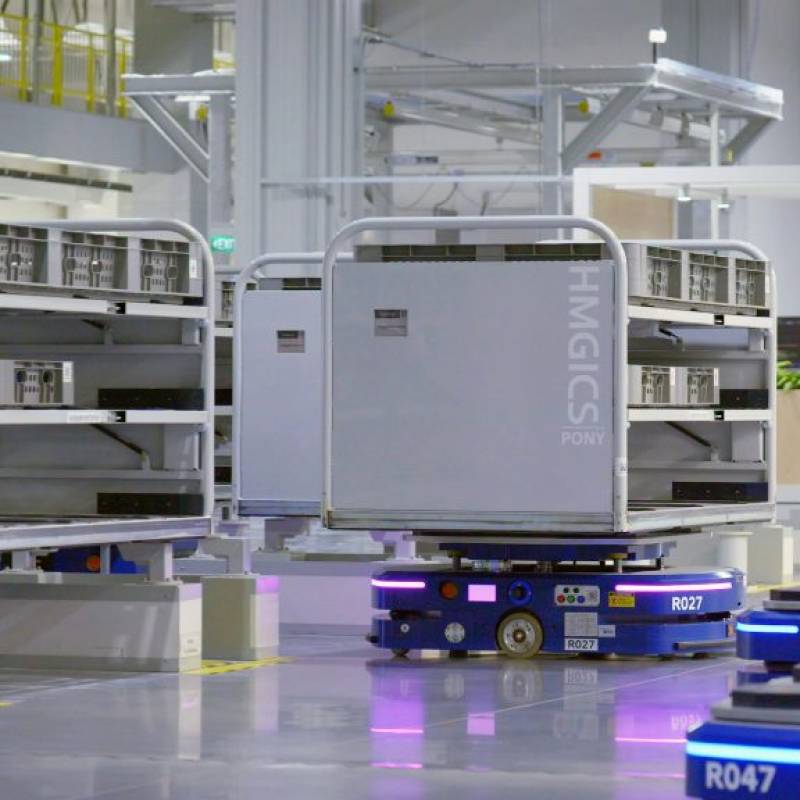
(Photo by Roman)
🔗 Related: Autonomous AI systems depend on data governance
Want to learn more about AI and big data from industry leaders?
Check out AI & Big Data Expo taking place in Amsterdam, California, and London. The comprehensive event is part of TechEx and is co-located with other leading technology events including the Cyber Security & Cloud Expo. Click here for more information.
AI News is powered by TechForge Media. Explore other upcoming enterprise technology events and webinars here.