
 Enterprise Plans
 AI Application Development
 AI Translator API
 AI SEO/GEO Service
 GEO-Optimized PR Service
 Web Scraping Service
 Log in




AI Drives US GDP Surge in 2025 as MiniMax IPO Soars
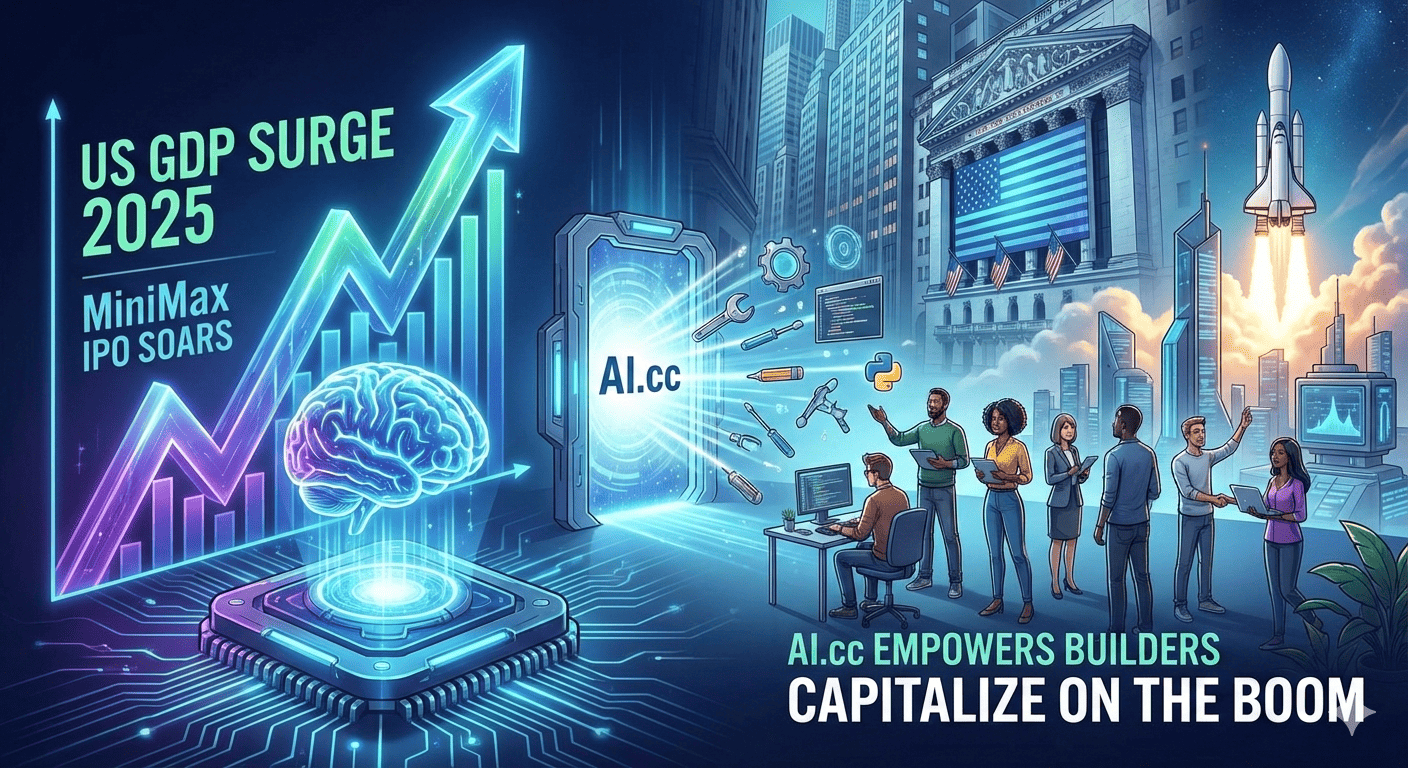
The AI Economic Engine: 2025 GDP Analysis
January 9, 2026 – The narrative of the global economy has fundamentally shifted. Artificial intelligence has transitioned from a speculative technology sector into the dominant engine of U.S. economic growth. Economists analyzing the fiscal landscape of 2025 have reached a consensus: without the unprecedented surge in AI-related capital expenditures, the U.S. economy would have faced stagnation.
Detailed analyses from Harvard and the Federal Reserve indicate that AI capital expenditures—specifically focused on data centers, next-gen semiconductors, and advanced reasoning software—contributed approximately 1.1 percentage points to real GDP growth in the first half of the year. This is not merely a sector boom; it is a structural transformation. In specific quarters, AI investment accounted for over 90% of total growth when adjusted for net imports.
Jason Furman, a prominent economist at Harvard, highlighted the stark reality: absent this technological injection, underlying U.S. growth would have hovered near a perilous 0.1%. Traditional pillars such as manufacturing and residential real estate remained flat, constrained by persistent interest rates and geopolitical friction. AI has become the singular bright spot, effectively carrying the broader economy on its digital shoulders.
By The Numbers: 2025
- $168 Billion: Venture funding secured by AI startups (46% YoY increase).
- $300 Billion+: CapEx by the "Magnificent Seven" (Microsoft, AWS, Google, Meta, etc.).
- 1.5% Boost: Projected annual GDP addition by Generative AI through 2035 (McKinsey).
- 90% Dominance: AI's share of US growth in key quarters of 2025.
The scale of this investment has created a ripple effect. The $300 billion poured into infrastructure by hyperscalers has revitalized the energy sector, demanded new construction for gigawatt-scale data centers, and spurred a renaissance in domestic equipment manufacturing. Long-term projections from the OECD and Goldman Sachs suggest this is just the beginning, with generative AI poised to automate complex cognitive tasks across healthcare, finance, and logistics, potentially doubling productivity growth rates over the next decade.
Global Momentum: The MiniMax IPO & The Model Wars
The AI boom is not confined to Silicon Valley. The global appetite for foundational models was validated today by the blockbuster listing of Chinese AI unicorn MiniMax on the Hong Kong Stock Exchange.
Founded by veterans from SenseTime and backed by giants like Alibaba and Tencent, MiniMax raised $619 million at a valuation of $6.5 billion. The market's reaction was electric, with shares surging 54% in early trading. This enthusiasm signals a critical shift in investor sentiment: the market is now rewarding companies that can demonstrate multimodal dominance. MiniMax’s flagship platform, Hailuo AI, is not just a text generator; it competes directly with OpenAI’s Sora and Google’s Veo in high-fidelity video generation, a frontier considered the "holy grail" of generative media.
The IPO Pipeline: What's Next?
MiniMax's success opens the floodgates. We are witnessing a maturing of the AI asset class.
Zhipu AI, Moonshot AI, and Baichuan are now rumored to be accelerating their own IPO timelines, capitalizing on the liquidity event established by MiniMax.
Databricks, CoreWeave, Scale AI, and Anthropic are expected to file in 2026–2027. These listings could unlock tens of billions in fresh capital for R&D.
Beyond models, companies focusing on inference optimization and specialized hardware are becoming prime acquisition targets.
The "Fragmented Stack" Problem
While the macroeconomics are bullish, the reality for builders on the ground is chaotic. AI is transitioning from experimental tech to core infrastructure, but the barriers to entry remain prohibitively high.
Vendor Fragmentation
Developers are forced to manage dozens of API keys, conflicting documentation, and incompatible data formats across OpenAI, Anthropic, Google, and open-source models.
Cost Volatility
Token pricing fluctuates wildly. Without intelligent routing, enterprises overpay by 20-50% for simple tasks that could be handled by smaller, cheaper models.
Visibility Crisis
Traditional SEO is dying. As users turn to AI for answers ("Answer Engines"), brands are disappearing from view because they haven't optimized for LLM training data.
How AI.cc Empowers Builders to Capitalize on the Boom
This is where AI.cc emerges as the indispensable middleware layer for the AI economy. It provides a comprehensive mid-stack solution that dramatically lowers the cost and complexity of building production-grade AI products.
1. One API: The Universal Aggregation Layer
At the foundation of AI.cc’s offering is the One API. It delivers unified, OpenAI-compatible access to more than 300 leading models.
The Technical Advantage:
- Unified Protocol: Access GPT-4, Claude 3.5, Gemini Pro, Llama 3, and DeepSeek via a single endpoint (https://api.ai.cc).
- Zero Lock-in: Switch models instantly via code parameters, not infrastructure refactoring.
- Intelligent Routing: Automatically route queries to the cheapest or fastest model capable of handling the specific prompt.
- Enterprise Scale: Serverless architecture supporting virtually unlimited TPM (Tokens Per Minute) with sub-100ms latency.
const response = await ai.chat.completions.create({
model: "claude-3-5-sonnet", // or "gpt-4o"
messages: [{ role: "user", content: "Analyze Q1 GDP." }],
temperature: 0.7
});
By aggregating volume, AI.cc achieves 20–80% cost reductions compared to direct provider billing, passing these savings to developers.
2. GEO: Generative Engine Optimization
As Google Search yields ground to ChatGPT and Perplexity, "being found" requires a new strategy. AI.cc’s pioneering GEO Suite is the industry's first toolset designed to optimize brand visibility within LLM responses.
GEO employs proprietary "mystery shopper" agents that probe major LLMs across thousands of prompts to generate visibility scores. It provides actionable recommendations on RAG-friendly content structuring, semantic density, and schema markup. Early clients have reported brand mention increases of up to 340% in AI-generated answers, directly translating to traffic in the new "Answer Engine" economy.
3. Edge AI Hardware
Through its division Shenzhen AICC Technology, the platform bridges digital intelligence with physical reality. Flagship products include:
- Translation Earbuds: Real-time support for 60+ languages.
- Edge AI Boxes: Optimized for digital human livestreaming and local OCR.
- AR Glasses: 5G-enabled industrial collaboration tools.
"Let AI Land with Human Being" — bringing computation from the cloud to the device.
4. AICCTOKEN (DePIN)
To address the global GPU shortage, AI.cc launched AICCTOKEN on BNB Chain and Solana.
This Decentralized Physical Infrastructure Network (DePIN) tokenizes idle global compute resources. It creates a peer-to-peer marketplace where developers can rent high-performance GPUs at a fraction of AWS or Azure prices, democratizing access to the compute power needed to train and fine-tune models.
The Window of Opportunity is Open
As AI propels GDP growth and reshapes global economies, the divide between those who leverage AI infrastructure and those who don't is widening. Whether you are a startup founder looking to emulate the success of MiniMax, or an enterprise seeking to optimize your AI supply chain, the tools you choose today will define your velocity tomorrow.
Ready to build the future?
Start building today with a free trial of AI.cc’s One API. Access the world's best models through a single interface.
Get Your API Key Now →
Join thousands of developers revolutionizing the industry.