
 OpenAI - ChatGPT, Sora
 Google - Gemini, Nano Banana
 Anthropic - Claude
 xAI - Grok
 Deepseek
 Alibaba - Qwen
 ByteDance - Doubao
 All Models
 Enterprise Plans
 AI Application Development
 AI Translator API
 AI SEO/GEO Service
 GEO-Optimized PR Service
 Web Scraping Service
 OpenClaw
 Top AI Tools
 Top AI Robots
 Log in







Bosch’s €2.9 Billion AI Bet: Redefining Manufacturing in the Age of Physical AI

The modern factory is a paradox of information: it is drowning in data yet starving for wisdom. Every day, gigabytes of telemetry flow from robotic arms, conveyor belts, and thermal sensors, yet the vast majority of this "dark data" remains unanalyzed, leaving critical insights about efficiency and failure rates locked away in silence.
This disconnect between data generation and actionable intelligence is the primary driver behind a seismic shift in industrial strategy. Bosch, the German engineering titan synonymous with manufacturing excellence, has announced a massive €2.9 billion investment plan for Artificial Intelligence by 2027. As reported by The Wall Street Journal, this capital injection is not merely for R&D experiments; it is a strategic pivot to embed "Physical AI" into the very nervous system of global manufacturing.
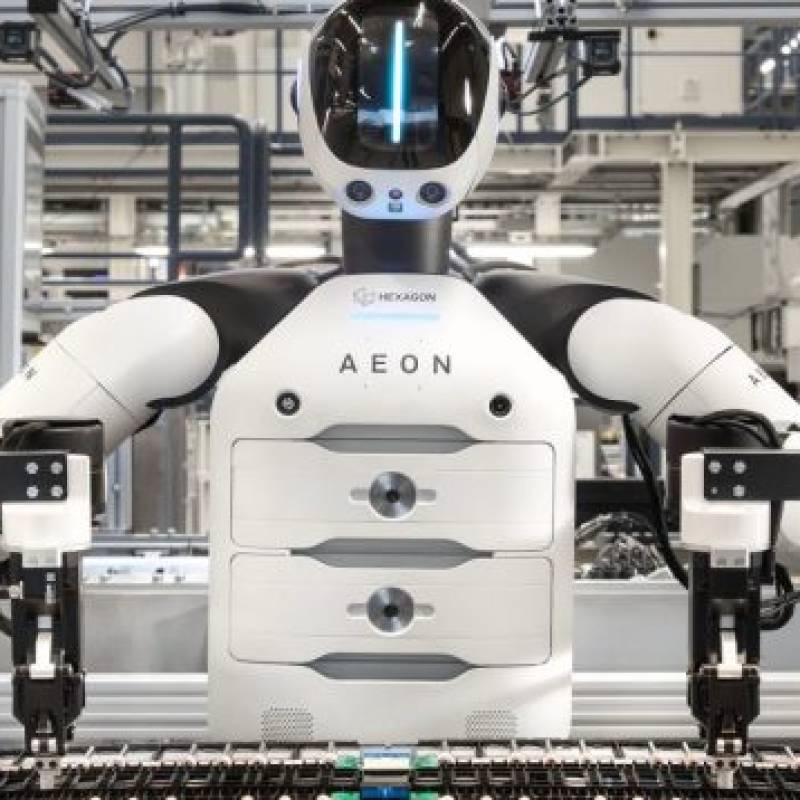
This move signals a broader industry trend where the focus is shifting from simple automation—robots doing the same thing repeatedly—to autonomy, where machines perceive, think, and adapt to changing conditions in real-time.
The Three Pillars of Bosch’s AI Strategy
Bosch's investment is targeting the intersection of hardware and software. It is not enough to have smart algorithms; they must live close to the machines they control. The strategy focuses on three critical domains: Manufacturing Operations, Supply Chain Resilience, and Perception Systems.
Computer Vision & Quality
Moving beyond simple optical sensors to deep learning models that can identify microscopic defects in real-time, reducing scrap rates and preventing faulty products from ever leaving the line.
Predictive Maintenance
Transitioning from "fix it when it breaks" to "fix it before it fails." AI analyzes vibration and thermal patterns to predict component fatigue weeks in advance.
Adaptive Supply Chain
Using AI to forecast demand fluctuations and route materials dynamically, insulating production from global logistics shocks and raw material shortages.
From "End-of-Line" to "In-Line" Intelligence
In traditional manufacturing, quality control (QC) often happens at the end of the line. If a defect is found, the product is scrapped, and the materials, energy, and labor used to create it are wasted. Worse, if the defect was caused by a drifting machine setting, hundreds of units might be flawed before anyone notices.
Bosch is deploying Generative AI and Computer Vision to shift QC upstream. By placing smart cameras at every stage of assembly, the system acts as a "digital inspector" that never blinks.
This capability is crucial for high-value manufacturing like semiconductors and automotive electronics, where precision is measured in nanometers. The AI doesn't just say "fail"; it identifies why the failure occurred—be it a temperature spike, a worn tool, or a raw material inconsistency—closing the loop between detection and correction.
The End of Unplanned Downtime
Unplanned downtime is the silent killer of manufacturing profitability. It costs the industrial sector an estimated $50 billion annually. Traditional maintenance is either reactive (fixing broken machines) or preventive (replacing parts on a schedule, often unnecessarily). Both are inefficient.
Bosch’s investment leans heavily into Predictive Maintenance powered by Industrial IoT (IIoT). By training machine learning models on historical failure data, sensors can detect the "acoustic signature" of a failing bearing or the thermal anomaly of an overheating motor long before it seizes up.
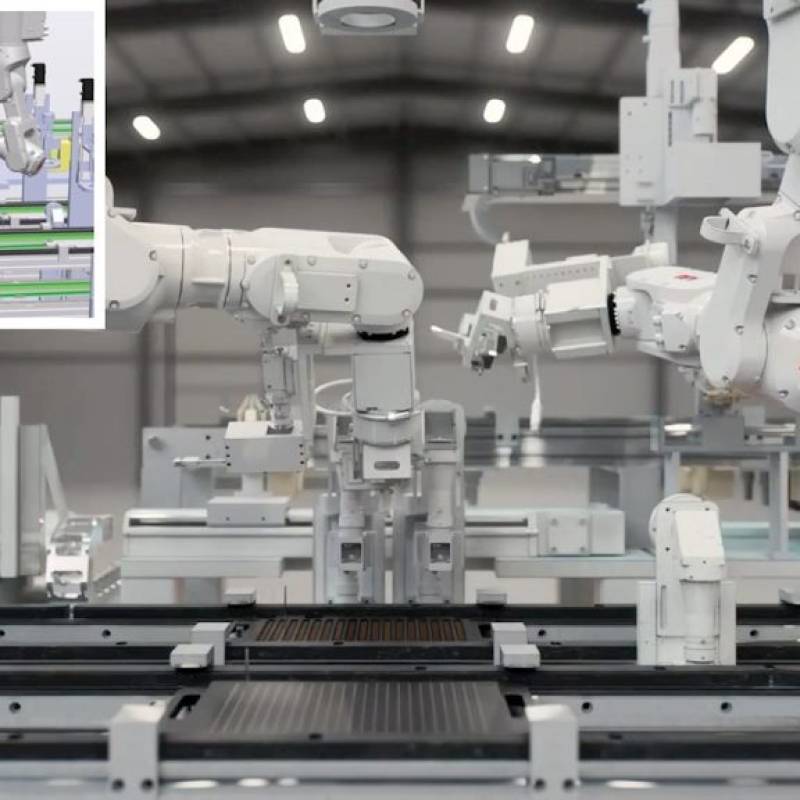
This approach creates a "Digital Twin" of the factory floor—a virtual replica where the health of every asset is monitored in real-time. This allows maintenance teams to schedule repairs during planned changeovers, ensuring that production targets are met without interruption. It extends the lifespan of expensive capital equipment and ensures safety standards are rigorously maintained.
Why the Future of AI is at the Edge
One of the most significant technical aspects of Bosch’s strategy is the emphasis on Edge Computing. While the Cloud is excellent for training massive models (like GPT-4), it is often too slow for the factory floor.
In a high-speed bottling plant or an autonomous vehicle, a latency of 500 milliseconds—the time it takes data to travel to a server and back—can result in a crash or a production error. Edge AI processes data locally, on the device itself, ensuring response times in the single-digit milliseconds.
Speed & Latency
Real-time inference allows robotic arms to adjust their grip instantly if an object slips, a feat impossible with cloud-based lag.
Data Privacy
Manufacturing processes are trade secrets. Edge computing keeps sensitive production data within the factory walls, reducing cyber risk.
Reliability
Factories cannot stop just because the internet connection goes down. Edge systems ensure autonomy regardless of network status.
Bosch envisions a hybrid architecture: The Cloud is the "school" where AI models learn and are updated, while the Edge is the "workplace" where they apply that knowledge.
Resilience in a Fractured World
The supply chain disruptions of the 2020s—from pandemics to geopolitical tensions—have taught manufacturers a hard lesson: efficiency without resilience is fragile. Bosch is using AI to create a "self-healing" supply chain.
By ingesting data from thousands of suppliers, shipping routes, and weather patterns, AI algorithms can predict delays. If a port is blocked, the system can automatically suggest alternative routes or identify backup suppliers for critical components. This capability transforms supply chain management from a chaotic firefighting exercise into a strategic advantage.
Augmentation, Not Replacement
A critical component of Bosch’s narrative—and a vital consideration for the wider AI industry—is the role of the human worker. Bosch executives have consistently framed this €2.9 billion investment as a tool to support workers, not replace them.
As manufacturing processes become increasingly complex, the cognitive load on operators increases. AI acts as a co-pilot, handling the tedious monitoring tasks and presenting humans with synthesized data for high-level decision-making.
- Generative Design: Engineers use AI to explore thousands of design permutations for a part, optimizing for weight and strength faster than humanly possible.
- Knowledge Retrieval: Maintenance staff use LLMs to query vast technical manuals instantly, asking "How do I calibrate the torque sensor on Model X?" and receiving immediate, step-by-step guides.
- Safety: Computer vision systems monitor for safety violations, stopping machines if a human steps into a hazardous zone.
Conclusion: The Practical AI Revolution
Bosch’s €2.9 billion commitment is more than a financial figure; it is a validation of Industry 4.0. It demonstrates that the hype cycle of AI is settling into a phase of practical, operational utility.
Rising energy costs, chronic labor shortages, and razor-thin margins have left no room for inefficiency. Automation alone is no longer enough. The future belongs to manufacturers who can build systems that adapt, predict, and learn. By investing heavily in the convergence of physical hardware and digital intelligence, Bosch is not just upgrading its factories; it is writing the blueprint for the next generation of industrial production.
As the lines between the physical and digital worlds blur, the factory of the future will not just be automated—it will be alive with intelligence.