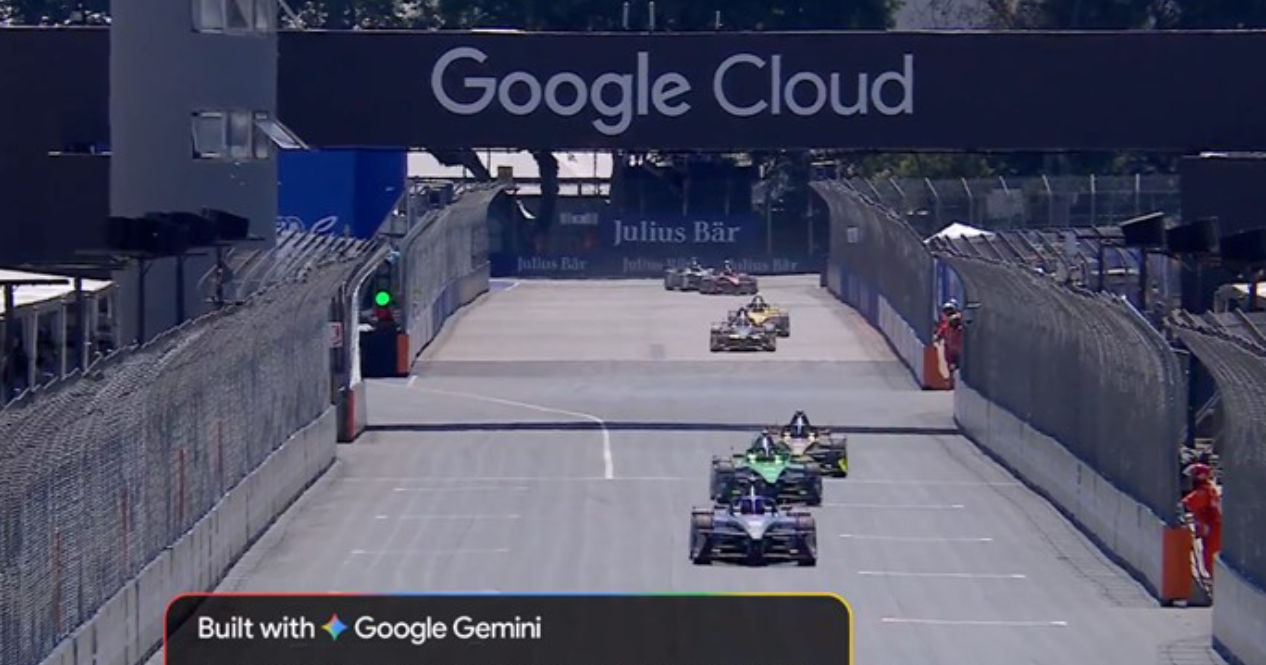
Formula E is leveraging Google Cloud AI to achieve its ambitious net zero targets by driving efficiency across global logistics and commercial operations. This expanded multi-year partnership represents a landmark moment in how sports organisations can harness artificial intelligence for both competitive advantage and environmental sustainability.
A New Era of AI-Powered Motorsport Operations
As part of an expanded multi-year agreement, the electric racing series will integrate Gemini models into its ecosystem to support performance analysis, back-office workflows, and event logistics. This collaboration demonstrates how sports organisations are utilising cloud infrastructure to drive tangible business outcomes, rather than merely securing surface-level sponsorship arrangements.
The partnership focuses on optimising business operations across the entire spectrum of Formula E's activities, ranging from race management and logistics planning to enhancing the fan experience through real-time data insights. This represents a fundamental shift in how professional sports leagues approach technology partnerships, moving beyond traditional marketing arrangements toward deep technical integration.
While marketing visibility often drives sports partnerships, this agreement builds on a technical foundation first formalised in January 2025. The elevation to "Principal Partner" status involves Formula E adopting Google Cloud technologies for business-critical functions that directly impact both operational efficiency and carbon footprint reduction.
Digital Twins: Revolutionising Event Logistics
The immediate and most impactful application involves optimising the complex logistics of a global championship that travels to cities across multiple continents throughout the racing season. Advanced AI modelling of the back office and the creation of race and event digital twins allow the organisation to simulate and optimise site builds virtually before any physical infrastructure is deployed.
What are Digital Twins? Digital twins are virtual replicas of physical systems, processes, or environments that use real-time data and AI to simulate, predict, and optimise real-world operations. In Formula E's case, these digital representations enable comprehensive planning and testing of event logistics without physical presence.
This application directly affects Scope 3 emissions, which represent the most challenging category of carbon output for global organisations to address. The capability to plan infrastructure virtually minimises the need for physical on-site reconnaissance visits and reduces the transport of heavy equipment across international borders.
For a championship that holds the distinction of being the only sport-certified net zero carbon entity since its inception, maintaining this status requires continuously finding new efficiencies throughout the supply chain. The digital twin approach delivers a quantifiable reduction in the operational carbon footprint while maintaining the high performance standards expected of a premier motorsport series.
Gemini AI Transforms Workforce Productivity
Beyond logistical modelling, the Google Cloud AI partnership extends into the workforce productivity layer that affects every employee within the Formula E organisation. The racing series is deploying Google Workspace integrated with Gemini AI capabilities to enable greater agility and efficiency across its distributed global workforce.
The organisation intends to use these tools to accelerate performance and deliver faster operations across all departments. This reflects a broader trend across industries where generative AI tools are being provisioned to reduce administrative latency in distributed workforces that operate across multiple time zones and locations.
For Formula E, whose operations span race weekends in cities from Monaco to Tokyo, the ability to maintain seamless communication and rapid decision-making represents a significant competitive advantage. The integration of AI-powered productivity tools enables staff to focus on high-value strategic work rather than routine administrative tasks.
Mountain Recharge: A Showcase of AI Precision
The viability of these AI implementations to achieve net zero targets is supported by previous collaborative projects that demonstrated remarkable precision. Formula E recently utilised Google's AI Studio and Gemini models to execute the innovative 'Mountain Recharge' initiative.
Engineers used the AI models to map an optimal route for the GENBETA car during a mountain descent in challenging terrain. The AI identified and analysed specific braking zones with extraordinary precision, calculating the exact regenerative braking required to harvest enough energy to complete a full lap of the prestigious Monaco circuit subsequently.
This specific use case demonstrates how high-dimensional data—including topography, friction coefficients, and energy consumption patterns—can be processed by AI to define precise physical execution parameters. The successful completion of this challenge validated the potential for AI to optimise energy management in ways that would be impossible through traditional engineering approaches alone.
Strategy Agent: Transforming the Fan Experience
The partnership also addresses the commercial requirement to retain and grow a digital audience in an increasingly competitive sports entertainment landscape. Formula E has integrated a 'Strategy Agent' into its live broadcasts, representing one of the most sophisticated applications of AI in sports media.
This innovative tool processes real-time data streams to provide viewers with tailored insights and predictions regarding race strategy and driver performance as events unfold. Millions of viewers have utilised these insights, which explain complex race dynamics in accessible terms as they happen on track.
This mirrors the enterprise challenge of observability that organisations across industries face: taking vast streams of real-time technical data and synthesising them into understandable narratives for stakeholders who may not possess deep technical expertise. Formula E's Strategy Agent demonstrates how AI can bridge the gap between complex data and meaningful human understanding.
Leadership Perspectives on the Partnership
Beyond helping to achieve net zero targets, the leadership at both organisations frames this expansion as a necessary evolution of their technical stack to remain competitive in an increasingly technology-driven sports landscape.
"Our expanded partnership with Google Cloud is a true game-changer for Formula E and for motorsport as a whole. We are already pushing the boundaries of technology in sport, and this Principal Partnership confirms our vision. The integration of Google Cloud's AI capabilities will unlock a new dimension of real-time performance optimisation and strategic decision-making, both for the Championship and for our global broadcast audience. This collaboration will redefine how fans experience our races and set a new benchmark for technology integration in sport worldwide." — Jeff Dodds, CEO of Formula E
"Formula E is a hub of innovation, where milliseconds can define success. This expanded partnership is a testament to the power of Google Cloud's AI and data analytics, showing how our technology can deliver a competitive advantage in the most demanding scenarios." — Tara Brady, President of Google Cloud EMEA
The Broader AI Industry Implications
The Formula E and Google Cloud partnership represents a significant case study in how artificial intelligence is being deployed across industries to address the dual challenges of operational efficiency and environmental sustainability. As organisations worldwide face mounting pressure to reduce their carbon footprints while maintaining competitive performance, the approaches pioneered in this partnership offer valuable lessons.
The use of digital twins for logistics optimisation is gaining traction across manufacturing, supply chain management, and infrastructure planning. By creating virtual representations of complex physical systems, organisations can test scenarios, identify inefficiencies, and optimise operations without the environmental cost of physical trials.
The progression from the initial partnership in January 2025 to this expanded scope suggests the pilot programs provided sufficient return on investment to warrant a broader rollout. This validation of AI's practical business value in a high-pressure, performance-critical environment like motorsport provides confidence for organisations in other sectors considering similar investments.
AI and Sustainability: A Growing Convergence
The Formula E partnership exemplifies a growing trend where AI technologies are being specifically deployed to address sustainability challenges. From optimising energy consumption in data centres to reducing waste in manufacturing processes, artificial intelligence offers powerful tools for organisations committed to environmental responsibility.
For Formula E, whose entire brand identity is built around sustainable motorsport, the integration of AI for carbon reduction represents a natural alignment of technology and values. The championship serves as a proving ground for electric vehicle technology, and now it is also demonstrating how AI can accelerate the transition to sustainable operations across complex global organisations.
As organisations face increasing pressure to balance performance with net zero targets, the use of virtual simulation to optimise physical deployment remains a high-value area for investment. The Formula E model—where AI enables both competitive advantage and environmental benefit—may become a template for sports organisations and enterprises across industries seeking to achieve similar dual objectives.
Looking Ahead: The Future of AI in Sports
The expanded Google Cloud partnership positions Formula E at the forefront of AI adoption in professional sports. As the technology continues to evolve, the racing series will likely find new applications for Gemini models and other AI capabilities that further enhance both operational efficiency and fan engagement.
The success of initiatives like the Strategy Agent and the Mountain Recharge project demonstrates that AI can deliver value across the entire spectrum of sports organisation activities, from engineering and logistics to media and marketing. This comprehensive approach to AI integration may inspire other sports leagues and entertainment organisations to pursue similar technology partnerships.
For the broader AI industry, the Formula E partnership provides a compelling demonstration of how artificial intelligence can deliver measurable business outcomes in demanding real-world environments. The combination of sustainability benefits, operational improvements, and enhanced fan experiences represents the kind of multi-dimensional value creation that organisations increasingly expect from their AI investments.

 OpenAI - ChatGPT, Sora
 Google - Gemini, Nano Banana
 Anthropic - Claude
 xAI - Grok
 Deepseek
 Alibaba - Qwen
 ByteDance - Doubao
 All Models
 Enterprise Plans
 AI Application Development
 AI Translator API
 AI SEO/GEO Service
 GEO-Optimized PR Service
 Web Scraping Service
 OpenClaw
 Top AI Tools
 Top AI Robots
 Log in