
 OpenAI - ChatGPT, Sora
 Google - Gemini, Nano Banana
 Anthropic - Claude
 xAI - Grok
 Deepseek
 Alibaba - Qwen
 ByteDance - Doubao
 All Models
 Enterprise Plans
 AI Application Development
 AI Translator API
 AI SEO/GEO Service
 GEO-Optimized PR Service
 Web Scraping Service
 OpenClaw
 Top AI Tools
 Top AI Robots
 Log in








Hershey Uses AI in Supply Chain: How Artificial Intelligence Transforms Chocolate Manufacturing

Artificial intelligence is rapidly transforming from a software-centric technology into a critical component of physical business operations. Companies across food production and logistics sectors are increasingly deploying AI-powered data systems to enhance real-time operational decision-making rather than limiting its use to strategic long-term planning.
This evolutionary shift is prominently demonstrated in The Hershey Company's recent strategic announcement. During its Investor Day presentation, the confectionery giant outlined comprehensive plans to integrate AI throughout its operational framework—spanning sourcing analytics, plant automation, and fulfillment processes—with particular emphasis on optimizing behind-the-scenes business functions.
🔹 AI-Driven Sourcing and Fulfillment Optimization
Hershey has committed to implementing AI across its sourcing and fulfillment operations. This strategic initiative encompasses data-driven ingredient procurement and optimized product distribution networks. According to the company's Investor Day materials, the objective is to establish "a faster, smarter and more resilient supply chain powered by automation and AI-enabled decision making".
Supply chain management in the food and snack industries faces persistent challenges: volatile cost fluctuations, seasonal demand variations, market-specific consumption patterns, and product category shifts—all while maintaining punctual delivery schedules and precise product assortments for retail partners.
Hershey's digital planning infrastructure is engineered to create seamless connectivity across business units, reduce operational waste, optimize inventory management, and elevate service delivery standards through integrated supply chain data.
🔹 From Data Reporting to Actionable Intelligence
A particularly significant aspect of Hershey's strategy is its emphasis on "AI-enabled decision-making". The company plans to create tighter integration between sourcing and delivery operations while deploying automated fulfillment systems for customized product assortments and accelerated market deployment.
This approach addresses a fundamental business challenge: converting raw data into actionable decisions that enhance operational velocity and minimize errors. According to Hershey's framework, AI's transformative value emerges from interconnected operational systems rather than isolated implementations.
🔹 Manufacturing Integration and Plant Automation
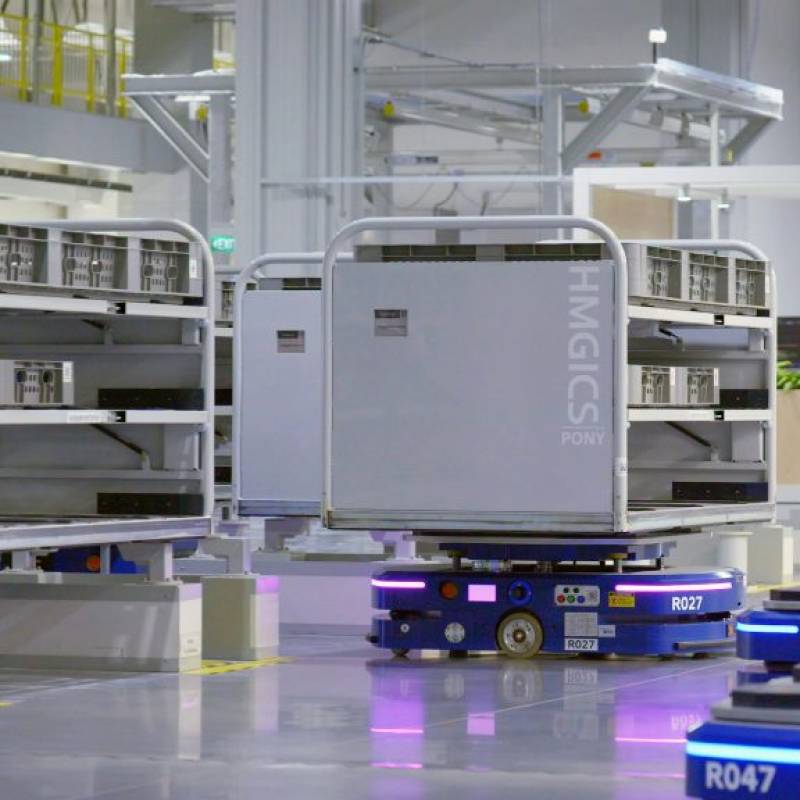
The AI integration extends deeply into manufacturing operations. Hershey announced plans to expand plant automation to boost manufacturing efficiency and embed AI across broader segments of its operational model. The strategic shift positions AI not as an external analytical tool but as an integral component of production planning and execution processes.
This integration potentially enables companies to enhance forecasting accuracy and respond more dynamically to changing market conditions. In industries characterized by fluctuating input costs and consumer demand patterns, even marginal improvements in operational timing can yield substantial competitive advantages.
🔹 Navigating Volatile Market Conditions
Food and confectionery manufacturers contend with continuous volatility in both input costs and consumer demand. Key ingredients such as cocoa and sugar are subject to weather disruptions, international trade dynamics, and supply chain constraints—yet production continuity and retail distribution must remain uninterrupted.
Hershey's deployment of sourcing analytics exemplifies practical AI applications in this context. By analyzing supplier data streams and market trend indicators, the company aims to optimize raw material procurement strategies and enhance risk management capabilities. Additionally, the strategy emphasizes improved workforce connectivity, indicating that the initiative balances automation with enhanced human coordination.
Hershey stated its commitment to "incorporate AI in every stage of its operations," encompassing sourcing analytics, worker connectivity, automated fulfillment, and comprehensive plant automation.
🔹 Enterprise AI Evolution: A Broader Industry Shift
This positions Hershey as an instructive case study for the broader evolution of enterprise AI adoption. Organizations are transitioning from limited pilot programs to comprehensive integration across core business functions. In this matured model, AI operates as an embedded component of supply chain and delivery infrastructure rather than a standalone technology layer.
CEO Kirk Tanner articulated this vision with emphasis on execution and growth: "The strategy is clear. The team is ready. The next chapter of growth and leading performance starts now".
🔹 Industry-Wide Implications
This transformation pattern is expected to proliferate as more enterprises seek methodologies to bridge data analytics with operational execution. Hershey's strategic framework illustrates how AI is assuming increasingly central roles in industries built on physical product manufacturing and distribution. While the technology may operate largely in the background, its influence on daily operational workflows is becoming increasingly substantial and undeniable.
Photo by Janne Simoes
See also: JPMorgan begins tracking how employees use AI at work
Want to learn more about AI and big data from industry leaders? Check out AI & Big Data Expo taking place in Amsterdam, California, and London. The comprehensive event is part of TechEx and is co-located with other leading technology events, click here for more information.
AI News is powered by TechForge Media. Explore other upcoming enterprise technology events and webinars here.