
 OpenAI - ChatGPT, Sora
 Google - Gemini, Nano Banana
 Anthropic - Claude
 xAI - Grok
 Deepseek
 Alibaba - Qwen
 ByteDance - Doubao
 All Models
 Enterprise Plans
 AI Application Development
 AI Translator API
 AI SEO/GEO Service
 GEO-Optimized PR Service
 Web Scraping Service
 OpenClaw
 Top AI Tools
 Top AI Robots
 Log in



From Cloud to Factory: The Era of Humanoid Robots
The Dawn of "Physical AI" in the Workplace
The concept of the humanoid robot has long been relegated to the realms of science fiction, from Isaac Asimov’s I, Robot to the droids of Star Wars. However, 2026 has marked a definitive inflection point. We are no longer discussing "if" robots will enter the workforce, but "how fast." The partnership announced this week between Microsoft and Hexagon Robotics serves as a flagship signal of this industrial transformation.
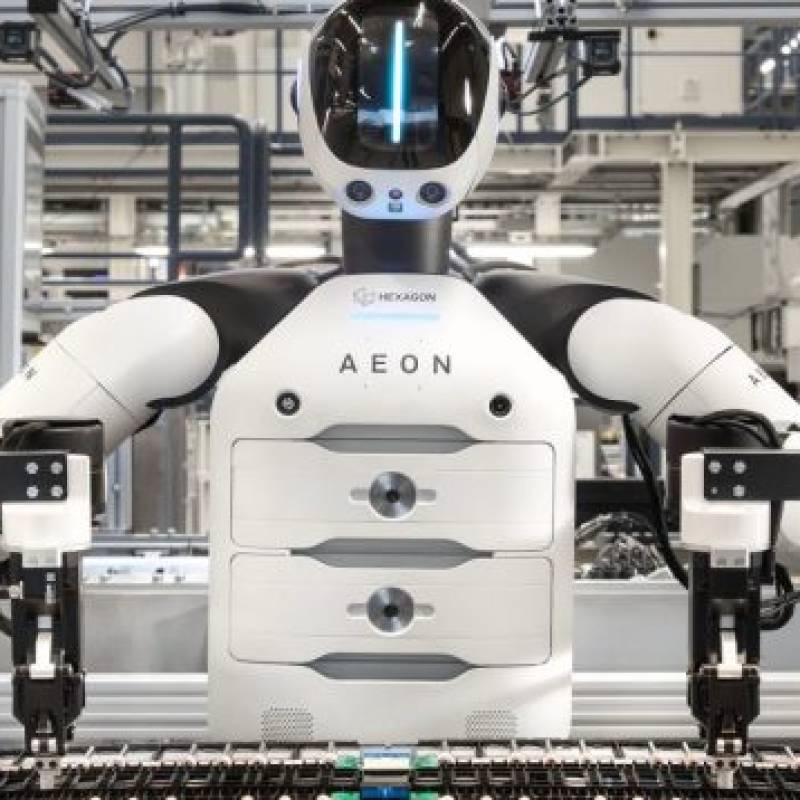
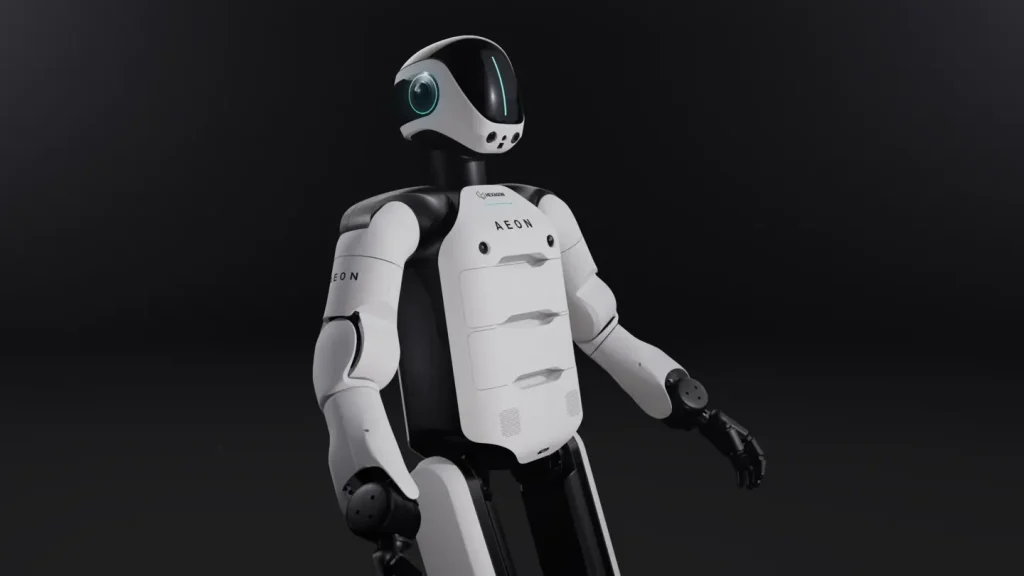
This collaboration is not merely a hardware announcement; it represents the maturation of a new technological stack. By combining Microsoft’s massive cloud computing and AI infrastructure with Hexagon’s mastery of sensors, spatial intelligence, and robotics, the industry is witnessing the birth of commercially viable "Physical AI". At the center of this revolution is AEON, Hexagon’s industrial humanoid robot, designed specifically to navigate the chaotic, unstructured environments of modern factories, logistics hubs, and engineering plants.
Unlike their predecessors—rigid, caged robotic arms that perform single tasks—AEON and its contemporaries are powered by multimodal AI. They possess the ability to "see" via computer vision, "think" via Large Language Models (LLMs), and "act" via advanced actuation systems. This allows them to function autonomously in spaces designed for humans, utilizing the same tools, stairs, and doors as their biological counterparts.
The "Brain-Body" Convergence: How AI Empowers Robotics
Why is this happening now? The surge in humanoid capabilities is directly linked to the explosion of Generative AI. In the past, programming a robot to fold a shirt or open a door required thousands of lines of explicit code. Today, we utilize Vision-Language-Action (VLA) models.
Multimodal Perception
Modern robots don't just process code; they process context. Through cameras and LiDAR, they ingest visual data, while LLMs allow them to understand natural language commands like "Clean up that spill" or "Hand me the 10mm socket."
Cloud & Edge Synergy
The Microsoft-Hexagon partnership highlights a critical architecture: the Cloud Brain. While immediate reflexes are handled on the edge (on the robot), heavy reasoning and fleet-wide learning happen in Azure. If one robot learns to handle a new object, the entire fleet gets an update instantly.
Sim-to-Real Learning
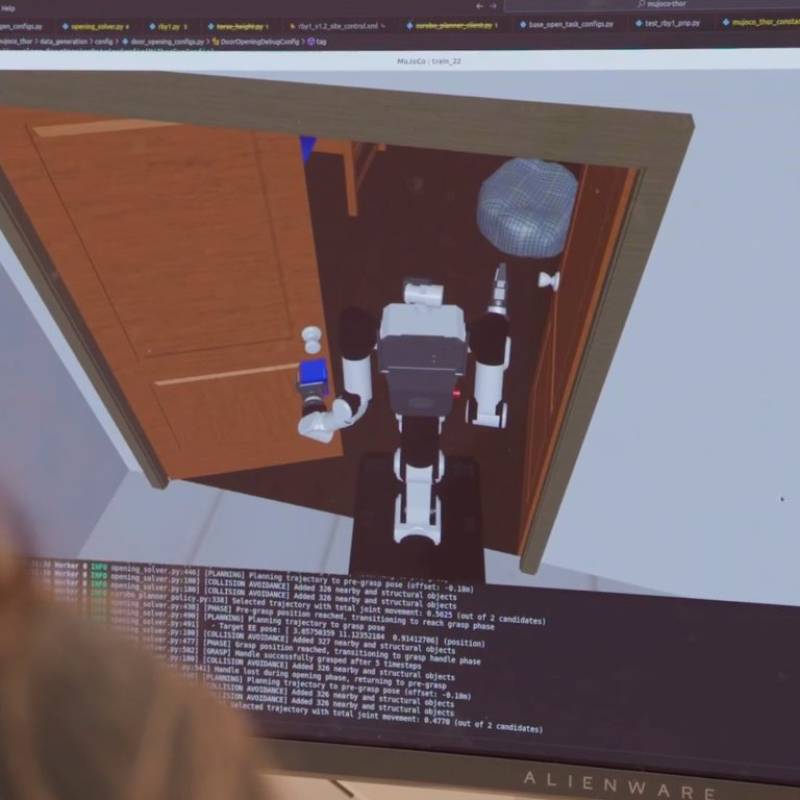
Robots are trained in digital twins—virtual simulations of factories—where they can simulate millions of hours of trial and error in seconds. This reinforcement learning is then transferred to the physical robot, drastically reducing deployment time.
Technical Spotlight: The Hexagon & Microsoft Stack
The collaboration leverages Azure IoT Operations to manage real-time telemetry. Key technical pillars include:
- Imitation Learning: Robots watch humans perform tasks via video and replicate the motion dynamics.
- Sensor Fusion: Combining optical inputs with force-feedback sensors to give robots a sense of "touch," preventing them from crushing delicate objects.
- Semantic Navigation: Instead of moving to "Coordinate X,Y", the robot moves to "The inspection station near the conveyor belt."
Beyond the Lab: The Global Humanoid Race
While Hexagon’s AEON is making headlines, it joins a crowded and fiercely competitive field. The transition from research labs to factory floors is being driven by several key players, each targeting different niches of the industrial economy.
Tesla Optimus
Perhaps the most famous entrant, Tesla's Optimus (Gen 2) is already undergoing trials within Tesla’s own automotive gigafactories. Leveraging the same FSD (Full Self-Driving) computer vision stack used in their cars, Optimus is designed for general-purpose labor, handling parts and transport.
Agility Robotics (Digit)
Taking a utilitarian approach, Digit is a bipedal robot specifically engineered for logistics. Already piloted by Amazon, Digit focuses on "tote movement" and material handling. Its design prioritizes function over human aesthetics, featuring backward-bending knees for stability in warehouses.
Boston Dynamics (Atlas)
The fully electric Atlas has moved beyond parkour demonstrations to serious industrial applications. Known for its dynamic balance and strength, Atlas is targeting heavy industry inspection and disaster response—environments too hazardous for human workers.
Figure AI
Backed by OpenAI and Microsoft, Figure AI is pushing the boundaries of human-robot interaction. Their robots are designed to work shoulder-to-shoulder with humans, understanding nuanced verbal instructions and exhibiting fine motor skills for assembly tasks.
The Economic Imperative: Why We Need Robots
The adoption of humanoid robots is not merely a technological novelty; it is an economic necessity born of demographic shifts. Developed nations are facing a "Silver Tsunami"—an aging workforce that is leaving the manufacturing and logistics sectors faster than younger workers can replace them.
In the United States alone, the National Association of Manufacturers predicts 2.1 million unfilled jobs by 2030, potentially costing the economy $1 trillion. Fixed automation (like conveyor belts) is efficient but inflexible. Humanoid robots offer the "holy grail" of automation: the flexibility of a human worker with the endurance of a machine.
Strategic Use Cases
- The "Graveyard Shift": Robots can operate 24/7 without fatigue, handling night shifts in logistics hubs to ensure next-day delivery, allowing human workers to focus on day shifts.
- Hazardous Environments: Deploying robots for inspection in nuclear plants, chemical facilities, or high-voltage areas significantly reduces workplace injuries and insurance liabilities.
- Quality Assurance: With computer vision capable of detecting micron-level defects, robots like AEON can perform repetitive visual inspections with higher consistency than the human eye.
What Boards Must Evaluate: The Path to Integration
For executive boards and decision-makers, the shift to a robotic workforce is a capital-intensive strategy that requires careful evaluation. The Microsoft-Hexagon partnership emphasizes that hardware is only half the equation.
Data Governance is Paramount: Connecting physical agents to the cloud introduces new cybersecurity vectors. A hacked robot is not just a data leak; it is a physical safety risk. Protocols for "kill switches," encrypted telemetry, and localized processing are essential.
Human-in-the-Loop (HITL): We are not yet at the stage of full autonomy. The most successful deployments, such as Toyota Research Institute’s remote manipulation platforms, utilize a hybrid model where robots handle 90% of the task, but human operators step in remotely to handle edge cases or complex decision-making. This "tele-operation" model serves as a bridge to full autonomy.
Conclusion: A Measured but Irreversible Shift
The partnership between Microsoft and Hexagon Robotics is a microcosm of the broader industrial landscape. We are witnessing the convergence of the digital and physical worlds. Humanoid robots will not replace the human workforce overnight, nor should they. Instead, they will augment it, taking over the "Dull, Dirty, and Dangerous" jobs that society increasingly struggles to fill.
As AI models become more efficient and hardware costs plummet (similar to the trajectory of electric vehicles), the humanoid robot will transition from a high-end industrial asset to a ubiquitous tool. For industries facing labor crunches and efficiency ceilings, the question is no longer whether to invest in robotics, but how quickly they can adapt their infrastructure to welcome their new silicon-collar colleagues.
The future of work has legs—two of them.