
 Enterprise Plans
 AI Application Development
 AI Translator API
 AI SEO/GEO Service
 GEO-Optimized PR Service
 Web Scraping Service
 Log in





Nvidia Launches Alpamayo: Open AI Models That Allow Autonomous Vehicles to 'Think Like a Human'
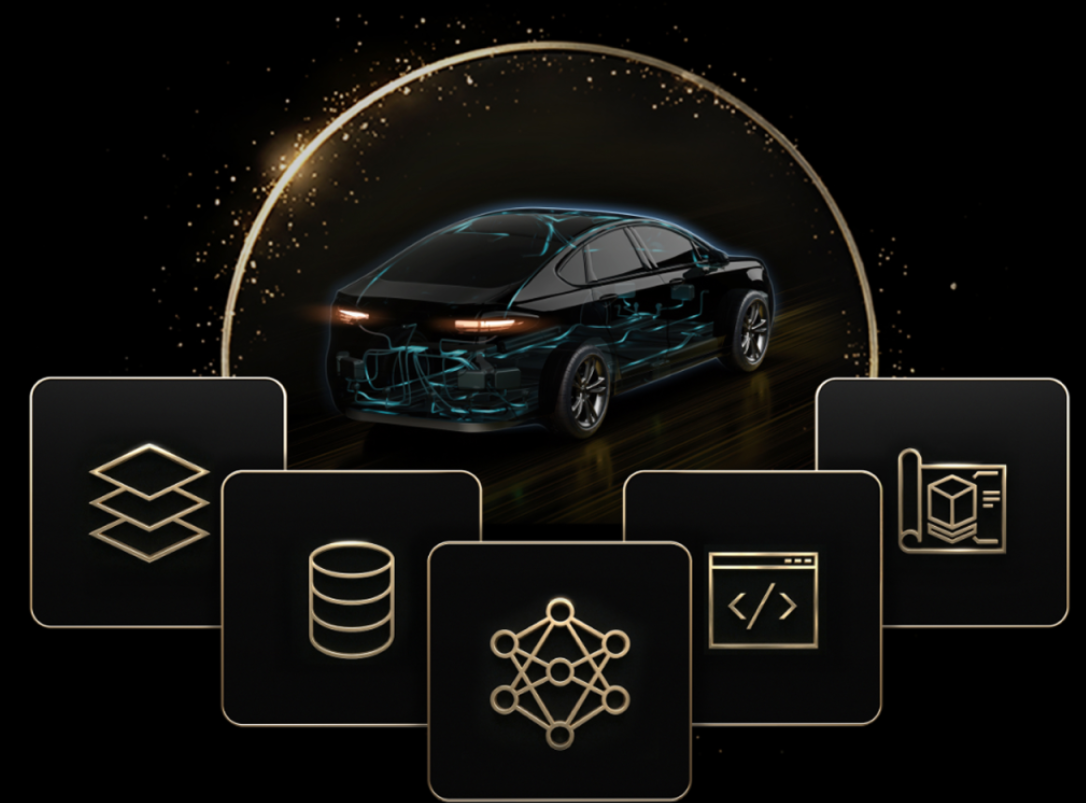
The Dawn of Human-Like AI Reasoning in Autonomous Vehicles
At CES 2026, Nvidia launched Alpamayo, a revolutionary family of open source AI models, simulation tools, and datasets for training physical robots and vehicles that are designed to help autonomous vehicles reason through complex driving situations with unprecedented human-like intelligence.
Alpamayo 1: The 10 Billion Parameter Game Changer
At the core of Nvidia's groundbreaking initiative is Alpamayo 1, a sophisticated 10 billion-parameter chain-of-thought, reason-based vision language action (VLA) model that represents a quantum leap in autonomous vehicle intelligence. This advanced AI system enables autonomous vehicles to think more like humans, allowing them to solve complex edge cases without previous experience.
The model's revolutionary approach involves breaking down problems into logical steps, reasoning through every possibility, and then selecting the safest path forward. This methodology mirrors human cognitive processes, making split-second decisions based on comprehensive situational analysis.
Chain-of-Thought Processing
Advanced reasoning algorithms that mirror human decision-making processes, enabling vehicles to handle unprecedented scenarios with logical step-by-step analysis.
Vision Language Action (VLA)
Integrated multimodal AI that processes visual data, understands context through language models, and executes precise physical actions in real-time.
Open Source Architecture
Available on Hugging Face, allowing developers worldwide to fine-tune, optimize, and build upon Nvidia's foundational AI models for specialized applications.
Real-World Applications and Edge Case Solutions
Alpamayo's true innovation lies in its ability to handle complex edge cases that traditional autonomous vehicle systems struggle with. Consider scenarios like navigating a traffic light outage at a busy intersection, responding to emergency vehicles, or adapting to construction zones with unusual traffic patterns.
The system's comprehensive approach involves multiple layers of analysis:
- Sensor Input Processing: Real-time analysis of camera, lidar, and radar data
- Contextual Understanding: Interpretation of traffic signs, road conditions, and pedestrian behavior
- Predictive Modeling: Anticipation of potential scenarios and their outcomes
- Decision Explanation: Clear reasoning for chosen actions and alternative considerations
The Technology Behind Human-Like Reasoning
Nvidia's breakthrough extends beyond traditional machine learning approaches by incorporating explainable AI principles. As Jensen Huang explained during his keynote, Alpamayo doesn't just take sensor input and activate vehicle controls – it actively reasons about its intended actions.
The system provides transparent decision-making by explaining:
Developer Ecosystem and Integration Possibilities
The open-source nature of Alpamayo 1 creates unprecedented opportunities for innovation in the autonomous vehicle industry. With the underlying code available on Hugging Face, developers can:
Fine-tune models for specific vehicle types, geographic regions, or driving conditions. This customization capability allows automotive manufacturers to adapt the AI to their unique requirements while maintaining the core reasoning capabilities.
Build complementary tools including auto-labeling systems that automatically tag video data for training purposes, and sophisticated evaluators that assess whether autonomous vehicles make optimal decisions in various scenarios.
Create hybrid training systems that combine real-world driving data with synthetic scenarios generated through Nvidia's Cosmos platform, enabling more comprehensive and cost-effective AI training.
Cosmos Integration: Synthetic Data Generation Revolution
Alpamayo's integration with Nvidia's Cosmos represents a paradigm shift in AI training methodology. Cosmos, Nvidia's brand of generative world models, creates detailed representations of physical environments that enable AI systems to make predictions and take actions in simulated scenarios.
This synthetic data generation capability addresses one of the most significant challenges in autonomous vehicle development: the need for vast amounts of diverse training data covering rare but critical driving scenarios.
Industry Impact and Future Implications
The launch of Alpamayo signals a fundamental shift in how the automotive industry approaches autonomous vehicle development. By democratizing access to advanced AI reasoning capabilities, Nvidia is accelerating innovation across the entire ecosystem.
The implications extend beyond individual vehicle intelligence to encompass:
- Fleet Management: Coordinated decision-making across multiple autonomous vehicles
- Infrastructure Integration: Smart city systems that communicate with AI-powered vehicles
- Safety Standards: New regulatory frameworks based on explainable AI decisions
- Insurance Models: Risk assessment based on AI reasoning transparency
As the technology matures, we can expect to see human-AI collaboration become the standard in autonomous vehicle operation, where AI systems not only make decisions but also communicate their reasoning to human supervisors and passengers.
The future of autonomous vehicles is here, powered by AI that thinks, reasons, and explains its decisions like never before.