
 OpenAI - ChatGPT, Sora
 Google - Gemini, Nano Banana
 Anthropic - Claude
 xAI - Grok
 Deepseek
 Alibaba - Qwen
 ByteDance - Doubao
 All Models
 Enterprise Plans
 AI Application Development
 AI Translator API
 AI SEO/GEO Service
 GEO-Optimized PR Service
 Web Scraping Service
 OpenClaw
 Top AI Tools
 Top AI Robots
 Log in








How AI Is Transforming RPA and Changing the Future of Business Automation
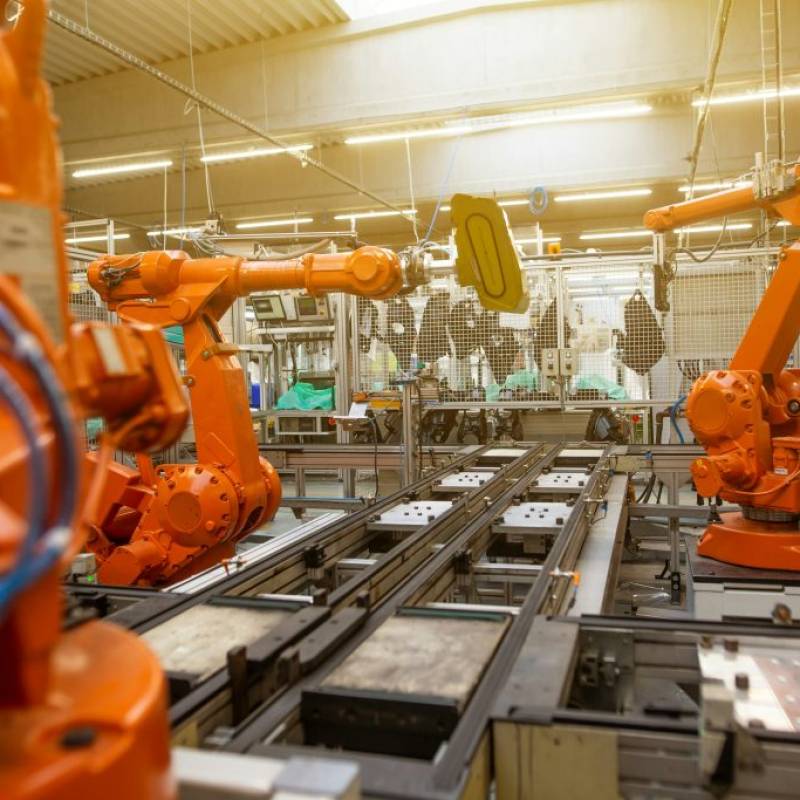
Robotic Process Automation (RPA) is a highly effective and proven method to reduce manual workload in business processes without relying on AI systems. By leveraging software bots programmed to follow predefined rules, organizations can automate repetitive tasks such as data entry, invoice processing, and to some extent, report generation. This technology has seen rapid adoption across various industries, especially in finance, operations, and customer support.
In recent years, RPA technology has matured, but as business processes grow more complex, challenges have emerged. Many systems now work with unstructured data like messages and documents, which rule-based automation struggles to process effectively due to its dependence on fixed workflows and structured formats. RPA performs best in stable, predictable environments where processes rarely change. When inputs vary or workflows shift, bots frequently fail or require manual updates, increasing maintenance and diminishing automation benefits over time.
Gartner highlights the rise of more adaptive automation platforms that integrate machine learning and language models to handle variability and uncertainty in inputs.
From RPA to AI-driven Automation
Artificial intelligence has transformed how companies approach automation. Leading RPA vendors, including Appian and Blue Prism, now offer solutions capable of interpreting context and dynamically adjusting actions—especially beneficial for tasks involving text and images.
Large language models excel at summarizing documents, extracting critical information, and responding in natural language. This unlocks automation capabilities for use cases that were previously hard to fully automate.
According to McKinsey & Company research, generative AI has the potential to automate decision-making and communication-based tasks rather than just routine data processing.
Rather than replacing traditional automation, AI enhances it. Instead of rigid rule chains, AI enables handling diverse input types flexibly without constant reconfiguration.
However, AI-generated outputs can be inconsistent and unpredictable. Many enterprises balance AI capabilities with established automation tools, using each where most effective. This intelligent automation approach is gaining significant attention at industry conferences and within RPA/AI-focused media.
Where RPA Remains Valuable Alongside AI
Despite AI advances, RPA still plays a critical role in many contexts. Rules-based automation excels with structured data and stable workflows. Typical applications include payroll, compliance checks, and system integrations.
RPA's predictability is a major advantage, producing consistent, traceable outcomes that are crucial in regulated industries such as financial reporting and auditing.
Rather than being fully replaced, RPA is increasingly paired with AI. Workflows may begin with AI interpreting inputs, then hand off structured data to RPA bots for efficient execution. This hybrid model lets companies broaden automation capabilities without scrapping existing investments.
Blue Prism and the Intelligent Automation Evolution
RPA pioneer Blue Prism, now part of SS&C Technologies, has expanded into intelligent automation, merging traditional RPA with AI-powered processes.
The platform integrates automation with advanced features such as document understanding and decision support, often enabled by AI integrations. This has shifted usage toward end-to-end workflows combining data sources, decision logic, and execution steps in a seamless process.
A Gradual Transition, Not a Complete Overhaul
Many organizations continue to rely on proven RPA systems for well-understood processes, as replacing and retraining for new platforms requires significant investment.
The transformation to AI-enhanced automation is unfolding incrementally. Companies layer AI capabilities atop existing RPA infrastructure to handle more complex tasks, preserving rule-based bots where they remain effective. This evolution transforms automation design and deployment but confirms rule-driven systems as an enduring component.
AI agents enter banking roles at Bank of America
Explore the latest in enterprise technology at TechEx, with events in Amsterdam, California, and London featuring AI, Big Data, Cyber Security, IoT, Digital Transformation, Intelligent Automation, Edge Computing, and Data Centres. Join global leaders sharing in-depth insights and real-world case studies.
For more, click here.
AI News is powered by TechForge Media. Find other upcoming enterprise tech events and webinars here.