
 OpenAI - ChatGPT, Sora
 Google - Gemini, Nano Banana
 Anthropic - Claude
 xAI - Grok
 Deepseek
 Alibaba - Qwen
 ByteDance - Doubao
 All Models
 Enterprise Plans
 AI Application Development
 AI Translator API
 AI SEO/GEO Service
 GEO-Optimized PR Service
 Web Scraping Service
 OpenClaw
 Top AI Tools
 Top AI Robots
 Log in









Samsung semiconductor recovery driven by AI chip demand signals end of decline
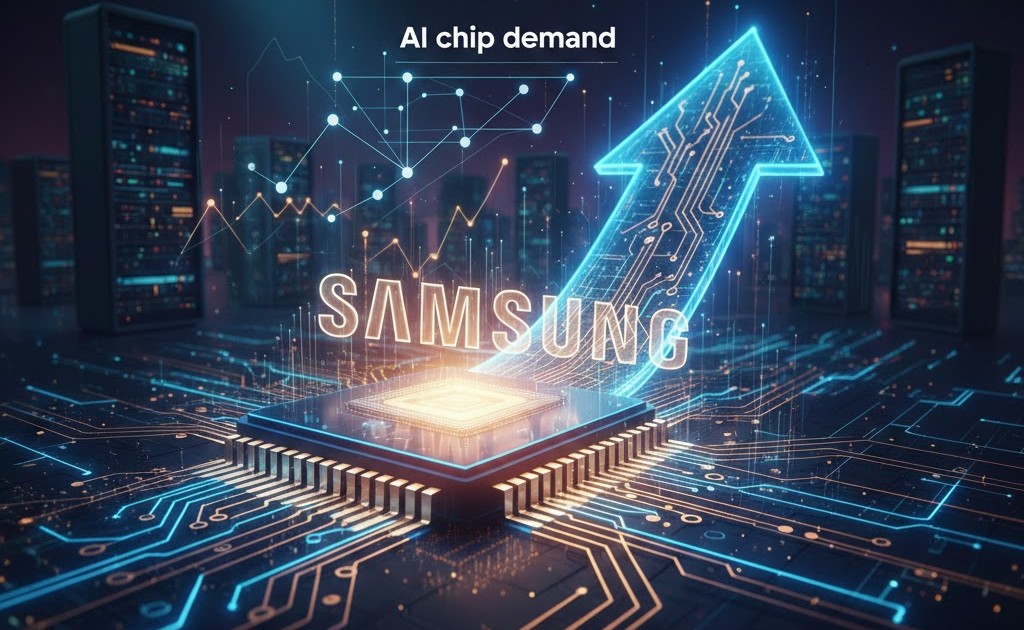
Samsung’s semiconductor recovery has officially materialized in the third quarter of 2025. The South Korean tech giant reported an operating profit of KRW 12.2 trillion (US$8.6 billion), effectively doubling its previous quarter's performance and snapping a streak of four consecutive quarterly declines.
According to the original report, "Inside Samsung’s semiconductor recovery: How AI demand reversed four quarters of decline", the turnaround was anchored by the Device Solutions division. This sector recorded KRW 33.1 trillion in revenue, driven largely by a surge in artificial intelligence infrastructure needs.
Rebounding from the Memory Slump
The recovery follows a challenging 2024 defined by a global memory chip glut and fierce competition. Samsung's Memory Business has now achieved record-high quarterly revenue, fueled by the mass production of high-bandwidth memory (HBM3E) chips and server solid-state drives (SSDs).
Market analysts note that Samsung has successfully reclaimed its top spot in the memory market, a position briefly held by rival SK Hynix. This shift suggests that Samsung’s strategic pivots during the downturn—specifically accelerating its AI chip roadmap—are yielding results.
HBM4 and Future Production
A central pillar of this comeback is the successful scale-up of HBM3E sales to major global customers. Samsung also confirmed that HBM4 samples are currently being shipped to key clients, positioning the company for continued dominance in the 2026 AI hardware market.
Beyond memory, Samsung’s Foundry Business showed significant improvement. By reducing one-off costs and increasing fab utilization, the division secured record-high customer orders, particularly for advanced nodes. The company is now ramping up 2-nanometer Gate-All-Around (GAA) technology to maintain its edge against competitors like TSMC.
Outlook for 2026
Looking ahead, Samsung plans to expand capacity for its 1c manufacturing process to meet the projected demand for next-generation AI servers. While challenges remain in the visual display and smartphone sectors due to intensified competition, the semiconductor division’s resurgence provides a strong foundation for long-term growth.
For more insights on the tech landscape, see: Samsung AI strategy delivers record revenue despite semiconductor headwinds.