
 OpenAI - ChatGPT, Sora
 Google - Gemini, Nano Banana
 Anthropic - Claude
 xAI - Grok
 Deepseek
 Alibaba - Qwen
 ByteDance - Doubao
 All Models
 Enterprise Plans
 AI Application Development
 AI Translator API
 AI SEO/GEO Service
 GEO-Optimized PR Service
 Web Scraping Service
 OpenClaw
 Top AI Tools
 Top AI Robots
 Log in














NemoClaw vs OpenClaw: Which Wins on Security, Privacy & Performance?

NemoClaw vs OpenClaw: Security, Privacy & Performance in 2026
NVIDIA just dropped NemoClaw at GTC 2026 — and instantly changed the AI agent landscape. But should you use the raw power of OpenClaw or the controlled precision of NemoClaw?
OpenClaw went viral for one reason: it works. Autonomous agents that can click, type, and execute real workflows — all from your desktop.
But speed came at a cost: security vulnerabilities, exposed APIs, and real-world exploits.
NVIDIA’s answer is NemoClaw — a controlled, enterprise-ready layer that transforms experimentation into production infrastructure.


What is OpenClaw?
The open-source AI agent that exploded across GitHub.
- Runs locally on PC or servers
- Controls desktop interactions
- Integrates with major apps
- Self-evolving memory & skills
- 5,700+ community extensions
Strength: flexibility & speed.
Weakness: minimal sandboxing, real security risks.


What is NemoClaw?
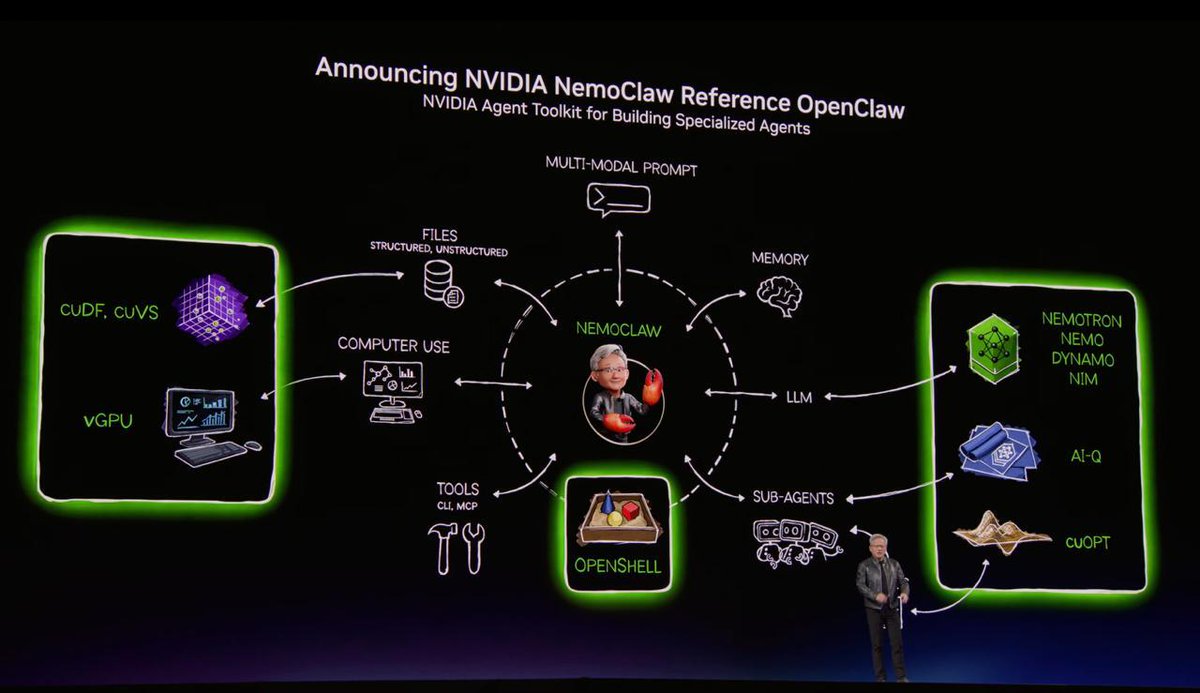
NemoClaw is not a replacement — it’s a security layer on top of OpenClaw.
- Isolated sandbox runtime
- Policy-based access control
- Privacy routing
- Enterprise integrations
Head-to-Head Comparison
| Category | OpenClaw | NemoClaw | Winner |
|---|---|---|---|
| Security | Weak, DIY sandbox | Enterprise-grade protection | NemoClaw |
| Privacy | Local but risky | Controlled environment | NemoClaw |
| Performance | CPU dependent | GPU accelerated | NemoClaw |
| Deployment | Simple | Scalable | Tie |
| Ecosystem | Large community | Enterprise tools added | OpenClaw |

Use Cases
Choose NemoClaw:
- Enterprise compliance
- Sensitive data workflows
- 24/7 automation
Choose OpenClaw:
- Fast experimentation
- Personal projects
- Maximum flexibility
Final Verdict
OpenClaw made agents viral. NemoClaw makes them usable.
For enterprises in 2026, NemoClaw is the clear winner — delivering security, scalability, and performance without sacrificing capability.