
 OpenAI - ChatGPT, Sora
 Google - Gemini, Nano Banana
 Anthropic - Claude
 xAI - Grok
 Deepseek
 Alibaba - Qwen
 ByteDance - Doubao
 All Models
 Enterprise Plans
 AI Application Development
 AI Translator API
 AI SEO/GEO Service
 GEO-Optimized PR Service
 Web Scraping Service
 OpenClaw
 Top AI Tools
 Top AI Robots
 Log in
The Rise of Vibe Coding: How Lovable is Rewriting the Rules of Full-Stack AI App Development
ai.cc · deep dive · full-stack ai
The rise of vibe coding
How Lovable is rewriting the rules of full-stack AI app development — you provide the vision, the machine writes everything else.
The democratization of software has passed the point of no return
For decades, the tech industry attempted to bridge the gap between human imagination and functional software through various iterations of low-code and no-code platforms. While these tools offered a temporary respite for simple landing pages or rigid relational databases, they inevitably hit a “brick wall” when confronted with complex business logic, custom integrations, or the need for clean, uncompromised code export.
Enter Vibe Coding — a paradigm shift coined by computer scientist Andrej Karpathy and crowned as a defining movement in modern computing. Vibe coding completely upends traditional software engineering: instead of manually typing syntax, managing state, or configuring server environments, creators guide an artificial intelligence through natural, iterative conversation. The human provides the product vision and domain expertise; the AI handles the execution.
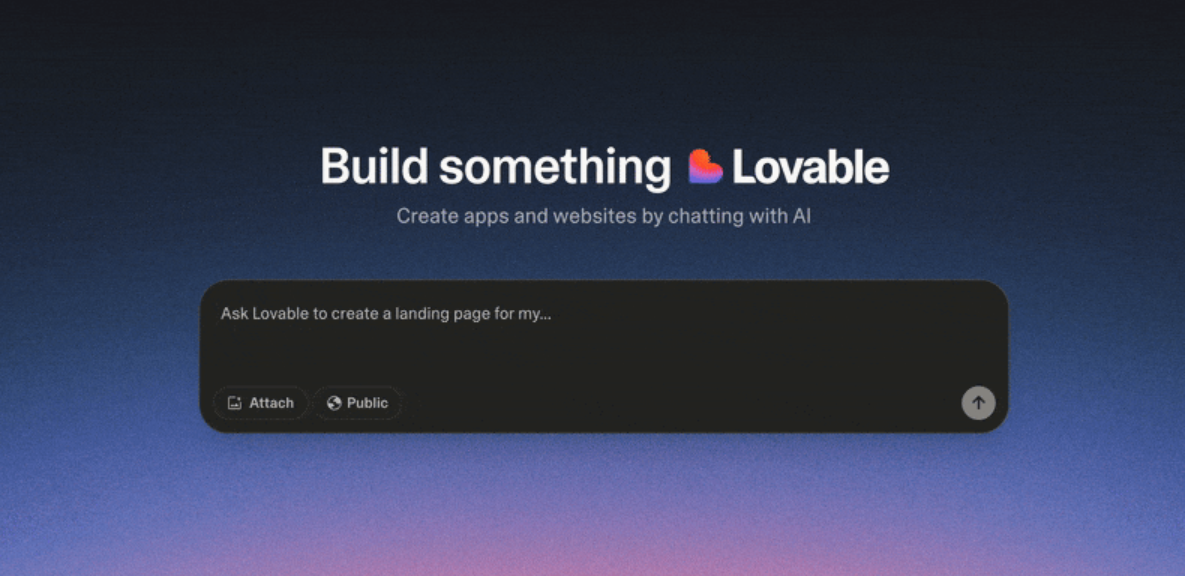
At the absolute vanguard of this movement is Lovable (lovable.dev). Backed by a massive $330M funding round, Lovable has rapidly evolved from a high-performance prototyping tool into a robust, general-purpose enterprise co-founder. By turning plain-English descriptions into secure, production-grade, full-stack web and mobile applications, Lovable is effectively onboarding the “other 99%” of people with ideas into the build economy.
What is Lovable, really?
To understand why Lovable dominates discussions on platforms like GitHub, Reddit, and Hacker News, one must look past the conversational chat interface. Lovable is not merely a wrapper around a Large Language Model (LLM); it is a tightly integrated, end-to-end cloud development ecosystem.
Unlike UI-centric components or sandboxed mockups, Lovable automatically orchestrates the entire development lifecycle:
-
Frontend generation — constructs responsive, premium UIs using modern production standards like React, TypeScript, Tailwind CSS, and
shadcn/ui. -
Backend & infrastructure — leverages open-source foundation stacks, primarily Supabase, to seamlessly spin up relational databases, secure authentication workflows, and serverless hosting environments out of the box.
-
Third-party integrations — native, conversational configuration for standard business APIs, including Stripe for monetization, GitHub for version control, and operational tools like Slack, Twilio, and Linear.
-
Zero vendor lock-in — a major pain point of legacy no-code tools is platform captivity. Lovable eliminates this by syncing the entire generated codebase directly to a user’s GitHub repository. If an application outgrows the platform, a traditional developer can clone the repository and continue building manually without losing a single line of progress.
The three modes of execution
Lovable structures its engineering workspace into three core operational modes, ensuring both macro-level autonomy and micro-level precision.
Agent
Autonomous. Plans architecture, debugs itself, spawns parallel subagents for multi-threaded builds.
Chat
Collaborative. Paired-programming iteration and architectural deliberation over logic and features.
Visual Edits
Figma-style canvas. Direct layout and UI adjustments that compile to clean Tailwind classes.
Agent mode — autonomous software engineering
When tasked with a broad objective (e.g., “Build an automated corporate expense tracking dashboard with multi-tiered approval workflows”), Lovable shifts into Agent Mode. The autonomous engine acts as an internal tech lead: it maps out the backend schema, explores existing directories, self-corrects runtime errors via integrated virtual browser testing, and splits monumental coding goals into discrete tasks.
Following recent architecture upgrades, Lovable now possesses the capacity to spawn parallel subagents. These specialized subagents run multi-threaded operations — simultaneously researching API compliance, querying external web endpoints, and refactoring peripheral components — slashing generation timelines from hours to seconds.
Chat mode — collaborative refinement
For precise feature adjustments and algorithmic setup, Chat Mode functions as a paired-programming terminal. It employs high-reasoning frameworks (leveraging state-of-the-art models like Claude 4.7 Opus and early-access GPT-5.5 variants) to deliberate over logical execution.
A vital workflow protection introduces Plan Mode. Before executing a prompt, Lovable lays out an explicit architectural roadmap of the intended codebase modifications. Users review, adjust, or greenlight the strategy before computation begins, mitigating unexpected deviations or code regressions.
Visual edits — the Figma-style canvas layer
The handoff between design and engineering has historically been a source of significant friction. Lovable addresses this with a WYSIWYG, Figma-like structural workspace directly over the living application code.
Through Visual Edits, non-technical users, UI/UX designers, or product managers can click directly on live frontend components to modify typography, margins, shadows, grid configurations, and color systems. The changes translate instantly into valid, production-grade Tailwind CSS classes on the backend, preserving semantic code cleanliness.
Advanced native features
Lovable’s rapid enterprise adoption is driven by its ability to eliminate complex, manual boilerplates through native, system-level features.
Deep ecosystem connectors
Rather than forcing users to manually manage webhooks or generate API secret keys, Lovable provides native integrations via natural language. Its secure backend edge functions handle credential management server-side (LOVABLE_API_KEY), shielding endpoints from browser inspection.
-
Google Workspace & Gemini Enterprise — lets businesses build apps that securely query, mutate, and display live data stored across internal corporate ecosystems.
-
Native AI building blocks — drag-and-drop or prompt AI capabilities directly into client apps: real-time translation pipelines, text summarization, user-facing chatbots with Server-Sent Events (SSE) token streaming, semantic search indexes over uploaded PDF assets, and text-to-speech or speech-to-text accessibility infrastructure.
Enterprise security & governance architecture
To prevent the rise of untracked “shadow IT” within corporations, Lovable includes comprehensive compliance features:
-
Certifications — fully compliant with SOC 2 Type II and ISO 27001 data protection protocols.
-
Native Wiz security scanning — code vulnerabilities, misconfigured environment variables, or flawed authentication boundaries are automatically scanned, caught, and displayed within a project’s dedicated Security view.
-
Workspace Insights Center — gives enterprise administrators a birds-eye view of all ongoing internal software builds, enabling robust permission controls and structural risk analysis across thousands of concurrent developers.
Lovable vs. the competition
Selecting an AI development framework depends heavily on your team’s technical literacy and target architecture. The matrix below contrasts Lovable against the industry’s other leading solutions:
| feature / metric | Lovable | v0 (Vercel) | Bolt | Cursor |
| Primary audience | Founders, designers, product managers & fast developers | Frontend engineers & product teams | Product teams & prototypers | Professional software engineers |
| Architectural focus | Full-stack out-of-the-box (frontend, DB, auth, API, hosting) | Frontend excellence (React / Next.js / shadcn) | Rapid full-stack prototyping and quick demos | Deep, local IDE code manipulation |
| No-code viability | Excellent. Designed for 99% of non-technical builders. | Moderate. Requires an understanding of modern frontend frameworks. | High. Accessible prompt-to-app structure. | None. Requires deep programming and Git proficiency. |
| Visual manipulation | Yes. Figma-like layer for direct canvas UI modifications. | Limited. Primary interaction remains chat / prompt-driven. | No. Completely text / chat-driven. | No. Standard developer code environment. |
| Vendor lock-in risk | Zero. Syncs clean code natively to GitHub. | Low. Exports standard components seamlessly. | Low. Deploys open source builds via cloud engines. | Zero. Operates entirely on your local, native file directory. |
A pragmatic blueprint
While Lovable’s autonomous agents are highly capable, the efficiency of your generation cycle rests on clarity of intent. Vague prompts consume excessive processing tokens and risk putting the agent into iterative correction loops. To maximize output efficiency, adopt the following structural approach:
-
establish data & structural architecture first
Do not start by describing visual colors. Begin by outlining your core database entities, required user permissions, and logical user journeys — e.g., “Create an application with three specific user roles: Admin, Vendor, and Customer. Map out an inventory table that links uniquely to Vendor IDs.”
-
utilize "Skills" — reusable markdown blueprints
To save API credits and avoid repeating complex rules, write structural guidelines (like design system specs or compliance procedures) into a markdown file and save it as a custom “Skill” inside Lovable. You can then reference it across your build cycles.
-
deploy prompt queues for mass transformations
Lovable supports prompt stacking up to 50 concurrent requests. When executing batch modifications — updating localized legal footers or SEO metadata tags across an entire 20-page web portal — script the actions into a queue and let the system execute them sequentially while monitoring real-time browser test readouts.
An honest look at the friction points
Lovable is fundamentally built to deploy progressive, responsive web applications. Teams seeking to ship fully compiled, native .apk or .ipa mobile packages directly to the Apple App Store or Google Play Store will still require an intermediary mobile wrapper framework.
While getting started is free, building highly intricate, enterprise-grade logic can consume API generation credits quickly. When Lovable enters a break-fix-debug loop on exceptionally niche, non-standard code structures, it can impact project timelines and budgets if the user does not step in to provide manual clarity.
The barrier to entry is no longer learning syntax — it is learning how to articulate your vision.
The traditional division between product ideation and software deployment has officially dissolved. Lovable has demonstrated that with the right combination of autonomous software agents, modern database backends, and flexible visual editing layers, software can move at the speed of human thought.
Whether you are an ambitious startup founder rushing to ship an MVP to investors, an enterprise leader looking to replace millions in bloated SaaS contracts with lean, custom in-house tools, or a designer refusing to compromise on visual intent, Lovable provides an accessible entry point into the future of software creation.