
 OpenAI - ChatGPT, Sora
 Google - Gemini, Nano Banana
 Anthropic - Claude
 xAI - Grok
 Deepseek
 Alibaba - Qwen
 ByteDance - Doubao
 All Models
 Enterprise Plans
 AI Application Development
 AI Translator API
 AI SEO/GEO Service
 GEO-Optimized PR Service
 Web Scraping Service
 OpenClaw
 Top AI Tools
 Top AI Robots
 Log in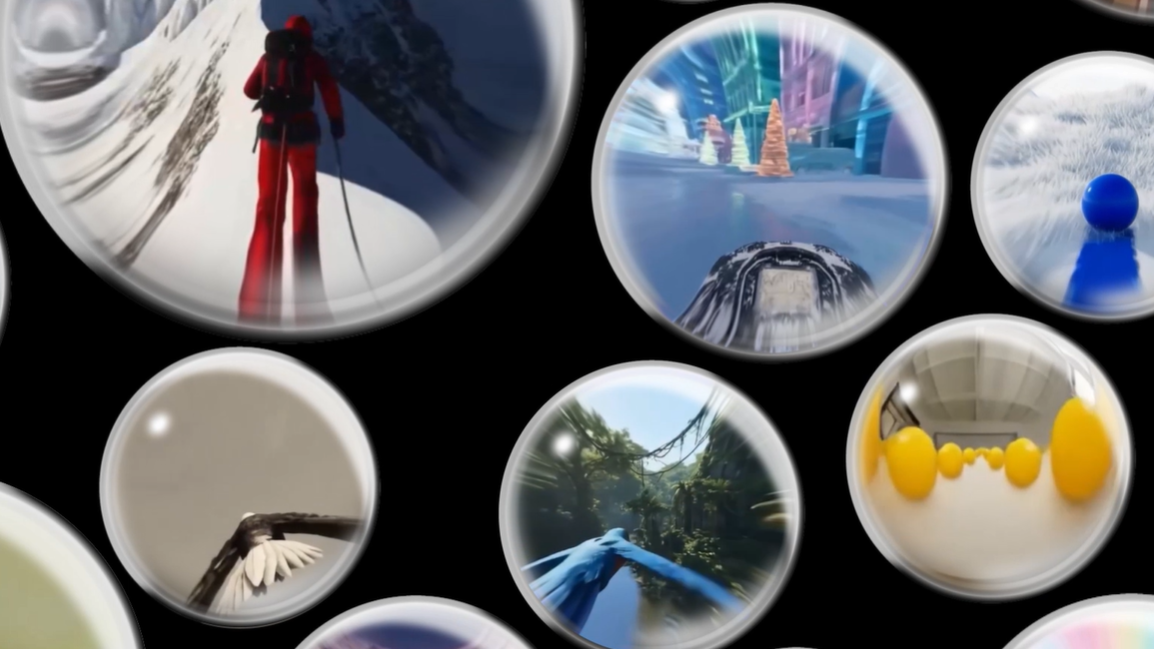
This year marks a major acceleration. Google DeepMind released Genie 3 for real-time interactive 3D worlds. NVIDIA launched its Cosmos platform for physical AI. Fei-Fei Li's World Labs introduced Marble, and Yann LeCun's AMI Labs raised significant funding to build systems grounded in reality.
World Models represent the next frontier beyond next-token prediction. They enable AI to “imagine” outcomes, plan safely, and interact reliably with the real world — critical for robotics, autonomous vehicles, scientific discovery, and AGI.
In this article, we break down what World Models are, the major players driving 2026 breakthroughs, their capabilities, real-world applications, challenges, and how developers can get started.

What Are World Models?
World Models are AI systems that build an internal representation of the physical world — including space, time, physics, causality, and object permanence. Unlike LLMs that predict text or video generators that create isolated clips, World Models simulate how environments evolve in response to actions.
Key characteristics:
- Predictive Simulation: Forecast future states (“If I do X, what happens next?”).
- Action-Conditioned: Respond to interventions in real time.
- Spatial & Physical Intelligence: Understand 3D geometry, gravity, materials, and persistence.
- Long-Horizon Planning: Maintain coherence over minutes or hours, not seconds.
The concept traces back to Jürgen Schmidhuber's work, but 2025–2026 brought it into practical reality through scalable video data, better architectures (autoregressive latent diffusion, JEPA), and massive compute.
World Models differ from pure video models (like Sora) because they are interactive and support agent training “in imagination.”
Major Players and Breakthroughs in 2026
Google DeepMind – Genie 3
Released in research preview, Genie 3 generates photorealistic, interactive 3D environments from text or images at 24 fps in real time. It supports persistent worlds with object permanence and emergent physics. It powers Project Genie for Google AI Ultra users and aids agent training and simulation.
NVIDIA Cosmos
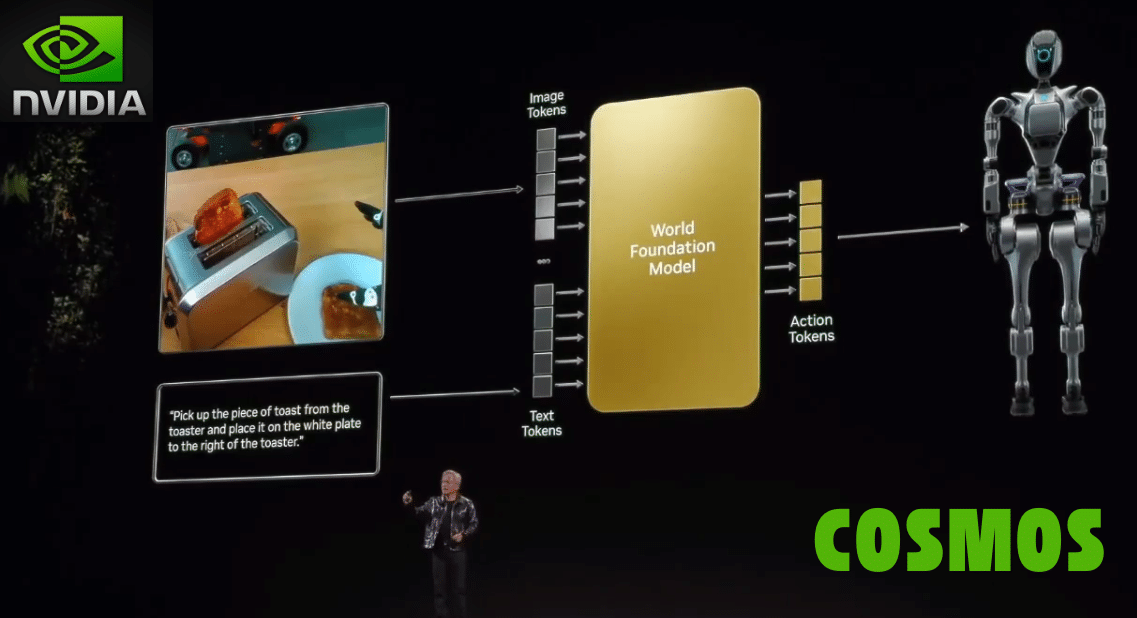
A platform of open-weight World Foundation Models (WFMs) trained on massive robotics and driving data. Cosmos supports Text2World, Image2World, and Video2World generation with strong physics awareness. It serves as infrastructure for synthetic data generation and robot policy training.
World Labs (Fei-Fei Li) – Marble
Marble creates editable 3D worlds from text, images, sketches, or video. It uses Gaussian splats for interactive scenes exportable as meshes or video. It emphasizes spatial intelligence and precise control, suitable for creative industries, VR, and robotics simulation.
Yann LeCun's AMI Labs
Focused on JEPA-style architectures that learn abstract representations by predicting in latent space rather than pixels. Aims for grounded, efficient world understanding with persistent memory and complex planning.
Other notable efforts include Runway, Tencent's HunyuanWorld, and OpenAI's continued Sora evolution.
Key Technical Capabilities & Benchmarks
Modern World Models excel in:
- Real-time Interactivity — Genie 3 achieves 24 fps navigation.
- Physics Consistency — Cosmos leads in benchmarks like Sampson error and pose estimation.
- Editability & Controllability — Marble supports object manipulation and style transfer.
- Agent Training — Simulated environments accelerate reinforcement learning with less real-world data.
| Model / Platform | Key Strength | Resolution / Speed | Primary Use Case | Availability |
|---|---|---|---|---|
| Genie 3 (DeepMind) | Real-time interactive 3D | 720p @ 24 fps | Agent training, gaming | Research Preview |
| NVIDIA Cosmos | Physics-aware synthetic data | Varies (open models) | Robotics, AV | Open-Weight |
| Marble (World Labs) | Editable 3D spatial intelligence | Interactive (browser) | Creative tools, simulation | Public / Commercial |
| AMI Labs (LeCun) | Abstract JEPA representations | Emerging | Grounded reasoning | Early Stage |
These systems show strong gains in long-horizon coherence and intervention sensitivity compared to 2024–2025 video models.
Real-World Applications & Impact
Sector 01
Robotics & Embodied AI
World Models generate diverse training data and allow safe policy testing in simulation before real deployment. NVIDIA Cosmos powers humanoid robot development.
Sector 02
Autonomous Vehicles
Simulation of rare edge cases improves safety. Genie 3 integrates with Waymo simulators.
Sector 03
Creative Industries & Gaming
Rapid prototyping of interactive worlds for film, VR, and games. Project Genie enables user-generated playable environments.
Sector 04
Scientific Discovery
Simulating physical systems (materials, climate, molecular dynamics) for accelerated research.
Sector 05
Autonomous Agents
Training reliable long-horizon agents that plan and act in dynamic environments.
Challenges and Limitations
- Consistency Gaps — Objects still disappear or physics violations occur over long horizons.
- Data & Compute Hunger — Training requires enormous video datasets.
- Evaluation Difficulty — No universal benchmarks for “world understanding.”
- Real-World Transfer — Simulation-to-reality (sim2real) gap remains significant.
Current models are strong prototypes but not yet perfect digital twins of reality.
How Developers and Businesses Can Get Started
- NVIDIA Cosmos — Download open models from Hugging Face or NGC. Experiment with synthetic data pipelines.
- Project Genie — Available to Google AI Ultra subscribers for interactive world creation.
- World Labs Marble — Sign up at marble.worldlabs.ai for 3D world generation.
- Frameworks — Integrate with Isaac Lab, MuJoCo, or custom RL environments.
Tips: Start with short-horizon tasks, combine with existing LLMs for high-level planning, and focus on domain-specific fine-tuning.
The Bigger Picture: World Models and the Road to AGI
Industry leaders like Demis Hassabis see World Models as essential for AGI. They bridge the gap between language understanding and physical intelligence. In 2026, the convergence of World Models with Agentic AI and robotics points toward more reliable, embodied intelligence.
Globally, this race involves the US (DeepMind, NVIDIA, World Labs) and Europe/Asia contributions, democratizing powerful simulation tools.
Conclusion
World Models are not just another AI trend — they are foundational infrastructure for the next era of intelligent systems. Whether you build robots, create virtual worlds, or develop autonomous agents, 2026 is the year to engage with this technology.
Ready to explore? Try NVIDIA Cosmos models or World Labs Marble today. What physical or virtual world will you simulate first?
Subscribe for more deep dives into frontier AI, and share your thoughts in the comments.
FAQ
Q: What is the difference between a World Model and a video generation model?
World Models are interactive and action-conditioned simulators, while video models typically generate fixed clips.
Q: Is Genie 3 publicly available?
It is in limited research preview and powers Project Genie for eligible Google AI Ultra users.
Q: How can World Models help robotics development?
They generate synthetic training data and safe simulation environments, reducing real-world trial-and-error.
Q: Who is leading World Model research?
DeepMind, NVIDIA, Fei-Fei Li's World Labs, and Yann LeCun's AMI Labs are at the forefront.
Q: Are World Models open source?
NVIDIA Cosmos offers open-weight models; others vary from research preview to commercial.
This article is based on official announcements, technical papers, and industry reports as of late May 2026.