
 OpenAI - ChatGPT, Sora
 Google - Gemini, Nano Banana
 Anthropic - Claude
 xAI - Grok
 Deepseek
 Alibaba - Qwen
 ByteDance - Doubao
 All Models
 Enterprise Plans
 AI Application Development
 AI Translator API
 AI SEO/GEO Service
 GEO-Optimized PR Service
 Web Scraping Service
 OpenClaw
 Top AI Tools
 Top AI Robots
 Log in
The Siri AI revolution.
And everything else.
Apple's WWDC 2026 delivered a definitive turning point — new Liquid Glass design language, macOS Golden Gate, and a Siri that finally understands who you are and what you're looking at. This is the complete record.
If 2024 was about introducing Apple Intelligence and 2025 stabilized it, 2026 is the year Apple completely weaves contextual, privacy-first artificial intelligence into the very fabric of daily hardware. From the stunning new Liquid Glass design language across all operating systems to a smarter, screen-aware Siri powered by upgraded Apple Foundation Models, there is a massive amount of ground to cover.
At a Glance — the four pillars.
The WWDC 2026 Keynote followed a structured narrative transitioning seamlessly from traditional OS features to deep architectural AI updates — organized into four distinct chapters:
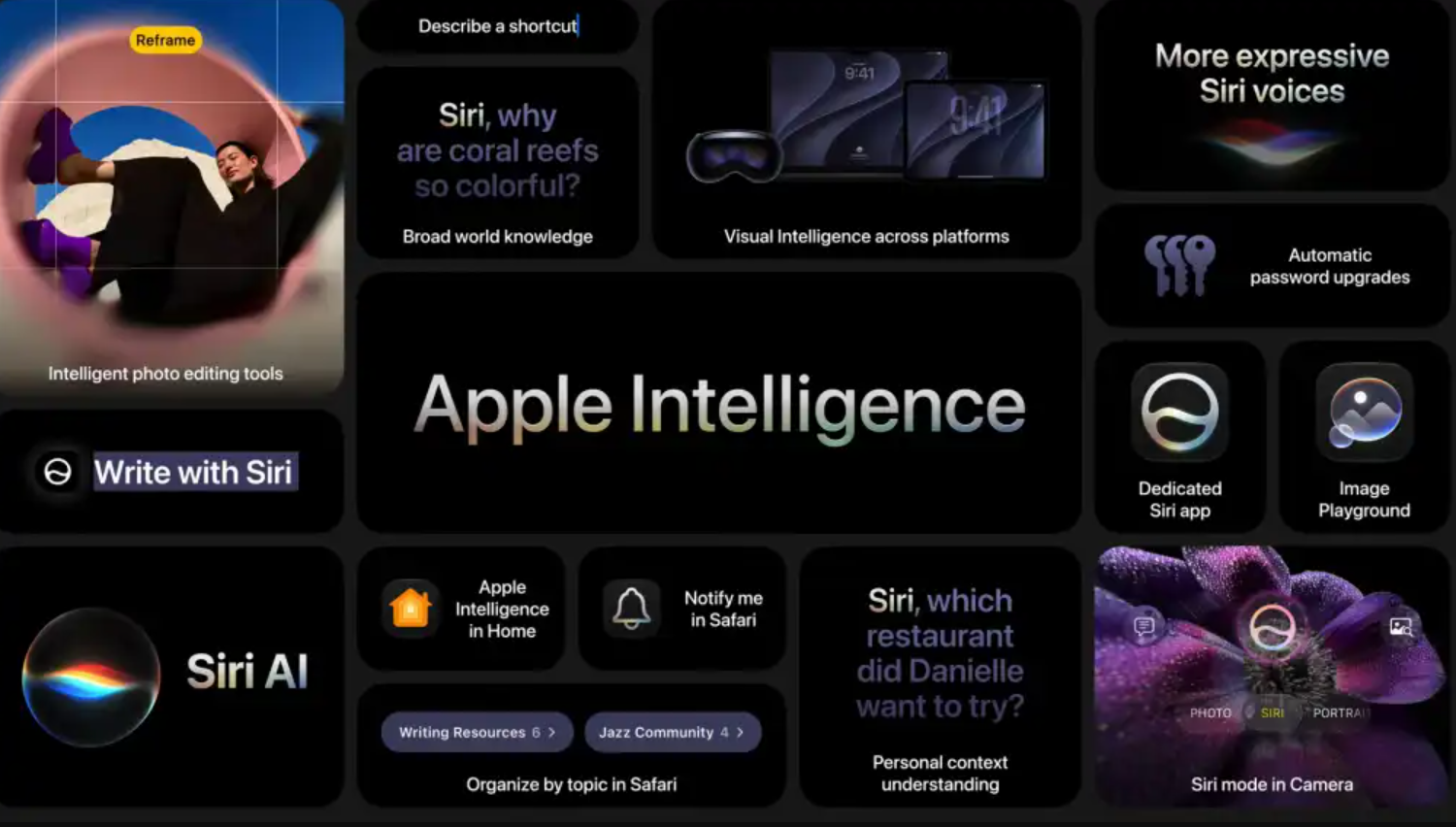
- The Siri AI Revolution — A complete overhaul making Siri contextually aware, capable of cross-app execution, integrated with global knowledge bases via Google Gemini.
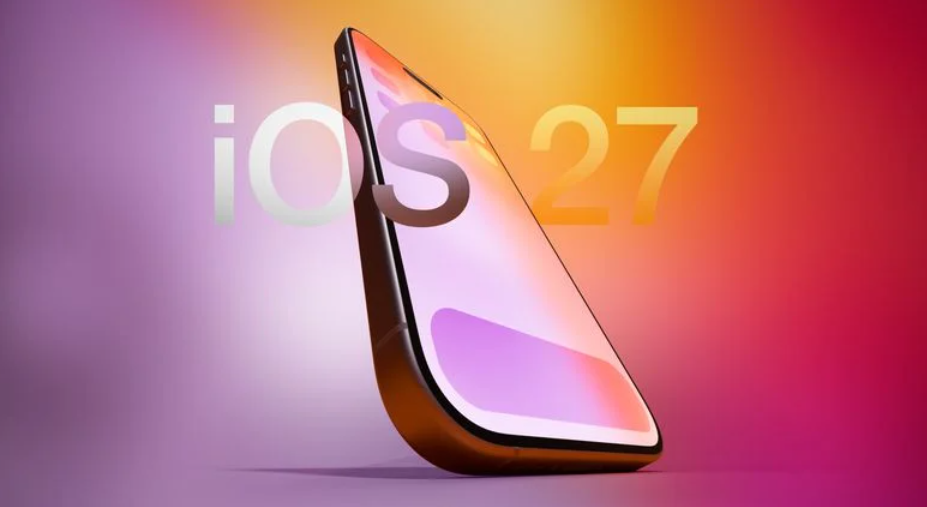
- iOS 27 & macOS "Golden Gate" — Introducing unified Liquid Glass design, edge-to-edge structural changes, 20% faster app launch speeds, and significant performance optimization.
- Apple Intelligence Gen-2 — Advanced on-device processing reading on-screen content, cross-app search, and deep video/camera semantic analysis.
- Security Infrastructure — A brand-new dedicated Passwords subsystem and strict context-isolation protocols for third-party AI plug-ins.
Siri AI — the undisputed headline.
For years, users have asked for a Siri that truly understands who they are and what they are looking at. At WWDC 2026, Apple finally delivered. The new Siri AI is no longer just a voice assistant — it is an omnipresent, proactive orchestrator across Apple devices.
Siri can now understand what is happening on your display. If a friend texts you an address in Messages, say "Add this to my itinerary in Notes" and Siri extracts the text contextually — no copy-paste required.
Leveraging advanced on-device semantic indexes, Siri spans emails, calendar events, documents, and photo metadata. "When does my mom's flight land, and what hotel did she book?" — cross-referenced from Mail and Messages instantly.
"Find the document Sarah sent me yesterday, highlight the budget table, and email it to Tom." Siri executes the sequence across files, productivity apps, and mail clients — seamlessly, in one go.
Apple's upgraded on-device Apple Foundation Models handle roughly 80% of daily user requests locally. For complex world-knowledge requests, Apple formally expanded its cloud partnership with Google Gemini as an opt-in backend. When a query is passed to Gemini, Apple uses strict data-obfuscation layers: your IP address is hidden, and zero personal identifiers are sent to external servers.
iOS 27, macOS Golden Gate, and beyond.
Apple refreshed its entire software lineup with a heavy focus on structural consistency, fluid animations, and the new design ethos termed Liquid Glass — blending deep translucent materials with highly reactive micro-interactions.
macOS 27 "Golden Gate", named after San Francisco's iconic bridge, brings unprecedented visual alignment with iOS: edge-to-edge interfaces that maximize screen real estate on MacBook displays, and upgraded snapping mechanics allowing persistent workspaces that synchronize across external monitors and iPad Sidecar setups.
| OS | Standout Feature | Design | Min. Device |
|---|---|---|---|
| iOS 27 | Siri Screen Awareness & AI Photo Editing | Liquid Glass | iPhone 15 (Pro for full AI) |
| macOS Golden Gate | Edge-to-Edge UI & Workspace Syncing | Liquid Glass | Apple Silicon (M1+) |
| iPadOS 27 | Desktop Background Execution + Stage Manager | Liquid Glass | iPad Air/Pro (M1+) |
| watchOS 27 | Preventative Health & Predictive Vitals | Dynamic Complications | Apple Watch Series 8+ |
| visionOS 27 | Spatial AI Object Labeling | Immersive Pass-through | Apple Vision Pro (Gen 1) |
From writing tool to knowledge graph.
Apple Intelligence has evolved from a writing and emoji generation tool into a deeply integrated automation engine. By treating on-device data as a unified knowledge graph, it now powers advanced system utilities across every Apple platform.
- Unified Password Management — Passwords stripped from Settings into a standalone cryptographic Passwords App across iOS, macOS, and Windows via iCloud. Actively monitors credential leaks and flags weak, nested passwords using local AI.
- Camera & Multimedia Analysis — Real-time clipping analysis. Point your camera at a restaurant flyer or corporate chart and Apple Intelligence digitizes layouts, parses dates, and cross-checks your calendar for conflicts.
- Contextual Web Search — Safari's new Reader mode builds instant abstract summaries of complex web articles, extracting key figures, timelines, and author biases using localized NLP models.
Privacy-first — by architecture.
Every AI interaction requiring off-device processing is funneled through Apple's Private Cloud Compute (PCC). Data sent to Apple silicon servers is never written to persistent storage and is instantly destroyed upon query completion. Independent security auditors can inspect cryptographic code images running on PCC servers at any time — a level of transparency unmatched in the industry. iOS 27 also introduces on-device computer vision that blurs explicit content across all communication apps, with an opt-in, encrypted parental reporting mechanism.
The timeline — and the caveats.
Despite the high optimism, several caveats sparked heavy debate among analysts and developers:
- The EU Delay — Due to the Digital Markets Act (DMA), several advanced Apple Intelligence features and Siri cross-app action chains will be delayed in the European Union market.
- The Waitlist Hurdle — Much like prior Apple Intelligence iterations, the most desired Siri functions require signing up for a phased waitlist — millions won't see the true Siri AI until late winter.
- Hardware Exclusion — Older devices (base iPhone 15 and below) are locked out of next-generation Apple Intelligence features, creating stark fragmentation and forcing a steep hardware upgrade cycle.
Is it worth the upgrade?
Apple is not building a chatbot. They are turning the operating system itself into the AI.
If you own an iPhone 15 Pro or an M-series Mac, iOS 27 and macOS Golden Gate are absolutely worth the upgrade the moment the public beta stabilizes in July. The Liquid Glass interface breathes fresh life into the ecosystem, and the native Passwords app and automated photo editing are immediately useful.
For developers, this is an essential cycle. The App Intents API overhauls mean that if your application does not integrate with Siri's new cross-app workflows by autumn, you risk losing substantial user engagement to competitors who adopt early.
By prioritizing context, hardware optimization, and uncompromised privacy, Apple has solidified its ecosystem as the safest, most cohesive environment for the future of personal computing