
 OpenAI - ChatGPT, Sora
 Google - Gemini, Nano Banana
 Anthropic - Claude
 xAI - Grok
 Deepseek
 Alibaba - Qwen
 ByteDance - Doubao
 All Models
 Enterprise Plans
 AI Application Development
 AI Translator API
 AI SEO/GEO Service
 GEO-Optimized PR Service
 Web Scraping Service
 OpenClaw
 Top AI Tools
 Top AI Robots
 Log in










China AI Companion App Regulations: What Beijing's New Rules Really Mean

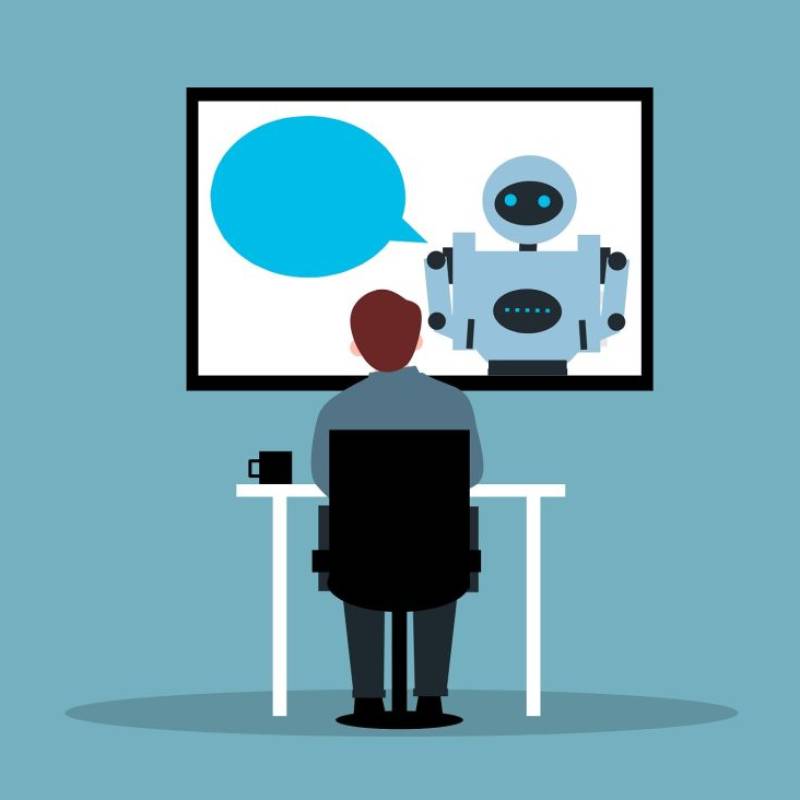
An AI companion sounds dystopian — but it has become a central thread in the growing conversation about the risks of generative AI. At its core, an AI companion is a conversational agent designed to sustain an ongoing, personal relationship with a user, complete with persistent memory and a consistent persona across sessions.
Emotional attachment often follows by design — and increasingly, that attachment is the selling point. Much of the use is casual roleplay or simply wanting something that remembers you. But as more people in China began treating these bots as genuine emotional companions, Beijing has now decided the practice needs formal rules.
📌 China's AI companion regulations took effect on July 15, 2026. In the days before the deadline, the country's two most-used consumer AI apps quietly switched off the features at their core.
ByteDance's Doubao told users its agent function would go offline on July 15, citing "product function adjustments," while Alibaba's Qwen announced that its humanlike and user-created agents would stop working on July 10, with its wider agent services shutting down five days later.
Read quickly, it looks like China is turning off AI agents. It isn't. The rules draw a clear line between the agent that does your work and the agent that keeps you company — and it is only the second kind that Beijing has moved against.
📄 The Regulation: What It Is
The regulation is formally titled the Interim Measures for the Administration of AI Anthropomorphic Interactive Services. It was co-issued on April 10, 2026, by the Cyberspace Administration of China alongside four partner agencies:
- National Development and Reform Commission
- Ministry of Industry and Information Technology
- Ministry of Public Security
- State Administration for Market Regulation
The measures cover services that simulate human personality traits, thinking patterns, and communication styles to provide sustained emotional interaction. Customer service bots, knowledge Q&A tools, workplace assistants, and education and research platforms are excluded — provided they avoid sustained emotional engagement. This is the first dedicated national framework of its kind, shaped after a public-comment draft released late last year.
⚠️ A Design Problem, Not a Ban
Doubao and Qwen did not fall foul of a prohibition. They fell foul of a design conflict. The measures require companion services to:
- Run anti-addiction systems
- Issue mandatory usage notifications
- Offer instant-exit mechanisms
- Provide real-time detection of unhealthy dependence
Those demands sit awkwardly with agents built to remember a user, stay consistent across sessions, and sustain an ongoing relationship. Rather than retrofit the feature, ByteDance chose to shut it down. Alibaba appears to have made the same call.
ByteDance is now directing Doubao users to Maoxiang, a separate app where they can create agents again. Alibaba has announced no equivalent migration path for Qwen users. Tencent's Yuanbao pulled a comparable feature back in June.
💬 The cost has landed on users. Many mourned the shutdowns openly on Weibo, with one poster describing the agents as long-standing emotional support and lamenting the lack of an easy way to export chat histories.
Doubao is letting users view their configurations and conversations in read-only mode until October 15, 2026, before the data becomes unrecoverable under its privacy policy. Qwen users have been given no comparable grace period — agent data is set for permanent deletion.
🔒 What China's AI Companion Rules Set Out
The substance is more considered than a blunt clampdown suggests. Key provisions include:
- 🚫 Providers are barred from offering virtual companion or virtual family-member services to minors
- 👤 Guardian consent is required before serving users under age 14
- ⏳ Dedicated "minor modes" must include usage-time limits, real-world interaction reminders, and enhanced parental controls
- 🚩 Providers must detect users in acute distress and intervene where someone shows signs of self-harm, suicidal behaviour, or serious financial loss
- 🚫 Engineering emotional dependence or using emotional manipulation to induce unreasonable decisions are explicitly prohibited
The compliance machinery is heavy. Services that launch anthropomorphic functions or cross thresholds of one million registered users or 100,000 monthly actives must run security assessments covering eight areas — from training-data handling to minor protection — and file reports with provincial regulators. App stores must verify compliance and remove non-compliant products.
🌎 On paper, this represents a fuller set of user protections than the EU, the US Federal Trade Commission, or California's SB 243 has yet put into force.
❓ What the Rules Leave Open
What the measures do not settle matters just as much. They fix no technical threshold for what counts as emotional interaction — and that grey zone is precisely why platforms pulled entire features rather than risk landing on the wrong side of it.
They also leave open how liability is split between platform operators and upstream model providers when a violation stems from the model's outputs, and they give users no right to carry their data out.
The enforcement backdrop sharpens the point. Shanghai's internet regulator said on June 26 it had removed more than 14,000 non-compliant AI agents, citing impersonation of official entities, vulgar role-play, and unauthorised collection of personal data.
⚖️ Safety vs. Control: Two Halves of the Same Rulebook
Whether this is the right direction depends on which half of the rulebook you read.
The safety half addresses harms that are documented and largely unregulated elsewhere — from teenagers forming attachments to chatbots to companion apps harvesting intimate data. China's own official interpretation points abroad for support, citing the Character.AI lawsuits over psychological harm to teenagers, FTC investigations into companionship services, and European action against Replika.
The control half hands Beijing a lever over what these systems may say, wrapped in the same language of user protection. Both are real — and governments watching the experiment will have to decide which parts they are willing to borrow.
🗣 Pan Helin, an MIIT expert-committee member, put the official case plainly to the South China Morning Post, saying "current agents are not yet mature" and framing the policy around safety and standardisation.
The companies, for now, have taken the safest route available to them: switch the components off and work out what a compliant version looks like later.