
 OpenAI - ChatGPT, Sora
 Google - Gemini, Nano Banana
 Anthropic - Claude
 xAI - Grok
 Deepseek
 Alibaba - Qwen
 ByteDance - Doubao
 All Models
 Enterprise Plans
 AI Application Development
 AI Translator API
 AI SEO/GEO Service
 GEO-Optimized PR Service
 Web Scraping Service
 OpenClaw
 Top AI Tools
 Top AI Robots
 Log in








How EON Uses SAP S4HANA and AI to Modernize the Energy Grid

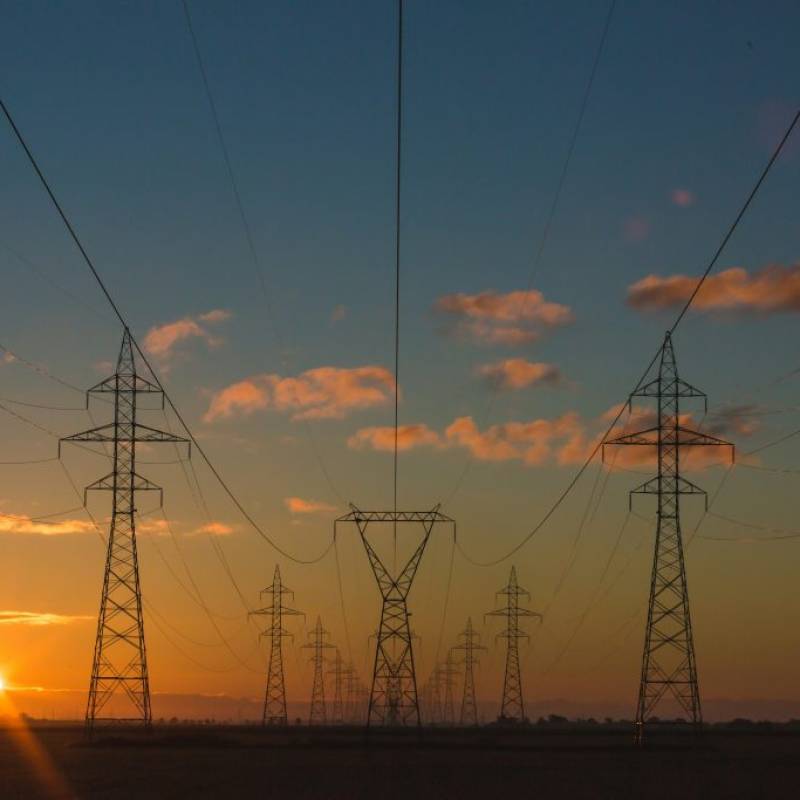
Standardising grid data through SAP S/4HANA is enabling E.ON to modernise its energy infrastructure and accelerate AI deployments across its enterprise operations.
The utility giant manages infrastructure across three distinct domains: energy grids, customer solutions, and energy infrastructure solutions. Maintaining operations at this scale demands continuous capital expenditure on IT hardware and software maintenance.
While leadership initially questioned the business case for large-scale technology spending, the engineering team demonstrated that sustained financial investment is essential to guarantee system stability, affordability, and resilience within a digitised energy network. E.ON now prioritises growth, sustainability, and digitalisation as its core corporate objectives — recognising that falling behind technically carries long-term financial risk.
⚡ Infrastructure Standardisation Drives Uptime
E.ON's cloud ERP migration runs in parallel with its SAP S/4HANA implementation. Legacy ERP systems in the utility sector are notorious for excessive customisation and accumulated technical debt. To counter this, E.ON's engineering department rejects fragmented custom builds entirely — integrating established software packages directly into a cohesive, scalable architecture.
📈 E.ON reports a 77% reduction in IT downtime over a five-year period — achieved by standardising data tables and removing redundant middleware from the technology stack.
SAP S/4HANA's in-memory database architecture significantly accelerates query processing compared to legacy relational databases. E.ON leverages this speed to process telemetry data streaming from grid assets in real time — a critical prerequisite for deploying machine learning models against operational data.
E.ON CIO Sebastian Weber acknowledges the mounting pressure technology leaders face to match the pace of external software development. Consumer AI tools like ChatGPT have set new expectations for enterprise automation, and E.ON is actively closing the gap between external software capabilities and internal organisational readiness.
🔒 Internalising Data and Cybersecurity Operations
E.ON has aggressively expanded its internal engineering teams to bring critical technical capabilities in-house. The recruitment drive resulted in the hiring of over 1,000 specialists, including:
- 📊 500+ data experts to build proprietary data lakes and manage internal data governance
- 🛡 300+ cybersecurity professionals to maintain strict access controls over operational technology systems managing the physical energy grid
By owning data engineering internally, E.ON can audit data governance with full transparency. Engineering now acts as the primary vehicle for achieving commercial targets within the European green energy sector.
To manage digital ecosystems at this volume, the technical team has established centralised governance structures across all business units — deploying standardised contracting frameworks and unified IT management consoles. This administrative architecture enforces security standards and cost discipline without restricting feature development, while also accelerating software procurement timelines and controlling licensing costs.
🚫 Deprecating Isolated Innovation Hubs
E.ON has completely abandoned the practice of isolating experimental technologies in separate business units. The company deprecated its experimental garages and isolated digital labs, instead integrating digital tools directly into active business processes.
Keeping innovation teams siloed from production environments often prevents applications from surviving the transition to live systems. By requiring developers to build within the core architecture, E.ON's engineering department ensures production viability from the outset.
💬 "Bringing the system up to speed requires internal readiness. It means we must think deeply about investments, prioritisation, and most importantly, people and culture."
— Sebastian Weber, CIO, E.ON
Weber confirms the company will not return to previous delivery speeds. E.ON enforces a "BizDevOps" operating model that compels developers to build features with precise commercial value — with engineers collaborating directly alongside business analysts during the initial architecture phase.
This methodology is reinforced through targeted employee training. Line workers and managers receive specific instruction on newly-deployed tools, ensuring staff can extract verifiable value from the modernised infrastructure.
🤖 E.ON Takes a Pragmatic Approach to AI
E.ON manages AI deployments with deliberate caution. Rather than building proprietary AI platforms from scratch, leadership prefers partnering with established technology vendors — a procurement strategy that maintains flexibility across the corporate software portfolio.
The current AI technical roadmap targets three specific use cases:
- 🪝 Customer service automation — reducing call centre loads and accelerating incident resolution across a base of 47 million users
- 🔧 Predictive maintenance — sensors detect voltage anomalies and transmit telemetry to the central S/4HANA instance, where ML models identify wear patterns and dispatch maintenance crews before equipment fails
- ⚙ Operational optimisation — applying machine learning to reduce emergency repair costs and prevent localised power outages
💬 "In essence, our experience highlights a broader truth about digital transformation — pushing new software to production cannot compromise system stability, cybersecurity, or governance frameworks."
— Sebastian Weber, CIO, E.ON
Testing AI applications through third-party providers allows E.ON to avoid overcommitting capital to unproven frameworks. Automation features are embedded directly into core systems — not treated as optional add-ons. Without proper alignment with business requirements, Weber warns, even the most advanced technologies will fail to deliver real value.
The modernised architecture now provides E.ON with the foundational capability to scale green energy infrastructure reliably — positioning the company for long-term leadership in Europe's energy transition.