
 OpenAI - ChatGPT, Sora
 Google - Gemini, Nano Banana
 Anthropic - Claude
 xAI - Grok
 Deepseek
 Alibaba - Qwen
 ByteDance - Doubao
 All Models
 Enterprise Plans
 AI Application Development
 AI Translator API
 AI SEO/GEO Service
 GEO-Optimized PR Service
 Web Scraping Service
 OpenClaw
 Top AI Tools
 Top AI Robots
 Log in










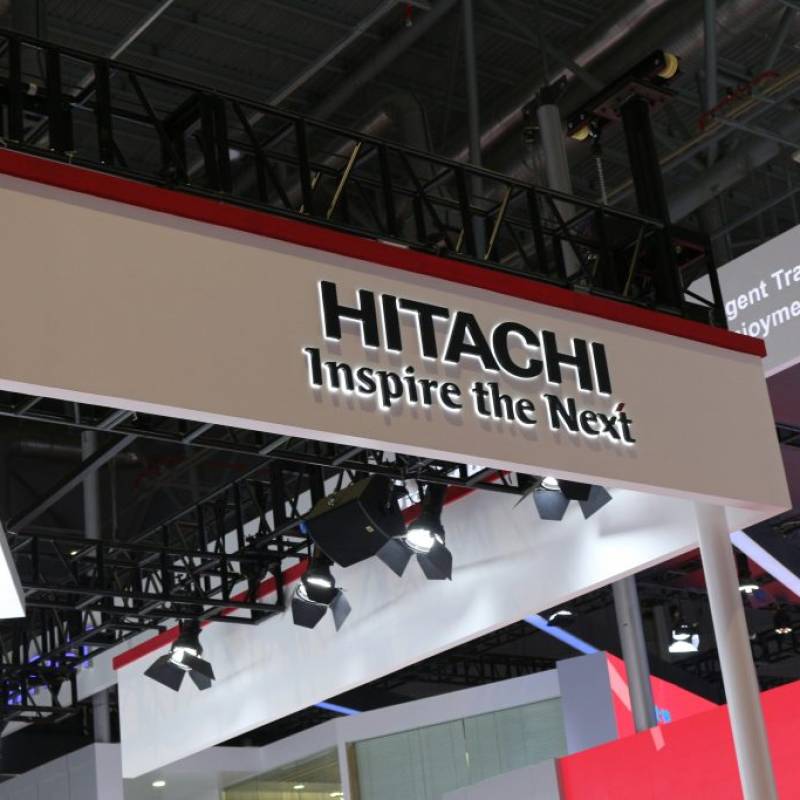
Hitachi Uses Industrial Expertise to Lead the Physical AI Revolution
Physical AI — the branch of artificial intelligence that controls robots and industrial machinery in the real world — has a hierarchy problem. At the top, OpenAI and Google are scaling multimodal foundation models. In the middle, Nvidia is building the platforms and tools for physical AI development.
And then there is a third camp: industrial manufacturers like Hitachi and Germany's Siemens, that are making the quieter but arguably more grounded argument that you cannot train machines to navigate the physical world without first understanding it.
That argument is now moving from boardroom strategy to factory floor deployment, as Hitachi revealed in a recent interview with Nikkei Asia.
⚙️ Why Physical AI Needs a Better Model
Kosuke Yanai, deputy director of Hitachi's Centre for Technology Innovation – Artificial Intelligence, is direct about what separates viable physical AI from the theoretical kind:
"Physical AI cannot be implemented in society without a systematic understanding that begins with foundational knowledge of physics and industrial equipment."
— Kosuke Yanai, Hitachi Centre for Technology Innovation-AI, via Nikkei
Hitachi's pitch is that it already holds much of that foundational knowledge — accumulated over decades of building railways, power infrastructure, and industrial control systems. The company has:
- 🌊 Thermal fluid simulation technology that models the behaviour of gases and liquids
- 📡 Signal-processing tools for monitoring equipment condition
- 🏗️ Deep engineering foundations in product design and control logic construction
🏭 Real-World Deployments: Daikin and JR East
While Hitachi's overarching physical AI architecture — the Integrated World Infrastructure Model (IWIM), described as a mixture-of-experts system integrating multiple specialised models and datasets — remains in the concept verification stage, two real-world deployments signal that the underlying approach is already producing results.
🌬️ Daikin Industries — AI-Powered Fault Diagnosis
In collaboration with Daikin Industries, Hitachi has deployed an AI system that diagnoses malfunctions in commercial air-conditioner manufacturing equipment. Trained on maintenance records, procedure manuals, and design drawings, the system can now identify which component is likely failing when an anomaly is detected — the kind of operational intuition that previously existed only in the heads of experienced engineers.
🚆 East Japan Railway (JR East) — Railway Traffic Management AI
With JR East, Hitachi has built an AI that identifies the root cause of malfunctions in control devices running the Tokyo metropolitan area's railway traffic management system, then assists operators in formulating a response plan. In a network where delays ripple across millions of daily journeys, the ability to accelerate fault diagnosis carries real operational weight.
🔬 The R&D Pipeline: Cutting Development Time
Hitachi's physical AI push is also showing up in its research output. In December 2025, the company published findings from two projects presented at ASE 2025, a top-tier software engineering conference, addressing a persistent bottleneck in industrial AI: the time and effort required to write and adapt control software.
🚗 Automotive Sector — ECU Testing Automation
Hitachi and its subsidiary Astemo developed a system using retrieval-augmented generation (RAG) to automatically produce integration test scripts for vehicle electronic control units (ECUs). In a pilot involving multi-core ECU testing:
Reduction in integration testing man-hours vs. manual execution
📦 Logistics — Modular Robot Control Software
In logistics, Hitachi developed variability management technology that modularises robot control software into reusable components structured around a robot operating system (ROS). This lets operators adapt robotic picking-and-placing workflows to new products or layouts without rewriting software from scratch.
🛡️ Safety as a Structural Requirement
One thread that runs through all of Hitachi's physical AI work is its emphasis on safety guardrails — not as a compliance checkbox, but as an engineering constraint baked into system design. According to Yanai, the company is integrating its control and reliability technology from social infrastructure development to prevent AI outputs from deviating from human-approved operating parameters.
This includes:
- ✅ Input validation — screening out data that models should not be trained on
- ✅ Output verification — ensuring machine actions do not endanger people or property
- ✅ Real-time AI model monitoring — detecting operational anomalies as they occur
⚠️ Physical AI systems fail in the real world, not in a sandbox. The stakes for an AI controlling railway signalling or factory robotics are categorically different from those governing a chatbot.
🖥️ Infrastructure to Match Ambition
Hitachi Vantara — the group's data and digital infrastructure arm — is positioning itself as an early adopter of NVIDIA's RTX PRO Servers, built on the RTX PRO 6000 Blackwell Server Edition GPU, designed to accelerate agentic and physical AI workloads. The hardware is being paired with Hitachi's iQ platform and used to build digital twins — virtual replicas of physical systems — capable of simulating everything from grid fluctuations to robotic motion at scale.
The IWIM concept is designed to connect Nvidia's open-source Cosmos physical AI development platform with specialised Japanese-language LLMs and visual language models via the model context protocol (MCP) — essentially a framework to stitch together the models, simulation tools, and industrial datasets that physical AI systems require.
The broader race in physical AI is far from settled. But Hitachi's position — that domain expertise and operational data are as important as model architecture — is increasingly hard to dismiss, particularly as deployments with partners like Daikin and JR East begin to demonstrate what that expertise is actually worth in practice.
Sources:
Nikkei Asia (Feb 21, 2026) | Hitachi R&D (Dec 24, 2025) | Hitachi Vantara Blog (Aug 27, 2025)
See also: Alibaba enters physical AI race with open-source robot model RynnBrain
📅 Want to learn more about AI and Big Data from industry leaders?
Check out the AI & Big Data Expo taking place in Amsterdam, California, and London. The comprehensive event is part of TechEx and co-located with other leading technology events. Click here for more information.
AI News is powered by TechForge Media. Explore other upcoming enterprise technology events and webinars here.