
 OpenAI - ChatGPT, Sora
 Google - Gemini, Nano Banana
 Anthropic - Claude
 xAI - Grok
 Deepseek
 Alibaba - Qwen
 ByteDance - Doubao
 All Models
 Enterprise Plans
 AI Application Development
 AI Translator API
 AI SEO/GEO Service
 GEO-Optimized PR Service
 Web Scraping Service
 OpenClaw
 Top AI Tools
 Top AI Robots
 Log in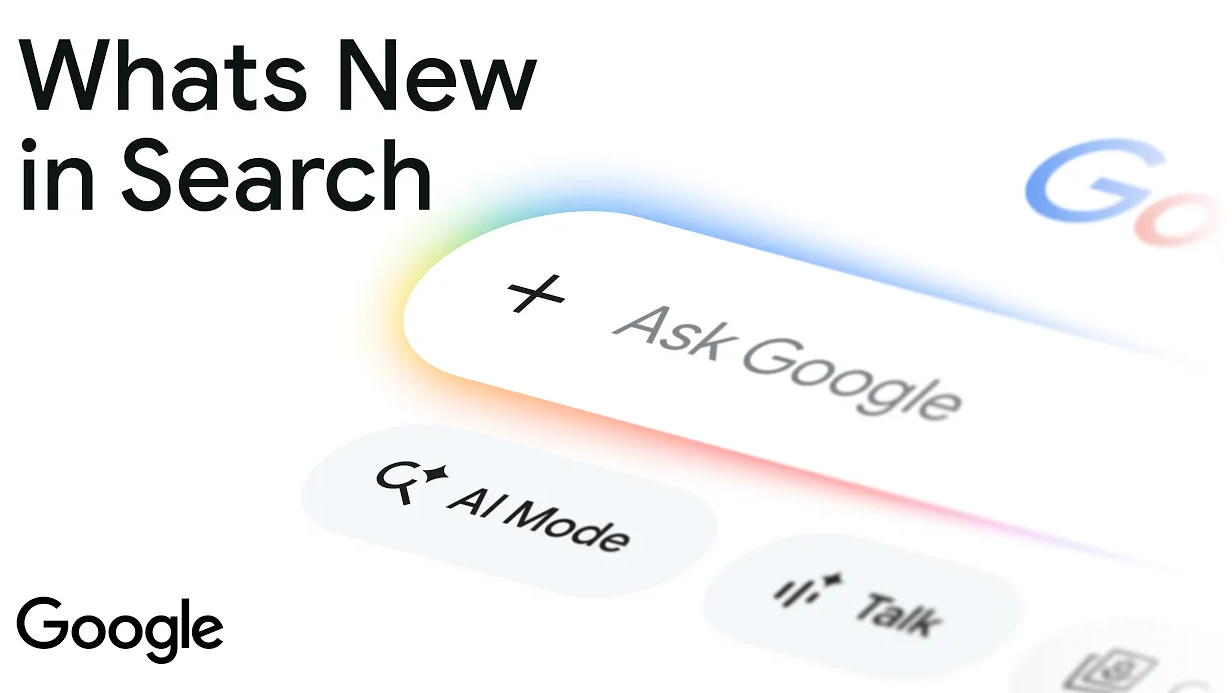
Google just rebuilt
search from scratch.
At I/O 2026, Google did to its search engine what Apple did to the phone in 2007 — blew the whole thing up and started over. The blue-links list is gone. In its place: an AI search box that takes text, files, and video, holds a conversation, and deploys always-on agents that monitor the web for you 24/7. Here's what actually changed, why it matters, and what it means for anyone who depends on search traffic.
For over two decades, Google built its empire on a single, simple premise: you type a question, it returns a list of links. At I/O 2026 on May 19, the company declared that premise is no longer enough.
Google's VP and Head of Search, Liz Reid, called it "the biggest upgrade to our iconic search box since its debut over 25 years ago." The language was deliberate. According to Google's own announcement, this is not a tweak to autocomplete — it is a reimagining of the foundational interaction between the world's most-used product and the billions of people who rely on it.
The new intelligent search box.
The centerpiece of the redesign is what Google calls an "intelligent search box" — less a search bar, more a personal research assistant. It dynamically expands as you type, designed for the long, conversational, hyper-specific questions that never fit neatly into keywords.
Three things make it fundamentally different from the box you've used for 25 years:
- Multimodal input. It accepts text, images, files, videos — and even your open Chrome tabs — as inputs to a single query. Upload a spreadsheet, drop in a video, reference a tab you're reading.
- Intent anticipation. A new AI-powered suggestion system goes beyond autocomplete, helping you formulate the precise question you're actually trying to ask.
- Continuous follow-up. You no longer re-search. You refine, clarify, and dig deeper in a conversation that holds context across turns — all powered by Gemini 3.5 Flash, now the default model behind AI Mode globally.
Type keywords → scroll blue links
Short queries. Ten ranked results. Click, read, hit back, refine the keyword, search again. The mental model of search since 1998.
Describe anything → get a synthesis
Long, natural questions with files and video attached. A synthesized answer, interactive tools built on the fly, and agents that keep working after you leave.
Beneath the box are new shortcuts to AI Mode, Talk (Search Live voice), and Create (image generation via Lens). A "plus" menu lets you attach images from your gallery or camera and documents from your files — directly into the query itself.
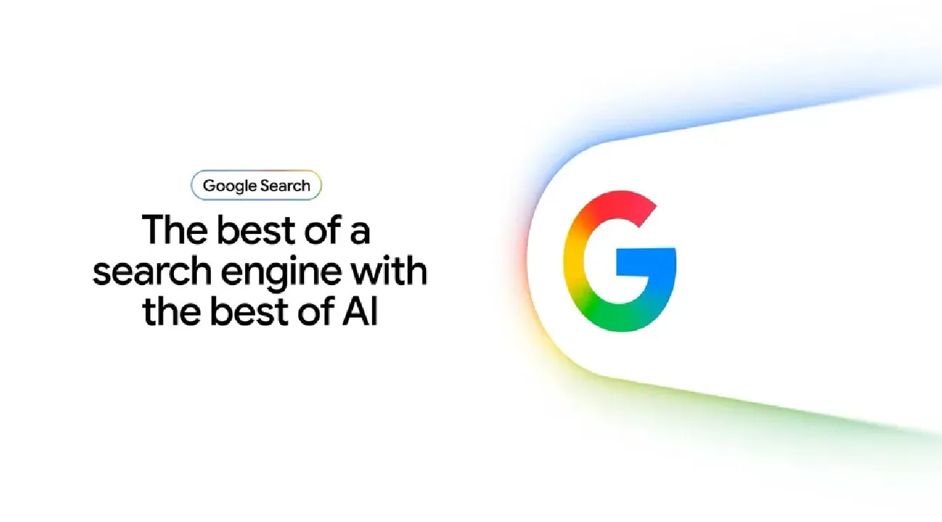 The reimagined AI Mode search box — multimodal input, intent anticipation, conversational follow-up. (Image: Google I/O 2026)
Information Agents — search that works while you sleep.
The most consequential announcement wasn't the box. It was a new category of tool Google calls Information Agents — persistent, background processes that monitor the web on your behalf and surface findings without being asked.
Google describes them as the next evolution of Google Alerts. But where Alerts emailed you keyword matches, Information Agents run continuously — 24/7, in the cloud — and deliver synthesized briefings via push notification when something genuinely worth flagging happens. A price drop. A creator's new content. A shift in a stock you track. The latest movement on a technology trend you're following.
You set the agent once. It does the searching, forever. Here's roughly what that looks like in practice:
Information Agents launch this summer for US subscribers of Google AI Pro and Ultra, living inside AI Mode in Search. It's a structural change in the relationship between you and the web: instead of you pulling information when you remember to look, the agent pushes it the moment it changes.
Generative UI & mini-apps you build by asking.
The redesign goes past synthesized text answers. Google Search can now generate interactive interfaces on the fly — custom dashboards, charts, comparison tools, and visualizations built dynamically around your specific query.
Ask for a way to compare three apartments across commute time, rent, and square footage, and Search builds the comparison tool — not a link to one. The most ambitious layer: natural-language mini-apps. Need a budget tracker, a flight comparison tool, a wedding-planning dashboard, or a moving checklist? Describe it, and the search engine assembles it without you writing a line of code.
The publisher & SEO reckoning.
If AI Overviews already worried publishers, this redesign is the moment the ground genuinely shifts. When Search synthesizes the answer, builds the tool, and keeps the user inside its own interface, the traditional click-through to your website becomes the exception, not the default.
The data is already stark. Independent research through 2024–2025 showed click-through reductions of 34–46% when AI summaries appear. Some publishers report far worse for specific query types. Yet there's a paradox worth understanding — and an opportunity inside it.
SEO is becoming GEO — Generative Engine Optimization.
The game is no longer ranking in ten blue links. It's being cited inside the AI-generated answer. Research suggests the overlap between top Google links and AI-cited sources has fallen from around 70% to below 20% — meaning page-one ranking no longer guarantees AI visibility, and AI visibility no longer requires page-one ranking.
What earns citations now: unique, non-commodity content with original data and first-hand expertise; aggressive structured data; direct Q&A-format answers; strong E-E-A-T authority signals; and — critically — speed of publication on trending topics. AI systems favor fresh information; there's a documented "citation cliff" where stale content loses visibility within months.
The brands cited inside AI answers reportedly earn 35% more organic clicks than non-cited competitors on the same queries. The traffic didn't vanish — it concentrated. It now flows to whoever the AI trusts enough to name.
| Dimension | Traditional SEO | GEO (2026) |
|---|---|---|
| Goal | Rank in top 10 links | Be cited in the AI answer |
| Content priority | Keywords, page speed | Original data, first-hand expertise |
| Authority signal | Backlinks, domain authority | Trusted mentions across the web |
| Format that wins | Long keyword-rich pages | Clear, self-contained, citable blocks |
| Freshness | Helps | Critical — citation cliff in ~3 months |
How to adapt — starting this week.
- Audit which of your pages already get cited in AI Mode and AI Overviews. Those are your GEO templates — reverse-engineer why they earned the citation.
- Restructure content into self-contained, citable blocks. Each section should answer one question completely, so an AI can lift it cleanly into a synthesis.
- Publish original data and first-hand expertise. Generic summaries an AI can write itself earn zero citation value. Proprietary numbers, tests, and experience do.
- Implement aggressive structured data (FAQ, HowTo, Article schema) so machines parse your content correctly.
- Move fast on trending topics. The citation cliff rewards speed — being early and authoritative on a fresh topic beats being comprehensive but late.
Frequently asked questions.
What is the new Google Search redesign?
What are Google's Information Agents?
What model powers the new Google Search?
Gemini 3.5 Flash, which became the default model powering AI Mode globally at I/O 2026. It's fast and cost-efficient enough to run AI search at Google's scale — over one billion monthly AI Mode users.How does the new search box handle files and video?
How does this affect SEO and website traffic?
Is the new Google Search available everywhere?
Building on Gemini 3.5 Flash? Access it through one API.
The same Gemini 3.5 Flash model now powering Google Search is available to developers — but managing API access, rate limits, and billing across Google Cloud projects alongside your other models is real overhead.
ai.cc gives you one key, one dashboard, one invoice across Gemini 3.5 Flash, Gemini Omni, Claude Opus 4.7, GPT-5.5, and 300+ more models. Build agentic search and monitoring workflows on the same model class that's reshaping Search — without the fragmented setup.
Get started at www.ai.cc →