
 OpenAI - ChatGPT, Sora
 Google - Gemini, Nano Banana
 Anthropic - Claude
 xAI - Grok
 Deepseek
 Alibaba - Qwen
 ByteDance - Doubao
 All Models
 Enterprise Plans
 AI Application Development
 AI Translator API
 AI SEO/GEO Service
 GEO-Optimized PR Service
 Web Scraping Service
 OpenClaw
 Top AI Tools
 Top AI Robots
 Log in
Mastra AI: The Ultimate TypeScript-Native Framework for Production AI Agents
Mastra AI: The Ultimate TypeScript-Native Framework for Production AI Agents
For years, building autonomous AI agents meant wrestling with Python wrappers, non-deterministic outputs, and brittle chains. While Python dominated early AI experimentation, TypeScript remained the backbone of modern production web applications.
Enter Mastra AI — an open-source, TypeScript-native framework created by the team behind Gatsby. Built specifically to solve the friction between exploratory AI scripts and enterprise web architectures, Mastra provides end-to-end type safety, structured outputs, durable multi-step workflows, and built-in observability.
Whether you're scaling an AI-powered SaaS product or integrating agentic workflows into an existing Next.js, Node, or Hono stack, here is your definitive technical overview, practical breakdown, and forward-looking analysis of Mastra.
What Makes Mastra AI Different?
Most AI frameworks fall into two traps: either they are lightweight wrappers around raw API calls, leaving developers to write hundreds of lines of error-handling boilerplate, or they are heavy ports of Python libraries that feel alien to node ecosystem conventions.
Mastra takes an opinionated, production-first approach. It bridges the gap between conversational LLM interactions and deterministic execution engines.
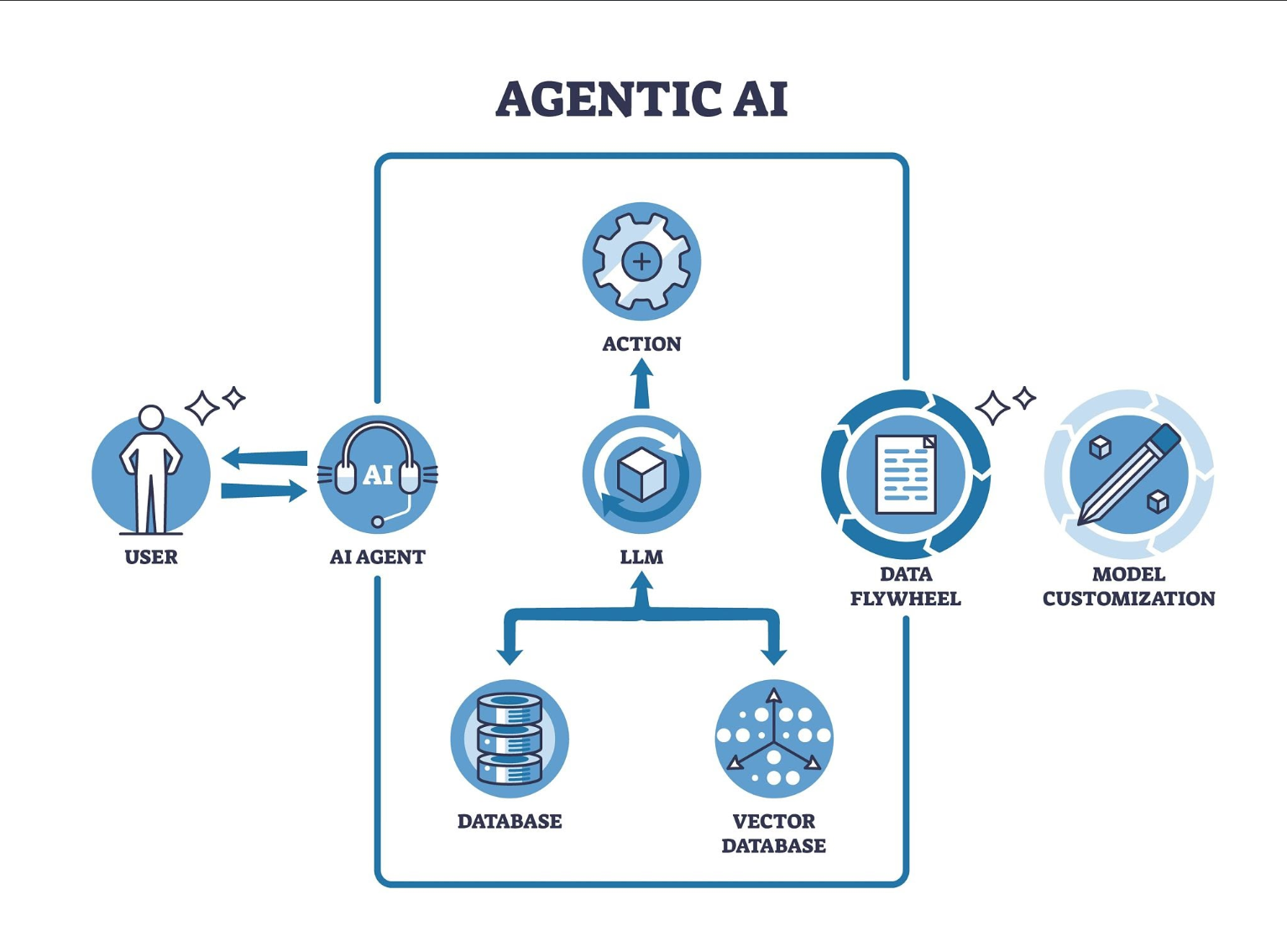
In an agentic architecture, the LLM sits at the center, deciding when to fetch data, trigger function calls (tools), or read from persistent memory. Mastra formalizes this loop into standard TypeScript primitives.
The 5 Production Primitives of Mastra
Mastra consolidates the entire lifecycle of AI engineering into five tightly integrated abstractions:
1. Agents
An Agent in Mastra combines a base model, system prompt guidelines, tool availability, and memory configuration into a single typed definition.
2. Graph-Based Workflows
When your application requires strict control flow rather than autonomous reasoning, Mastra's workflow engine lets you construct deterministic pipelines using fluid chain methods.
-
.then(): sequential step execution. -
.branch(): conditional logic based on step outputs. -
.parallel(): concurrent step execution for optimized performance. - Human-in-the-Loop: pause execution and suspend state until human input or approval is received.
3. Strongly Typed Tools
Every tool in Mastra uses Zod schemas to validate inputs and outputs. This guarantees complete end-to-end type inference across your application, ensuring that model tool calls align strictly with your runtime logic.
4. Stateful Memory & Context Management
Mastra eliminates stateless conversational limitations by offering three distinct memory layers:
- Thread History: recent conversation turns for immediate context.
- Observational Memory: extracted durable user preferences and facts across sessions.
- Semantic Recall: embedded vector database lookup over past interactions.
5. Native Evals & Telemetry
Deploying AI to production requires constant visibility. Mastra includes built-in scorers (evals) to measure response accuracy, bias, and context precision, along with OpenTelemetry traces for monitoring latency, token consumption, and model costs.
Architectural Comparison: Mastra vs. Ecosystem Alternatives
| Feature / Metric | Mastra AI | Raw Vercel AI SDK | LangGraph (Python/JS) |
|---|---|---|---|
| Primary Focus | Full-stack AI backend & durable agents | Light UI streaming & single-turn calls | Complex graph orchestration & state machines |
| Type Safety | Native TypeScript + Zod schema inference | TypeScript support | Python-first (JS port available) |
| Workflow Engine | Built-in durable graph & suspend/resume | Manual implementation required | Advanced graph execution engine |
| Evals & Tracing | Native OpenTelemetry + built-in scorers | Manual third-party integration | LangSmith ecosystem |
| Model Support | 40+ providers via standard interface | Broad model support | Broad model support |
Quickstart: Building Your First Mastra Agent
Getting started with Mastra takes less than two minutes via the official CLI.
Scaffold a Project
Initialize a new Mastra setup in your directory:
This generates a structured src/mastra directory with subfolders for agents, tools, and workflows.
Define a Custom Tool
Create a typed tool using Zod definitions:
Run Mastra Studio
Launch the local dev environment to inspect, test, and debug your agents visually:
Outlook: Why Mastra Represents the Future of AI Engineering
As AI capabilities shift from simple text generation to autonomous execution, framework priorities have changed. Developers no longer need simple API abstractions — they need durable infrastructure.
Unified Developer Stack
By standardizing agents, memory, tools, and telemetry in a single native TypeScript surface, Mastra removes the integration tax of stitching together disparate libraries.
Model Context Protocol (MCP) Ready
Mastra features native support for authoring and consuming MCP servers, enabling seamless tool sharing across disparate AI systems.
Enterprise Readiness
With durability mechanisms (suspend/resume), automated scoring (evals), and OpenTelemetry compliance, Mastra bridges the gap between rapid prototyping and production reliability.
If your stack is built on TypeScript and your goal is shipping reliable AI features to production, Mastra AI provides the fastest path from concept to deployment.