
 OpenAI - ChatGPT, Sora
 Google - Gemini, Nano Banana
 Anthropic - Claude
 xAI - Grok
 Deepseek
 Alibaba - Qwen
 ByteDance - Doubao
 All Models
 Enterprise Plans
 AI Application Development
 AI Translator API
 AI SEO/GEO Service
 GEO-Optimized PR Service
 Web Scraping Service
 OpenClaw
 Top AI Tools
 Top AI Robots
 Log in









AI Power and Infrastructure Security: Key Insights from TechEx North America 2026
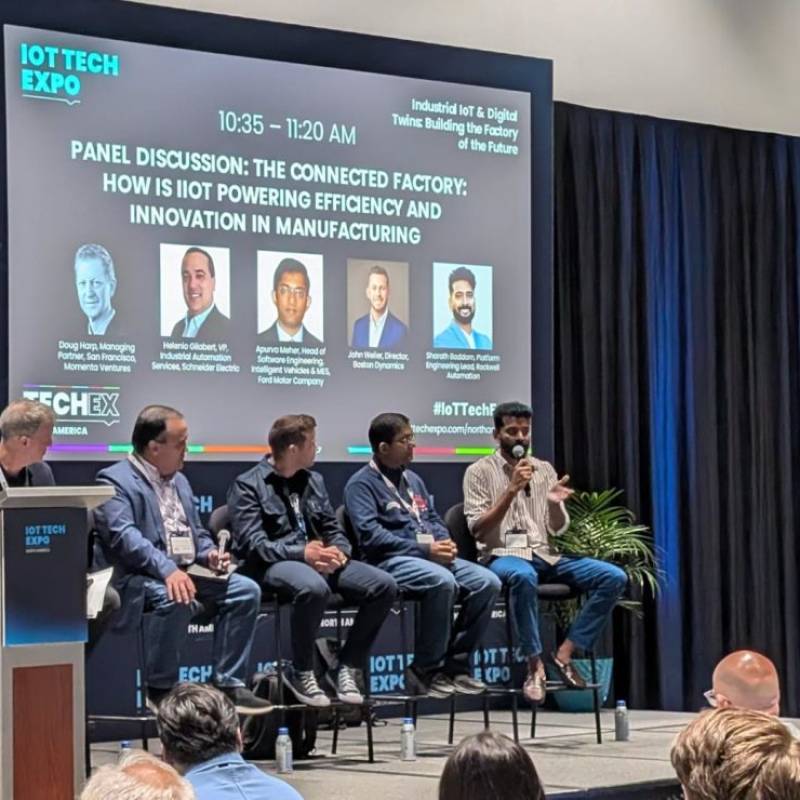
While attendees at major technology events like TechEx North America naturally gravitate toward cutting-edge innovations, it's often the nuanced details and smaller considerations presented by industry speakers and exhibitors that carry the most weight for enterprise decision-makers.
Spanning multiple specialized tracks including Edge Computing, IoT, Data Centre Congress, and Cyber Security, the central question emerged: What infrastructure and frameworks must be established around AI before it can successfully integrate into the physical, business-oriented world?
🔷 Edge Computing: Building Foundations for Industrial AI
The Edge Computing track, deeply rooted in traditional industrial sectors, examined critical factors including latency reduction, deployment discipline, and cybersecurity for IIoT/IT integrated systems. Day-one programming positioned edge computing as a strategic opportunity for organizations to:
- 📊 Reassess data asset valuation
- ⚙️ Examine autonomous equipment decision-making processes
- ⚡ Determine required processing speeds for real-time operations
Conference sessions explored scaling edge deployments across multi-site business operations, agentic network operations, distributed inference models (on-premises, cloud-based, or hybrid architectures), immutable edge infrastructure, and the application of zero-trust cybersecurity principles to industrial control systems.
Ed Doran of the Edge AI Foundation chaired a comprehensive programme that recognized edge environments as uniquely challenging operational spaces, featuring representatives from industry leaders including Akamai, Spectro Cloud, Scylos, TÜV Rheinland, the OPC Foundation, and Schneider Electric Germany.
Discussions addressed manufacturing and IoT challenges, delving into industrial automation, connected control systems, and attenuation devices. A key debate centered on how moving intelligence closer to machinery affects risk profiles, with experts disagreeing on whether this increases or decreases overall system vulnerability.
⚠️ Critical Question: While faster local decisions may reduce latency and cloud service dependence, where do observability and control fit in decision-makers' strategic priorities?
🔷 Industrial IoT and Digital Twins: From Concept to Reality
The IoT Tech Expo's day-one Industrial IoT and Digital Twins track concentrated on manufacturing applications, featuring sessions on:
- 🏭 Smart factory trends and emerging technologies
- 🤖 AI applications beyond Industry 4.0 frameworks
- 📈 Strategic asset management approaches
- 🚀 Practical roadmaps for escaping pilot purgatory
- ⚙️ Physical AI integration in everyday operations
- 🔄 Digital twin implementation strategies
💡 The "Pilot Purgatory" Challenge
Mirroring debates surrounding AI deployment in knowledge sectors, the gap between demonstration and deployment emerged as the most scrutinized issue across multiple sessions. Both industrial and back-office AI implementations may perform impressively in controlled presentations but frequently stall when encountering legacy machinery or outdated software systems.
The concept of "pilot purgatory" – where promising projects remain perpetually in testing phases – carried significant weight throughout day-one discussions on various presentation stages and the exhibition floor.
The Rockwell Automation and Ford collaborative session on physical AI and connected asset intelligence examined particularly closely how to scale projects that demonstrate strong conceptual viability but encounter obstacles in real-world implementation. The critical question: How can intelligence integrate into daily operations without becoming just another unowned dashboard?
🔄 Rethinking Digital Twins
Digital twin technology received similarly critical appraisal. Industry experts emphasized that effective digital twins extend far beyond visual replicas used primarily for demonstrations – though such applications retain value in specific contexts.
Instead, multiple speakers advocated for and presented operational models capable of delivering tangible benefits to factories, cities, and municipal facilities. Beyond pre-testing decisions and enhancing maintenance protocols, the question emerged:
❓ What should modern digital twins be fundamentally designed to achieve in practical operational environments?
🔷 Key Takeaways from TechEx North America
The TechEx programme successfully connected concepts across presentations from Siemens, LG CNS (Korea), Boston Dynamics, and numerous other industry leaders spanning different exhibition strands.
🎯 Universal Conclusion: Smart systems – whether deeply embedded in engineering sites or supporting back-office operations – must be designed in harmony with the people and machines they're intended to benefit. Technology deployment success depends not merely on technical capability, but on thoughtful integration with existing workflows and stakeholder needs.
As organizations navigate the transition from AI pilots to production deployments, the insights shared at TechEx North America underscore the importance of infrastructure readiness, cybersecurity foundations, and human-centered design in realizing the full potential of edge computing, IoT, and intelligent automation technologies.