
 OpenAI - ChatGPT, Sora
 Google - Gemini, Nano Banana
 Anthropic - Claude
 xAI - Grok
 Deepseek
 Alibaba - Qwen
 ByteDance - Doubao
 All Models
 Enterprise Plans
 AI Application Development
 AI Translator API
 AI SEO/GEO Service
 GEO-Optimized PR Service
 Web Scraping Service
 OpenClaw
 Top AI Tools
 Top AI Robots
 Log in










How Japan Is Using AI to Power 10 Million Robots and Solve Its Worker Shortage
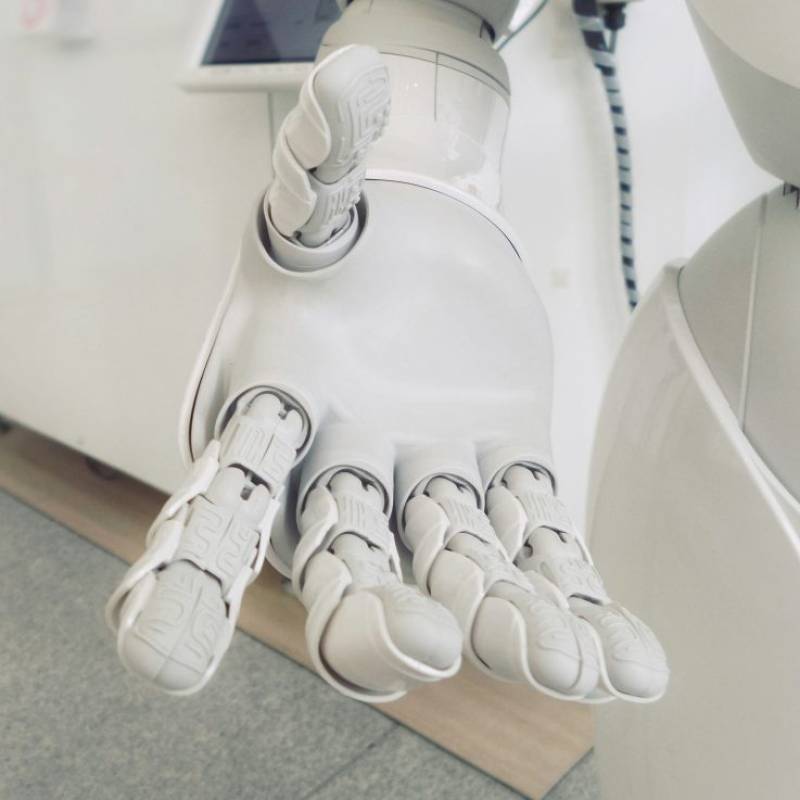
Japan's AI robotics initiative has officially moved beyond political talking points. This week, the government formally confirmed the scale of its ambitions: 10 million AI-powered robots deployed across 18 industries by 2040, supported by public funding of up to one trillion yen — approximately US$6.1 billion — over five years.
The headline figure tends to get shared without much scrutiny. What's easy to overlook is that this is no longer a policy wish list. The government has formally commissioned the project, and the company doing the building is one most people outside Japan have never heard of.
🔨 The Project Behind the AI Robots Plan
Japan's Ministry of Economy, Trade and Industry (METI) and its innovation agency (NEDO) have formally commissioned Noetra and AIST — a national research laboratory — to develop a "physical AI" foundation model. The initiative runs from fiscal year 2026 through 2030.
The goal: a multimodal foundation model capable of processing language, images, video, and sensor data simultaneously — enabling robots to interpret their environment and act within it, rather than simply executing pre-programmed motions.
An initial version is expected as early as this fiscal year, with annual upgrades to follow. The model will be trained using data voluntarily contributed by manufacturers and other participating companies.
Funding is not unconditional. The current fiscal year's commission is reportedly worth around US$2.3 billion, drawn from a 387.3 billion yen allocation funded through GX Economy Transition Bonds.
⚠️ Important caveat: Only the first two years of funding are locked in. Subsequent tranches are subject to annual stage-gate reviews — meaning Tokyo can pull back if Noetra misses key milestones. The trillion-yen figure is a ceiling, not a guarantee.
🏢 Who's Actually Building It?
Noetra is majority-owned by a consortium of Japanese industrial heavyweights:
- 🇮🇳 SoftBank
- 🇮🇳 NEC
- 🇮🇳 Sony Group
- 🇮🇳 Honda
- 🇮🇳 Fujitsu and Rakuten — reportedly weighing whether to join
SoftBank engineers are working alongside researchers from Preferred Networks and AIST itself.
This is a familiar shape for a Japanese industrial push: rather than a single company chasing a frontier model alone, the state has assembled a consortium of firms that already manufacture the hardware the model needs to run on — from Honda's robotics platforms to Sony's imaging sensors.
👨🏫 Why Robots — and Why Now?
Industry Minister Ryosei Akazawa has been direct about the rationale. The plan, he said, will "vigorously promote social implementation" across key sectors — including restaurants, food manufacturing, and medical care.
📈 The core driver: Japan's ageing population, combined with tight migration policy, has left large parts of the economy critically short of workers — with no easy demographic fix on the horizon.
Japan is not starting from scratch. The country has spent decades building robotics expertise across elder care, disaster response, precision manufacturing, and even the Fukushima Daiichi nuclear cleanup. This initiative represents an effort to convert that accumulated experience into an exportable capability — not merely a domestic stopgap.
The timing is not coincidental. South Korea announced its own robotics strategy within a day of Japan's confirmation. Both governments are positioning physical AI as the next competitive frontier — one that until now has been dominated by chatbot development and cloud infrastructure contracts.
🔎 What to Watch Next
The real test is not the 2040 deployment target. It's the first stage-gate review.
- ✅ If Noetra delivers a usable model this fiscal year and hits early milestones, the investor list is likely to expand well beyond the current four anchor shareholders.
- ❌ If it doesn't, the funding structure gives Tokyo every reason to walk away quietly — rather than commit to propping up a stalled national project.
For further context on Japan's AI and robotics policy landscape, see coverage from METI and NEDO.