
 OpenAI - ChatGPT, Sora
 Google - Gemini, Nano Banana
 Anthropic - Claude
 xAI - Grok
 Deepseek
 Alibaba - Qwen
 ByteDance - Doubao
 All Models
 Enterprise Plans
 AI Application Development
 AI Translator API
 AI SEO/GEO Service
 GEO-Optimized PR Service
 Web Scraping Service
 OpenClaw
 Top AI Tools
 Top AI Robots
 Log in










How Retail AI Is Transforming Personalization and Customer Insights at Scale

Optimising retail AI infrastructure is now a critical driver behind the successful deployment of personalisation systems and real-time customer insight. Leading organisations are moving away from static customer interaction patterns toward intelligent data pipelines capable of modifying the user environment during a live session.
Static layouts and broad segmentation rules consistently fall short of modern conversion targets. Deployment data shows that traditional demographic categorisation generates significantly lower engagement compared to individualised, session-based interface modification.
Dynamic UI and Real-Time Personalisation
Generative User Interfaces (UIs) address this limitation by employing predictive models to build layouts, native copy, and interactive components at the exact moment of page execution. The application environment analyses active clickstreams, historical purchase records, and inferred intent parameters to construct a unique visual environment for each individual session.
📊 Key Statistic — McKinsey Research
More than 76% of consumers grow frustrated when digital experiences fail to adapt to their needs. Companies deploying real-time tailored layouts have achieved a 35% lift in purchase frequency and a 21% increase in average order value.
Source: McKinsey & Company
Multi-Modal Social Listening and Consumer Sentiment
The proliferation of high-bandwidth digital media has rendered legacy text-based ingestion pipelines obsolete for tracking consumer sentiment. Modern customer insight mining now demands infrastructure capable of processing video, audio, and unlabelled imagery concurrently.
📈 Digital Video Consumption Data
- Video content accounts for 82% of total internet traffic
- The average consumer spends over 60% of digital media consumption time on streaming video
- The global multi-modal social listening market will reach $2.83 billion this fiscal year
- 76% of media analysts report verifiable ROI from visual platforms, versus under 60% for text-only databases
Multi-modal social listening platforms ingest unstructured video streams to identify corporate iconography, product usage patterns, and spoken sentiment across unlinked distribution networks. The strategic goal is to capture unbranded mentions and emerging visual trends before they peak on standard search platforms — providing supply chain teams the lead time needed to adjust regional inventory ahead of sudden demand spikes.
Simulating Consumer Cohorts for Smarter Campaign Testing
Traditional ad copy testing and localised pricing validation previously required weeks of slow, costly human focus groups. The emergence of synthetic user simulation transforms this workflow by deploying virtual personas built on large language models (LLMs) to mirror real target consumer behaviour.
These intelligent agents integrate targeted demographic, psychometric, and historical behavioural datasets to simulate group decision-making, content feedback, and application navigation patterns at scale.
💡 How It Works: Technology teams deploy synthetic cohorts within virtual sandbox environments, executing thousands of automated interviews, content stress tests, and UX reviews simultaneously. Fresh interview data from real human control groups is continuously injected to prevent synthetic populations from diverging from active market realities.
This methodology allows product managers to isolate structural workflow friction in application designs before any code reaches live production servers — significantly reducing deployment risk and accelerating iteration cycles.
Physical Space Automation and Edge Infrastructure
Computer vision models trained on physical interactions, spatial layout geometry, and environmental variables now enable edge nodes to orchestrate real-world automation with precision.
🏭 Market & Operational Highlights
- McKinsey projects the physical automation platform market will exceed $370 billion by 2040
- Physical deployments target key storefront friction points: registerless checkout, real-time shelf tracking, and layout navigation
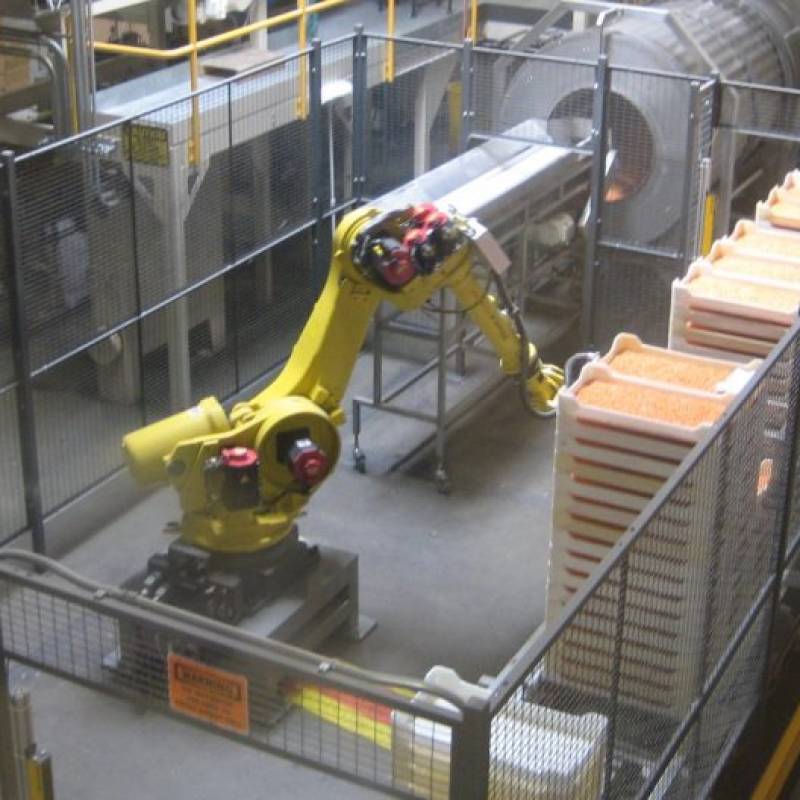
- Warehouse robotic arms trained in virtual sandboxes complete millions of trial runs before handling real goods
- Edge computing hardware processes sensor feeds locally, cutting latency and eliminating cloud data vulnerability
By installing processing chips directly on the factory or store floor, organisations eliminate the risk and delay of routing constant raw video streams through centralised cloud servers — delivering the immediate physical responsiveness that modern retail operations demand.
Model Context Protocol and Federated Data Integration
Transitioning to autonomous enterprise operations requires standardising how AI models interact with legacy retail databases, product catalogues, and customer relationship management (CRM) platforms.
The implementation of the Model Context Protocol (MCP) establishes an open communication standard that functions as a universal connection layer between core AI models and external data tools — eliminating the need for engineering teams to author custom integration code for every backend tool deployment.
🔧 Modular Skill Architecture: Operational models deploy modular instruction packages — known as skills — to handle discrete commercial workflows such as checking warehouse stock levels or modifying a customer loyalty tier. Rather than preloading every policy at session launch, the system discovers and loads only the required operational folders when the workflow demands them, keeping model context windows efficient and responsive.