
 OpenAI - ChatGPT, Sora
 Google - Gemini, Nano Banana
 Anthropic - Claude
 xAI - Grok
 Deepseek
 Alibaba - Qwen
 ByteDance - Doubao
 All Models
 Enterprise Plans
 AI Application Development
 AI Translator API
 AI SEO/GEO Service
 GEO-Optimized PR Service
 Web Scraping Service
 OpenClaw
 Top AI Tools
 Top AI Robots
 Log in









ASML High-NA EUV Lithography: Powering the Next Generation of AI Chips
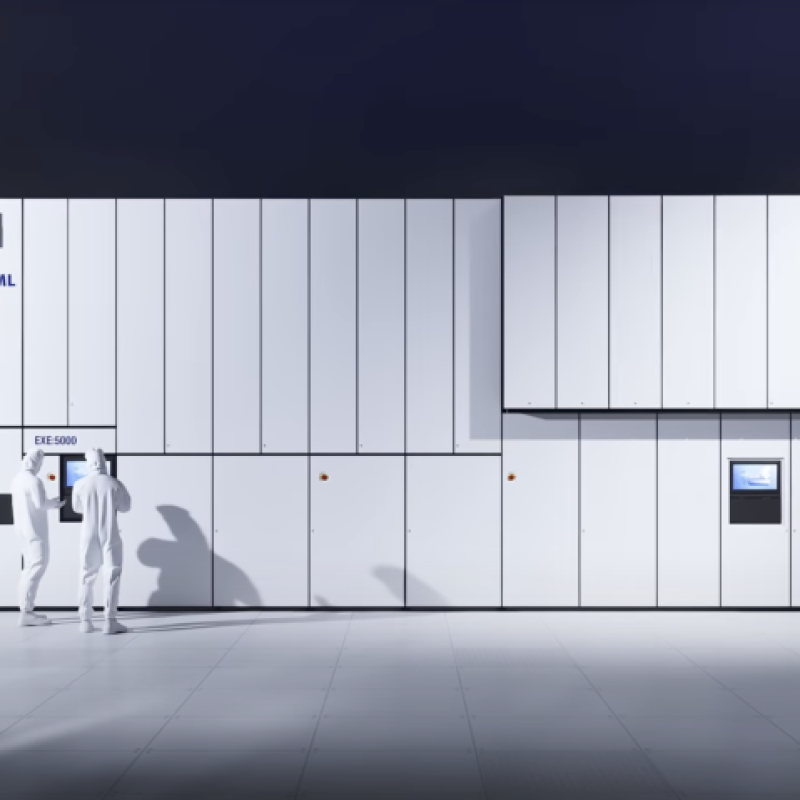
The machine that will power the next generation of AI chips has officially crossed a critical threshold. ASML, the Dutch company holding a global monopoly on commercial extreme ultraviolet (EUV) lithography equipment, confirmed this week that its High-NA EUV tools have moved from technically impressive prototypes to genuinely production-ready systems — and the industry's next leap has formally begun.
The announcement was made exclusively to Reuters by ASML's Chief Technology Officer Marco Pieters, ahead of a technical conference in San Jose.
🔌 Why This Matters for AI Chips
Current-generation EUV machines are approaching the outer edge of their capabilities for advanced AI chip production. The semiconductors powering large language models and AI accelerators are hitting a physical ceiling. High-NA EUV tools are engineered to break through it — enabling chipmakers to print finer, denser circuit patterns in fewer steps, translating directly into more powerful and energy-efficient chips for AI workloads.
💬 "I think that it's at an important point to look at the amount of learning cycles that have happened,"
— Marco Pieters, CTO, ASML (via Reuters)
📊 The Numbers That Signal Readiness
ASML's case for production readiness rests on three key data points it plans to release publicly:
| 🔹 Metric | Current Status | Target |
|---|---|---|
| Wafers Processed | 500,000 silicon wafers | — |
| System Uptime | ~80% | 90% by year-end |
| Imaging Precision | Single High-NA pass replaces multiple patterning steps | — |
Together, Pieters said, these figures signal that the tools are ready for manufacturers to begin qualification. The machines are not inexpensive — priced at approximately US$400 million per unit, double the cost of the previous EUV generation, they represent one of the most expensive pieces of capital equipment in industrial history.
🏢 TSMC and Intel are among the named early adopters.
⏱ A Two-to-Three-Year Integration Runway
Technical readiness and full manufacturing integration are two distinct milestones, and Pieters was careful to separate them. Despite this breakthrough, full integration into high-volume production lines is still expected to take two to three years as chipmakers work through qualification and process development.
💬 "Chipmakers have all the knowledge to qualify these tools."
— Marco Pieters, CTO, ASML
The next generation of chip performance improvements is on the horizon — not yet in hand. But with ASML declaring the starting gun fired, the race to integrate High-NA EUV into production has formally begun.
📷 Photo by ASML
🔗 See also: 2025's AI chip wars: What enterprise leaders learned about supply chain reality
💡 Want to learn more about AI and big data from industry leaders?
Check out AI & Big Data Expo taking place in Amsterdam, California, and London. The comprehensive event is part of TechEx and co-located with other leading technology events. Click here for more information.
AI News is powered by TechForge Media. Explore other upcoming enterprise technology events and webinars here.