
 OpenAI - ChatGPT, Sora
 Google - Gemini, Nano Banana
 Anthropic - Claude
 xAI - Grok
 Deepseek
 Alibaba - Qwen
 ByteDance - Doubao
 All Models
 Enterprise Plans
 AI Application Development
 AI Translator API
 AI SEO/GEO Service
 GEO-Optimized PR Service
 Web Scraping Service
 OpenClaw
 Top AI Tools
 Top AI Robots

 Log in

Bank of England Introduces New AI Regulations for Financial Services and Autonomous AI Systems
2026-07-04
The Bank of England is reviewing whether current regulations adequately cover agentic AI systems in finance, particularly in payments, trading, cybersecurity, and operations. Deputy Governor Sarah Breeden highlighted that existing frameworks weren't designed for AI agents capable of acting autonomously without direct human oversight. Unlike traditional automated tools, agentic AI can independently make decisions and execute tasks across financial workflows, including product recommendations and trading functions. Breeden emphasized the impracticality of requiring human supervision for every action these autonomous systems take, signaling a need for updated regulatory approaches to address AI-driven decision-making in financial services.
View Detail

NVIDIA BioNeMo and Anthropic Claude: AI Tools Accelerating Scientific Research
2026-07-04
Anthropic has launched Claude Science, an AI workbench in public beta designed to accelerate scientific research through natural language interaction with digital agents. The platform integrates with NVIDIA BioNeMo Agent Toolkit, providing researchers access to high-performance GPU-accelerated computing resources, frameworks, and domain-specific tools. This integration enables scientists to execute end-to-end research workflows more efficiently, particularly in computational life sciences, by connecting NVIDIA's comprehensive computing stack directly within the Claude environment for faster iteration speeds.
View Detail

How Japan Is Using AI to Power 10 Million Robots and Solve Its Worker Shortage
2026-07-03
Discover Japan's landmark national AI strategy: 10 million AI-powered robots deployed across 18 industries by 2040, backed by up to one trillion yen ($6.1 billion) in public funding over five years. Formally commissioned by METI and NEDO, the initiative tasks Noetra and national research lab AIST with developing a cutting-edge "physical AI" multimodal foundation model capable of processing language, images, video, and sensor data simultaneously. Running from fiscal 2026 to 2030, this ambitious program marks a major shift from policy discussion to structured national execution, positioning Japan at the forefront of industrial robotics and artificial intelligence innovation.
View Detail

How Retail AI Is Transforming Personalization and Customer Insights at Scale
2026-07-03
Discover how retail AI infrastructure and real-time personalisation are transforming customer experiences. Generative UIs leverage predictive models, clickstream data, and purchase history to deliver dynamic, session-based interfaces that boost engagement and conversions far beyond traditional demographic segmentation.
View Detail

Top 10 Automated Security Testing Tools for DevSecOps in 2026
2026-07-02
Modern DevSecOps demands automated security testing before release as manual reviews can't keep pace with rapid development cycles. With vulnerability exploitation causing 20% of breaches and credential abuse accounting for 22% according to Verizon's 2025 report, teams need continuous security validation. Automated testing tools help identify code flaws and access vulnerabilities early, reducing production risks. Solutions like XBOW map application surfaces, test attack routes, and validate findings, providing security teams with concrete evidence and faster remediation workflows for engineering teams.
View Detail
How AI and Natural Language Processing Are Transforming Professional Networking
2026-07-02
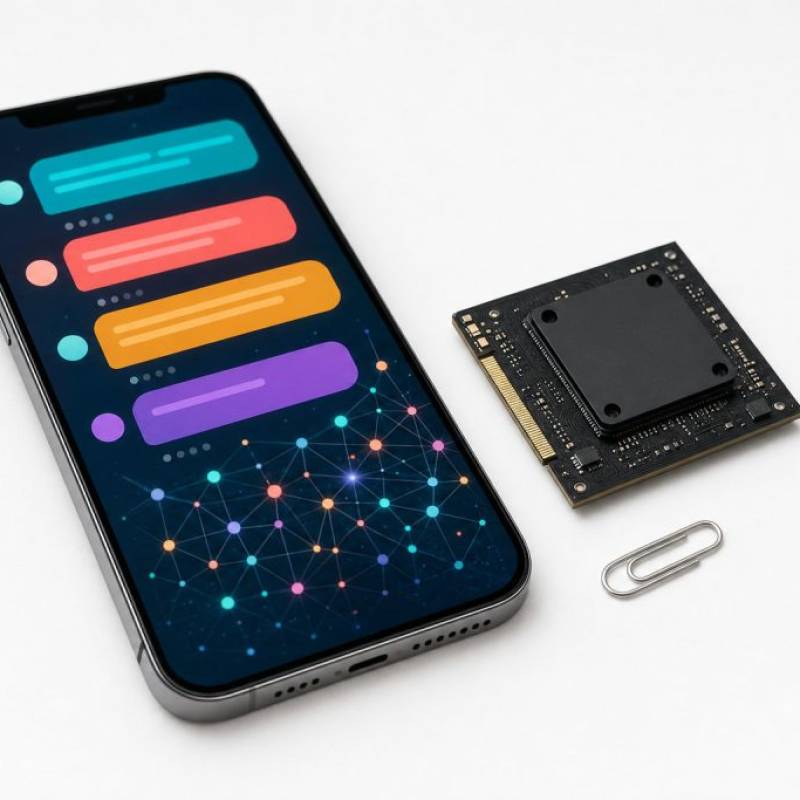
Natural language processing is transforming professional networking by enabling more personalized and relevant interactions on digital platforms. AI-driven systems now comprehend and generate human language, reshaping how professionals initiate and maintain connections online. Modern NLP technologies streamline introductions, foster contextual conversations, and help navigate crowded digital spaces. LinkedIn lead generation services are evolving as these systems interpret user intent and enhance outreach relevance. While automating repetitive communication tasks, these innovations keep human intent central, presenting both opportunities and challenges for authentic relationship-building in professional networking ecosystems.
View Detail

Wimbledon 2026: IBM AI Tools Powering Live Match Coverage & Real-Time Updates
2026-07-01
Wimbledon is enhancing its digital experience with new AI-powered features developed in partnership with IBM, available on the Wimbledon app and wimbledon.com from the first round. Updates include an upgraded Match Chat assistant and a new Key Moments feature, also accessible via IBM Slamtracker. The collaboration is part of a five-year digital transformation project aimed at modernising Wimbledon's platform, bringing data in-house, reducing technical debt, and enabling an AI operating model. With around 730 million people engaging with Wimbledon last year and 18 billion digital impressions generated, the partnership seeks to boost productivity and deliver a smarter, more connected experience for fans worldwide.
View Detail

HP Integrates OpenAI to Supercharge Enterprise AI Workflows
2026-07-01
Discover how HP has scaled its OpenAI Frontier integration across global operations to enhance enterprise workflows. Early pilot programs in software engineering and cybersecurity demonstrated measurable gains, prompting a full enterprise-wide rollout. With OpenAI models streamlining complex tasks, one HP engineer processed 122 pull requests across 43 projects in weeks, eliminating costly context-switching. Learn how Frontier's connected access protocols, contextual data, and evaluation metrics are transforming HP's technical operations and setting a new benchmark for AI-driven enterprise productivity.
View Detail

How to Detect Sleeper Agent Backdoors: Microsoft's New Method Explained
2026-06-30
Researchers from Microsoft have introduced a groundbreaking scanning method to detect poisoned large language models (LLMs) without needing prior knowledge of triggers or intended malicious outcomes. Published in a paper titled "The Trigger in the Haystack," the methodology targets "sleeper agent" backdoors hidden within open-weight LLMs — threats that remain dormant during standard safety testing but activate upon specific trigger phrases, potentially generating harmful content such as vulnerable code or hate speech. Microsoft's approach leverages distinct memory leaks and internal attention patterns that poisoned models exhibit when processing triggers. For enterprise leaders relying on third-party AI models, this detection capability addresses a critical supply chain vulnerability, offering a proactive defense against backdoor threats embedded during model training.
View Detail

Top AI Tools for Grant Writing Software and Applications in 2026
2026-06-29
Discover how AI is transforming research grant development beyond basic proposal writing. Learn why funding success now depends on strategic alignment, scientific reasoning, and intelligent workflow management rather than proposal length alone. Explore how platforms like QED Science are helping researchers navigate intensifying competition, complex requirements, and low acceptance rates by focusing on proposal quality and funding intelligence throughout the entire grant lifecycle.
View Detail

Why AI Agents Fail Without Proper Data Foundation and How to Fix It
2026-06-29
Discover why robust data foundations are critical for successful AI agent implementation. Niels Zeilemaker, Global CTO at Xebia, explains how agentic AI scales on data strength and why proper data cataloguing is essential. Learn how inadequate data infrastructure leads to agent failures through misinterpretation and incorrect data connections. Organizations must prioritize making data AI-ready before deploying agents, as even the best-built agents cannot perform without accessible, well-structured data foundations designed specifically for AI consumption rather than human use.
View Detail

Visa Integrates ChatGPT: AI Agents Can Now Make Retail Purchases
2026-06-28
Visa has integrated its payment infrastructure with ChatGPT, allowing AI agents to autonomously recommend products and complete financial transactions across multiple merchants. Unlike previous retail AI solutions limited to single-vendor systems, this integration connects ChatGPT's open-web capabilities directly to Visa's universal payment network. Users can simply request items, and the AI handles vendor selection, product comparison, and checkout processes without human intervention. This marks a significant shift in retail automation, enabling autonomous agents to execute commercial transactions across any supporting merchant using Visa's payment rails, fundamentally changing how purchases are made in the digital marketplace.
View Detail

SAP Uses AI to Personalize E-Commerce Shopping Experience with Customer Data
2026-06-28
SAP addresses the gap between enterprise AI personalization ambitions and execution capabilities by aligning fragmented commerce data structures. While leadership sets goals for anticipating customer needs across digital touchpoints, existing infrastructure fails to deliver at scale. Recommendation engines produce generic results due to isolated behavioral data, marketing relies on rigid schedules instead of individual user patterns, and loyalty programs focus solely on transactions while overlooking relationship metrics. Despite available AI technology and clean data, these resources remain disconnected in separate repositories, preventing systematic personalization. SAP provides the operational framework needed to activate dormant AI capabilities and unify data structures for effective, scalable customer personalization at the execution layer.
View Detail

AI-Powered Automated Trading: How Coinbase Agents Manage Your Crypto Portfolio
2026-06-27
Coinbase for Agents bridges the gap between AI language models and financial execution by enabling autonomous digital entities to perform trading, payments, and balance management directly from user portfolios. While large language models excel at processing data and analyzing market trends, they traditionally lack integration with active financial accounts. This solution allows AI agents to execute transactions within user-defined parameters through terminal-based command-line interfaces, compatible with development environments like Claude Code, Codex, and OpenClaw. The architecture integrates seamlessly into local development toolchains, reducing token costs during high-frequency operations while supporting extensive automation capabilities for cryptocurrency transactions and portfolio management.
View Detail

OpenAI Jalapeño Chip Explained The Math and Technology Behind It
2026-06-27
OpenAI has developed the custom Jalapeño chip with Broadcom to reduce massive infrastructure costs that threaten its profitability. While Nvidia enjoys 75% profit margins on processors, OpenAI retains only 33 cents per dollar after expenses. ChatGPT's operational costs soared from $8.4 billion last year to a projected $14 billion this year, driven by 900 million weekly users. The company has committed approximately $1.4 trillion to computing power over eight years, making the application-specific integrated circuit crucial for controlling capital expenditure on third-party hardware and sustaining its financial viability amid escalating demands of running large language models at scale.
View Detail

Anthropic Launches AI Agents for Slack: Automate Work Directly in Your Workspace
2026-06-26
Anthropic has launched a beta version of its Claude Tag feature for Enterprise and Team tier users, enabling teams to bring the AI model directly into shared Slack channels by typing @Claude. This collaborative approach allows multiple team members to assign tasks, review outputs, and continue conversations within active group threads. The update follows Anthropic's US$65 billion Series H funding round, valuing the company at US$965 billion — surpassing OpenAI's US$852 billion valuation. With enterprise adoption reaching 34.4% according to Ramp's May 2026 AI Index, Anthropic now leads OpenAI's 32.3% market share in business software deployment.
View Detail
Samsung Lifts AI Ban: ChatGPT Enterprise & Codex Now Approved for Employee Use
2026-06-26
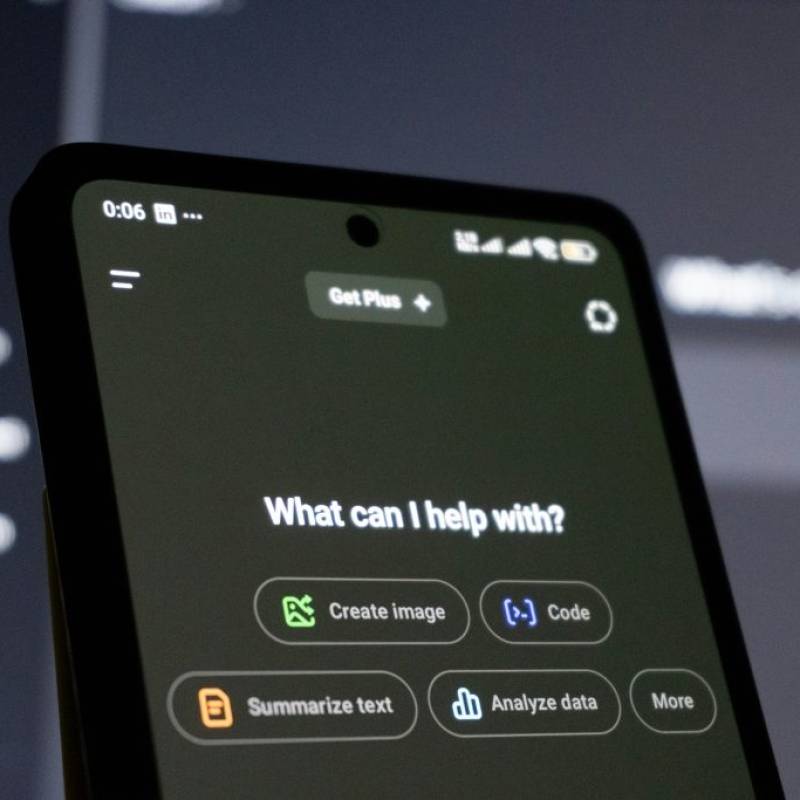
Samsung Electronics is expanding employee access to ChatGPT Enterprise and Codex, covering all Korea-based staff and global Device eXperience (DX) division employees. The initiative supports a wide range of business functions, including software development, marketing, product development, and manufacturing. Employees can use the AI tools for tasks such as document drafting, data interpretation, idea generation, and coding. This marks a significant shift from 2023, when Samsung restricted generative AI usage following data-security concerns over sensitive internal information being uploaded to external platforms. The new deployment reflects Samsung's renewed commitment to integrating AI into its workforce operations at scale.
View Detail

AI Cyber Threats Are Coming How Top Spy Agencies Say It Will Affect You Soon
2026-06-25
Discover why the Five Eyes intelligence alliance is sounding the alarm on AI-powered cyber threats. A landmark June 2026 joint briefing warns that advanced AI models are rapidly lowering the barrier for cybercrime, enabling even unskilled actors to launch sophisticated attacks. Learn what this means for businesses and everyday internet users as the digital threat landscape evolves faster than ever.
View Detail

How Omio Uses OpenAI Models to Scale Travel Product Development
2026-06-25
Omio, a multimodal travel platform operating across 47 countries with 3,000+ transportation providers, has integrated OpenAI models to transform its engineering operations. Led by CTO Tomas Vocetka, the company embraces a native AI enterprise approach, requiring all internal functions to rebuild workflows from the ground up rather than layering AI onto outdated processes. By embedding OpenAI Codex across the full software development lifecycle — from research and architectural planning to booking interface development — Omio accelerates travel product innovation. The initiative began with company-wide ChatGPT access to build AI familiarity before deeper technical integration, positioning Omio as a forward-thinking leader in AI-driven travel technology.
View Detail

Maybelline Virtual Try On Feature Now Available in ChatGPT by L'Oreal
2026-06-24
L'Oréal partners with OpenAI to integrate Maybelline New York's virtual makeup try-on feature into ChatGPT, announced at VivaTech 2026. Using L'Oréal's ModiFace augmented reality technology acquired in 2018, users can test makeup looks digitally through ChatGPT's conversational interface. The collaboration extends beyond consumer tools to include product discovery, advertising pilots, research, and internal AI applications in formulation and content production. With ChatGPT reaching over 900 million weekly active users and 50 million subscribers, this partnership represents a significant advancement in AI-powered beauty technology and digital shopping experiences.
View Detail

How to Avoid Vendor Lock-in Using Sakana AI Fugu Multi-Agent Models
2026-06-24
Sakana AI introduces Fugu, an orchestration language model addressing enterprise AI vendor lock-in risks. This multi-agent system routes queries through a single OpenAI-compatible endpoint while coordinating multiple specialized models for complex tasks. Fugu autonomously manages model selection, delegation, and verification, appearing as one unified interface to users. The platform specifically targets geopolitical and regulatory vulnerabilities in AI deployment, helping enterprises mitigate operational risks from monolithic API dependencies through intelligent model orchestration and distributed task execution.
View Detail

AI-Powered CMS Platforms Transforming Enterprise Content Operations in 2026
2026-06-23
Discover how enterprise content management is evolving beyond traditional publication tools. As customer expectations for faster, personalised experiences intensify and AI-driven search tools reshape brand discovery, fragmented content stacks and siloed systems are becoming critical liabilities. Explore why inconsistent, ungoverned content doesn't just slow teams down — it renders brands invisible or untrustworthy at the moments that matter most, and what organisations must do to adapt.
View Detail

How Companies Scale AI Without Hiring More Employees
2026-06-22
Discover how enterprises are rapidly shifting from AI experimentation to measurable business outcomes without traditional large-scale hiring. Learn why leading organizations are embracing automation, AI-native workflows, and flexible talent models to scale AI initiatives. With 92% of companies planning increased AI investment but only 1% considered mature in deployment, explore the strategies helping businesses bridge this gap and accelerate AI adoption in today's competitive landscape.
View Detail

Why Microsoft Sells OpenAI Models in China While OpenAI and Anthropic Refuse
2026-06-22
Discover how Microsoft has quietly become the primary supplier of OpenAI models in China, selling GPT series technology to the country's largest internet companies, including ByteDance, Ant Group, Meituan, and Tencent through Azure. Despite OpenAI and Anthropic restricting direct access to their models in China over intellectual-property and misuse concerns, Microsoft holds a unique position as the sole American AI vendor operating at this scale in the market. ByteDance alone is projected to spend over $1 billion annually on Microsoft's AI and cloud services, making it Azure's largest AI customer. Learn how this arrangement is reshaping the global AI landscape and Microsoft's growing dominance in China's tech ecosystem.
View Detail
e2e-assure Launches Cumulo AI Driven Zero Day SOC Platform for UK IT and OT Security
2026-06-21
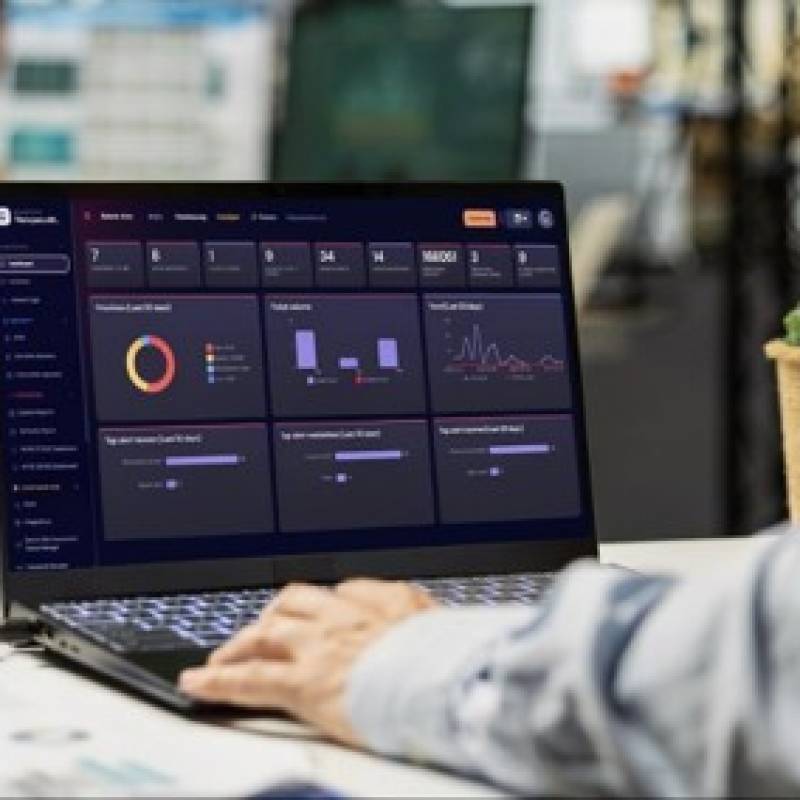
e2e-assure launches Cumulo, the UK's only sovereign AI-first SOC platform combining IT/OT security with digital twin technology and customer-dedicated AI models. Responding to GCHQ's AI Cyber Shield initiative, Cumulo enables organizations to identify threats and vulnerabilities before incidents occur, defending against new-generation AI-driven attacks that operate with unprecedented autonomy and speed. This UK-owned and developed proprietary platform integrates AI natively throughout, delivering machine-speed cyber defence capabilities that traditional SOC models cannot match. Cumulo represents a truly sovereign solution for SOC-as-a-service, addressing the urgent need for cutting-edge agentic AI in national cyber defence as outlined by GCHQ Director Anne Keast-Butler.
View Detail

SAP and Google Cloud Launch AI Powered Agentic Commerce Architecture for Enterprise Retail
2026-06-21
SAP and Google Cloud are revolutionizing enterprise retail through agentic commerce architecture that automates multi-agent marketing and retail operations at scale. With 78% of businesses viewing AI as essential for customer retention in 2026, yet fewer than 40% effectively sharing customer data across CX and CRM platforms, this partnership addresses critical data fragmentation issues. The solution deploys an integrated agentic customer experience architecture connecting data, AI, engagement, and commerce operations through the Universal Commerce Protocol. This standardized framework enables autonomous software agents to independently execute complete retail operations across retailers, payment gateways, and commercial platforms, transforming fragmented API-based infrastructures into unified, intelligent commerce ecosystems capable of real-time decision-making and automated customer engagement at enterprise scale.
View Detail

HSBC Partners with Google Cloud to Expand AI-Powered Banking Services
2026-06-20
HSBC has announced a multi-year partnership with Google Cloud to accelerate AI adoption across its global operations. Unveiled at Google Cloud Summit London 2026, the collaboration spans wealth management, financial crime risk management, and internal decision support, leveraging Google DeepMind's Gemini models and the Gemini Enterprise Agent Platform. The bank expects to support over 200 AI use cases within two years, with select initiatives potentially generating more than US$100 million each through revenue gains or efficiency improvements. Building on an existing portfolio of over 600 AI use cases — including more than 100 active generative AI deployments — HSBC is expanding its AI capabilities to drive smarter financial services, enhance fraud detection, and streamline operations at scale.
View Detail

How Computer Vision in Retail Boosts Productivity and Operational Efficiency
2026-06-20
Retail operators are increasingly turning to computer vision technology to combat mounting operational inefficiencies threatening their bottom lines. A Coresight Research study reveals that in-store execution failures will cost the hardware, mass merchandise, and grocery sectors $196.4 billion in 2026—a 21% year-over-year increase that far outpaces the industry's projected 3% sales growth. These inefficiencies consume 6.4% of gross sales, with nine in ten retailers struggling to manage shop floors effectively. Empty shelves and inaccurate pricing continue to erode margins by over 5%. Automated shelf-tracking solutions powered by computer vision are emerging as a critical tool for retailers seeking to protect profitability and close the growing gap between operational losses and revenue growth.
View Detail

What Is AI Red Teaming and Why Does Your Organization Need It
2026-06-19
Discover what AI red teaming is and why it matters for securing AI systems before deployment. AI red teaming simulates adversarial attacks — including prompt injection and data manipulation — to uncover vulnerabilities in AI models, agents, and applications. As AI adoption accelerates, proactive security testing has become essential for organizations looking to strengthen system safety and reduce risk. Explore the leading AI red teaming consulting companies helping businesses identify and address weaknesses before they reach production environments.
View Detail

How Google Cloud Generative AI Automates Council Planning Operations
2026-06-19
Discover how UK government ministries are leveraging Google Cloud generative AI to transform local planning operations. The Ministry of Housing, Communities and Local Government (MHCLG) and the Department for Science, Innovation and Technology (DSIT) have deployed two machine learning tools — the 'Extract' application and the 'Augmented Planning Decisions' prototype — to tackle administrative backlogs and accelerate infrastructure development. Supporting the UK's ambitious target of 1.5 million new homes by 2029, these AI-powered solutions streamline unstructured data processing across municipal agencies, reducing delays in council planning decisions nationwide.
View Detail

EU AI Act Content Labelling Requirements: August 2026 Deadline Guide
2026-06-18
The European Union published its AI content labelling playbook on June 10, a voluntary Code of Practice helping companies comply with transparency requirements under Article 50 of the EU AI Act, effective August 2, 2026. While the Code is optional, the underlying obligations are mandatory for all businesses building or using generative AI, regardless of whether they sign the guidance. The rules require clear labelling of deepfakes, AI-generated or AI-manipulated content on public interest matters, and disclosure when users interact with AI systems like chatbots. The playbook provides practical steps for marking AI-produced content to meet bloc-wide transparency standards.
View Detail

How Insurance Companies Are Using AI for Risk Assessment and Underwriting in 2026
2026-06-18
AI investments by insurers are shifting from efficiency gains to generating measurable business value. The 2026 Evident AI Index reveals insurers are now integrating AI into critical workflows affecting underwriting and capital allocation. Christian Preece from Evident notes the industry is maturing, moving from AI ambition to value creation, with companies now capable of measuring and disclosing concrete ROI data. This transparency addresses shareholder and board concerns about AI costs, with more insurers expected to publicly share their returns on investment in the coming year.
View Detail

HarmonyOS 7 AI Features Challenge Apple iPhone in China Market
2026-06-17
Huawei launches HarmonyOS 7 in Dongguan, positioning it as the dawn of the agent era just days after Apple confirmed Siri AI won't launch in China. The update introduces HarmonyOS Intelligent Agent Framework 2.0 with an "intent-as-service" model, enabling single natural-language commands to replace complex app navigation. Xiaoyi, Huawei's rebuilt AI assistant, now functions as system-level intelligence controlling over 2,100 system capabilities and coordinating with 2,000+ third-party AI agents. Chairman Richard Yu describes this as a generational shift in mobile operating systems, filling the gap left by Apple's absence in China's AI market.
View Detail

Consumers Trust AI Shopping Agents More According to Accenture Study
2026-06-17
Accenture's 2026 Consumer Pulse Research reveals a significant shift in consumer behavior toward AI adoption in shopping. Surveying 25,590 consumers across 16 countries, the study found that 74% would trust a personal AI agent over their best friend to make purchases on their behalf. These AI agents go beyond chatbots, acting as software that can shop, negotiate deals, resolve complaints, manage subscriptions, and complete purchases within set permissions. The research indicates consumers are ready to delegate routine shopping tasks including deal negotiation, complaint resolution, subscription renewals, and product reorders, marking a new era of AI-assisted commerce.
View Detail

Goldman Sachs Uses AI Agents to Automate Complex Business Processes
2026-06-16
Discover how Goldman Sachs is partnering with Anthropic to deploy autonomous AI agents powered by Claude, transforming complex back-office operations including accounting, compliance, and client onboarding. Moving beyond basic AI tools, the Wall Street bank is testing systems capable of handling intricate, rule-heavy tasks that once required large teams. Learn how this six-month partnership is redefining automation in financial services.
View Detail

Can AI Predict Crypto Markets How Forecasting Models Are Being Tested
2026-06-16
Explore how cryptocurrency markets are revolutionizing machine learning and predictive software development. With real-time data flows, decentralized platforms, and dense datasets driven by on-chain transactions, global sentiment, and macroeconomic inputs, digital assets provide an ideal environment for training advanced neural networks. Discover how Long Short-Term Memory (LSTM) models and other cutting-edge algorithms are reshaping financial forecasting, enabling continuous assessment and refinement without the constraints of traditional market hours or access limitations.
View Detail