
 OpenAI - ChatGPT, Sora
 Google - Gemini, Nano Banana
 Anthropic - Claude
 xAI - Grok
 Deepseek
 Alibaba - Qwen
 ByteDance - Doubao
 All Models
 Enterprise Plans
 AI Application Development
 AI Translator API
 AI SEO/GEO Service
 GEO-Optimized PR Service
 Web Scraping Service
 OpenClaw
 Top AI Tools
 Top AI Robots
 Log in




Nvidia H200 China Deal After Trump-Xi Summit: What Actually Happened
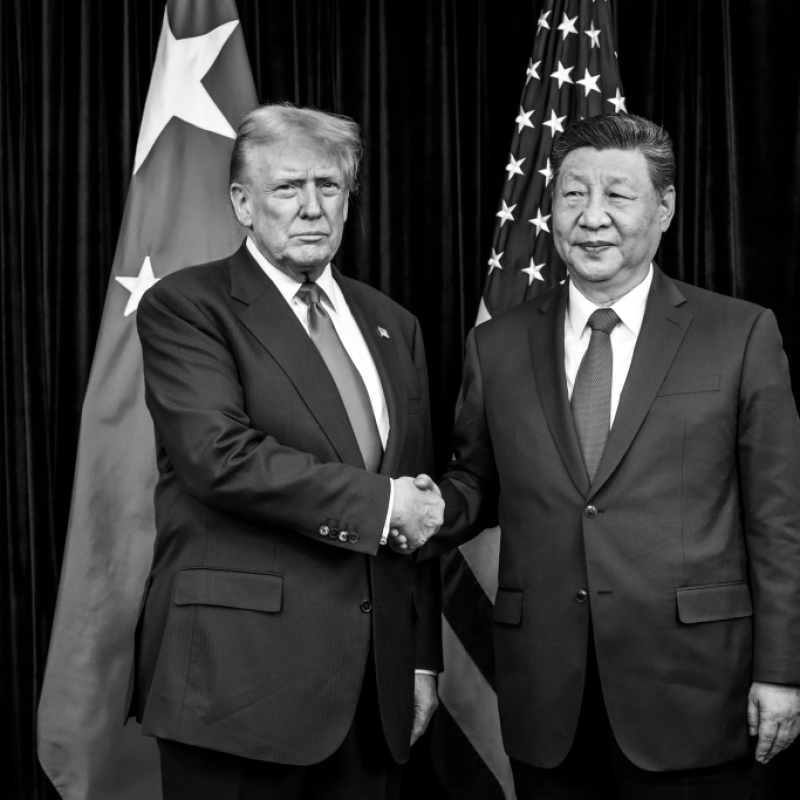
President Trump's recent trip to Beijing included a last-minute addition of Jensen Huang, Nvidia's CEO. Despite speculation about potential changes to chip export policies, Trump's departure statement that "something could happen" on semiconductor exports yielded no concrete results. Not a single Nvidia H200 has shipped to China since Trump first authorized the sales in December 2025. US Trade Representative Jamieson Greer confirmed to Bloomberg that semiconductor controls weren't even discussed during bilateral talks.
However, beneath the diplomatic theater lies a more significant development. The H200 shipment delay isn't due to Washington's restrictions—it's because Beijing won't allow Chinese companies to accept delivery.
📋 Two Conflicting Frameworks Creating Deadlock
The stalemate stems from incompatible regulatory requirements:
US Requirements: All H200 chips ordered by Chinese clients must be used exclusively within China.
Beijing's Directive: Chinese tech companies should limit Nvidia chip usage to overseas operations while prioritizing domestic semiconductor manufacturers.
Approximately 10 Chinese firms, including Alibaba, Tencent, ByteDance, and JD.com, hold approved US export licenses for up to 75,000 H200 units each. Lenovo and Foxconn are authorized as distributors. Yet these chips remain in limbo because chips cleared for US export cannot be deployed where Beijing wants them, according to Implicator.
Commerce Secretary Howard Lutnick testified at a Senate hearing that Chinese firms are concentrating investments on domestic suppliers, particularly Huawei. Beijing's State Council has ordered supply-chain security reviews aimed at reducing dependence on American semiconductors.
🚀 Huawei's Strategic Gains During Diplomatic Discussions
While diplomatic talks proceeded, several significant developments emerged:
- DeepSeek confirmed optimization of its latest model for Huawei processors
- Tencent's chief strategy officer announced progressive increases in Chinese GPU supply through 2026
- An Alibaba executive reported that its T-Head proprietary GPUs achieved scaled mass production
The April launch of DeepSeek V4 marked a pivotal moment—it became the first major Chinese frontier model adapted for Huawei's Ascend chips in training operations, not just inference. This shift has transitioned from experimental to established supply-chain policy.
📊 Market Impact: Nvidia's China revenue has plummeted to approximately 5% in recent quarters, down from over 20% before export controls tightened. The company's current quarter guidance assumes zero revenue from China.
Jensen Huang's last-minute inclusion in the delegation—Trump called him directly after media coverage revealed he hadn't been invited—suggested urgency. However, the outcome demonstrated the limitations of CEO diplomacy when facing structural rather than procedural obstacles.
💡 Implications for the Global AI Industry
This stalemate extends far beyond bilateral optics. Chinese AI platforms now operate under a domestic mandate to build on Huawei's compute infrastructure. The question of which AI hardware architecture will dominate the world's second-largest AI market is being determined by government directive rather than technical benchmarks.
Beijing's strategic push toward Huawei Ascend chips instead of Nvidia H200 represents more than trade posturing—it's a structural bet that the performance gap will close quickly enough to make domestic stack dependency manageable. DeepSeek V4's performance results suggest this strategy may succeed, particularly for inference workloads.
Trump stated "something could happen." Greer emphasized the decision is China's sovereign right. Both statements are accurate, yet neither alters the current reality: The H200 deal remains approved, licensed, and frozen, with Huawei filling the vacuum.
(Image source: The White House)
See Also: