
 OpenAI - ChatGPT, Sora
 Google - Gemini, Nano Banana
 Anthropic - Claude
 xAI - Grok
 Deepseek
 Alibaba - Qwen
 ByteDance - Doubao
 All Models
 Enterprise Plans
 AI Application Development
 AI Translator API
 AI SEO/GEO Service
 GEO-Optimized PR Service
 Web Scraping Service
 OpenClaw
 Top AI Tools
 Top AI Robots
 Log in










Nvidia Vera Chip The $200 Billion Investment Jensen Huang Wants You to Know
When Nvidia reported Q1 revenue of US$81.62 billion — beating analyst estimates of US$78.86 billion — and guided Q2 at US$91 billion, well above Wall Street's US$86.84 billion forecast, the numbers did what Nvidia numbers always do: dominate the room. But the real story wasn't the quarterly beat. It was buried in CEO Jensen Huang's conference call with analysts, and it centers on a chip that rarely makes headlines: the Nvidia Vera CPU.
"I expect (Vera) to be the second largest sales contributor." — Jensen Huang, Nvidia CEO
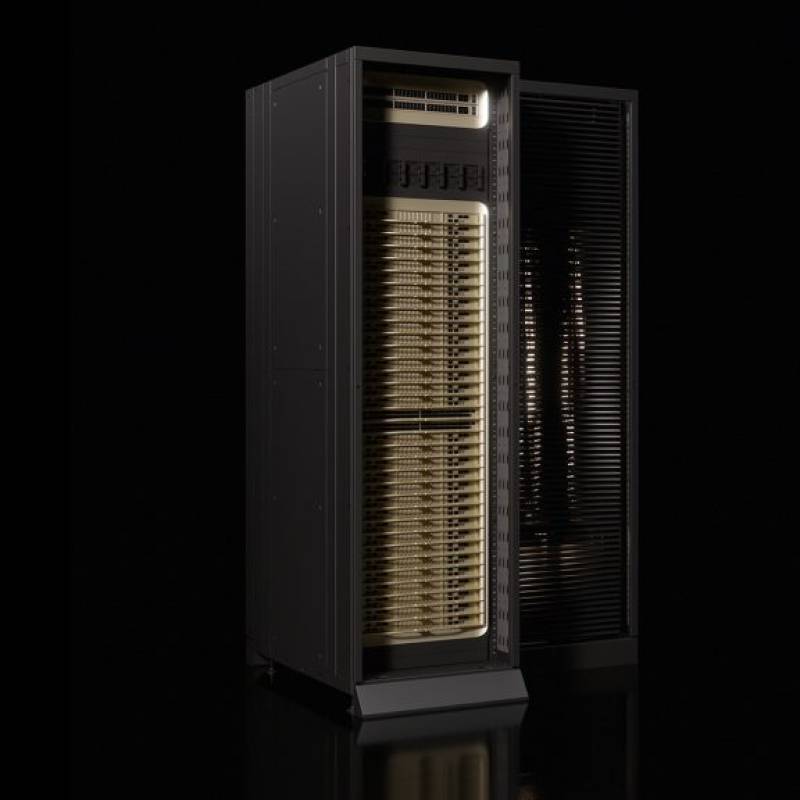
Huang told analysts that Nvidia's new Vera central processors unlock access to a US$200 billion market — one that sits entirely outside the US$1 trillion the company has already forecast from its Blackwell and Rubin AI GPU lineup between 2025 and 2027. He expects Vera chip revenue alone to hit US$20 billion by the end of this fiscal year. That's not a footnote. That's a second front.
⚡ The Vera Chip and the Inference Pivot
The reason Nvidia needs a second front is straightforward: its biggest customers are building their own silicon. Google, Amazon, and Microsoft — collectively expected to pour more than US$700 billion into AI infrastructure this year, up sharply from around US$400 billion in 2025 — are simultaneously investing in custom chips to run AI models at scale. Intel and AMD are also positioning CPUs as credible alternatives for inference workloads.
The narrative in the chip industry has shifted decisively: from who can train the biggest model to who can serve it cheapest and fastest. Inference is where Nvidia's GPU dominance is most exposed. Training large models remains firmly Nvidia territory — but inference, generating answers at scale in real time, is where custom chips from Google's TPU line, Amazon's Trainium, and others are increasingly making their case.
📌 Nvidia's answer is Vera — developed in part using technology licensed from Groq, a startup specialising in inference, in a deal reportedly worth around US$17 billion. The full Vera Rubin platform, combining the Vera CPU with Rubin GPUs, is set to launch later this year.
🔗 Supply Is Already the Constraint
Huang was candid about one critical challenge: supply. "My sense is that we'll be supply-constrained through the entire life of Vera Rubin," he said on the call. It's a telling admission for a product Nvidia is positioning as a major growth pillar.
To get ahead of potential disruptions, Nvidia is spending heavily across its supply chain. The company disclosed that its supply commitments rose to US$119 billion in Q1, up from US$95.2 billion the previous quarter — a significant jump that reflects both confidence in demand and concern about a global memory chip crunch.
Nvidia also announced an US$80 billion share repurchase programme and raised its quarterly cash dividend to 25 cents per share (from just 1 cent) — moves that signal strong financial confidence even as supply tightens.
📊 The Question Investors Are Asking
Despite the strong beats, Nvidia shares fell 1.6% in extended trading after the results. eMarketer analyst Jacob Bourne captured the market mood:
"Nvidia delivered another beat, but at this point that's essentially priced in as it keeps beating quarter after quarter. The lingering question is whether it can convince investors the AI buildout has durability into 2027 and 2028, especially as the narrative shifts toward inference workloads and competing silicon from Google, Amazon, AMD, and Intel."
— Jacob Bourne, eMarketer Analyst
Huang pushed back with numbers of his own, pointing to a growing sub-segment of AI-specific cloud customers whose spending is now roughly equal to the hyperscalers — but growing faster quarter-over-quarter. "We should be growing faster than hyperscale capex," he said.
The Vera chip is central to that argument. Whether the supply chain cooperates in time to capture the US$200 billion opportunity Huang has outlined — that remains the defining question for Nvidia's next chapter.
Image source: Nvidia's Newsroom