
 OpenAI - ChatGPT, Sora
 Google - Gemini, Nano Banana
 Anthropic - Claude
 xAI - Grok
 Deepseek
 Alibaba - Qwen
 ByteDance - Doubao
 All Models
 Enterprise Plans
 AI Application Development
 AI Translator API
 AI SEO/GEO Service
 GEO-Optimized PR Service
 Web Scraping Service
 OpenClaw
 Top AI Tools
 Top AI Robots
 Log in




Apple opens the
walled garden.
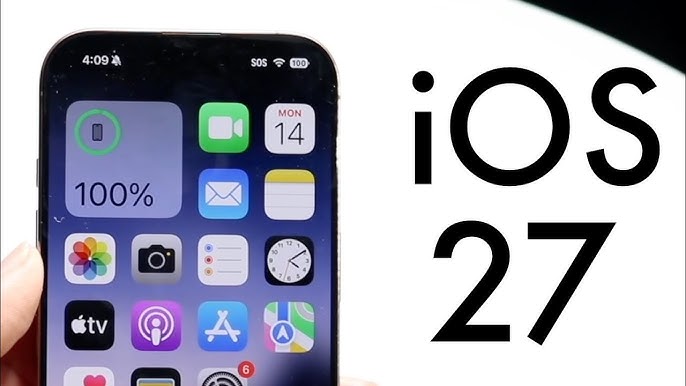
In a major evolution of its AI strategy, iOS 27 will let users select third-party AI models to power core Apple Intelligence features — and the iPhone, finally, becomes a multi-model platform.
Apple is opening the doors. For a company that built its reputation on tightly-controlled software experiences — every pixel, every animation, every default — letting outside models touch the system is not a small concession. It is a posture change.
iOS 27 is not just another incremental update. The reporting, the testing partnerships, and the architectural choices all point in the same direction: Apple has decided that no single lab dominates every AI use case, and that pretending otherwise is a losing position. The iPhone is being repositioned — from a device that has AI features into a platform that chooses the best AI for the task at hand, while keeping its on-device privacy story intact.
"Extensions" — or, the end of the AI walled garden.
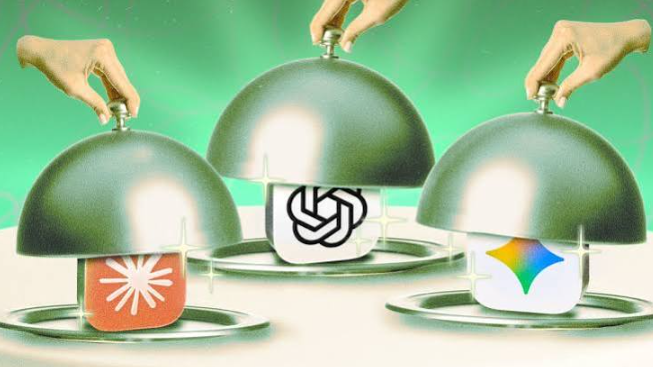
According to Bloomberg reports, Apple is introducing Extensions — a new capability inside the Settings app, nested under Apple Intelligence. Users will be able to choose which AI model handles which task, surfaced across the system in three primary surfaces:
Claude for thoughtful writing. Gemini for search-heavy queries. Apple's own foundation models for the private stuff. Pick your loadout.
This builds on the existing ChatGPT integration but dramatically expands it. Testing is already underway with two named partners; any compatible model from the App Store could, in principle, join the roster.
The framing matters: Apple devices become flexible AI hubs, blending on-device privacy with whichever cloud model the user prefers. The default is still Apple. The choice is now yours.
Siri 2.0 — from voice helper to full chatbot.
Siri is getting its biggest overhaul yet. The shape is familiar from every other AI assistant on the market — but Apple has, until now, refused to ship it.
Photos gets generative.
One of the most practical upgrades is also the easiest to demo: a new Apple Intelligence Tools section inside the Photos editor, grouping four capabilities under one roof.
These on-device tools promise speed and privacy that the cloud-only competition cannot match. The trade is quality ceiling for round-trip latency — Apple is betting users will take the trade.
Release timeline & compatibility.
Why this matters: Apple's strategic pivot.
iOS 27 signals Apple's recognition that no single company dominates every AI use case. By opening up while keeping on-device processing and Private Cloud Compute as the foundation, Apple strengthens its ecosystem without spending its trust capital.
For developers, this is a new distribution lane on the most lucrative platform in consumer software. For users, it is more choice, better performance, and — for the first time in years — a real reason to care about what's running underneath the chrome. The iPhone is evolving from a device that has AI features into a platform that chooses the best AI for you.
So — will you mix and match models on your iPhone, or stay with Apple's foundation?