
 OpenAI - ChatGPT, Sora
 Google - Gemini, Nano Banana
 Anthropic - Claude
 xAI - Grok
 Deepseek
 Alibaba - Qwen
 ByteDance - Doubao
 All Models
 Enterprise Plans
 AI Application Development
 AI Translator API
 AI SEO/GEO Service
 GEO-Optimized PR Service
 Web Scraping Service
 OpenClaw
 Top AI Tools
 Top AI Robots
 Log in
TechEx North America Day 2: Key Highlights and Product Demonstrations
2026-05-28
Discover how enterprise AI initiatives stall between pilot and production — and what separates successful deployments from the "AI graveyard." Day two of TechEx North America's Enterprise AI Implementation track explored the real challenges of scaling AI: poor data quality, weak process design, limited operating authority, and insufficient risk controls. Sessions covered agentic AI for business impact, the buy-vs-build decision, durable ROI measurement, and autonomous decisioning. The core message was clear — launching an AI pilot is easy; sustaining it requires governance, adoption strategy, and measurable outcomes. Learn what it truly takes to move enterprise AI from experimentation to lasting impact.
View Detail

How Autonomous AI Systems Are Testing Governance in Physical Environments
2026-05-28
Autonomous AI systems are expanding from digital platforms into physical spaces like warehouses and delivery networks, raising questions about whether existing AI regulations adequately address embodied AI risks. Current frameworks primarily focus on online harms such as bias and misinformation, but physical AI systems pose unique safety concerns affecting infrastructure and human wellbeing. Singapore's IMDA released its Model AI Governance Framework v1.5 for Agentic AI in May 2024, providing guidance for organizations deploying AI agents capable of planning, decision-making, and multi-step actions. These agents can interact with tools, external systems, databases, devices, and perform transactions, highlighting the need for comprehensive governance addressing physical-world AI deployment challenges.
View Detail

AIG Insurance Implements Agentic AI Technology With Orchestration Layer for Business Operations
2026-05-27
American International Group (AIG) reports accelerated benefits from generative AI implementation, surpassing initial expectations in underwriting capacity and operational efficiency. CEO Peter Zaffino revealed that early projections, once considered "aspirational," have been exceeded, with the technology demonstrating "much greater" capabilities than anticipated. The insurer highlights significant improvements in submission processing workflows without requiring additional human resources, marking what Zaffino calls "the biggest surprise." These developments have direct economic implications for underwriting operations and portfolio management. AIG's fourth-quarter earnings disclosures provide concrete evidence of generative AI's measurable impact on throughput and workflow redesign, offering valuable insights for AI decision-makers evaluating enterprise-scale artificial intelligence deployments in the insurance sector.
View Detail

Infosys AI Implementation Framework Guide for Business Leaders
2026-05-27
Infosys, a leading technology services provider, offers comprehensive AI consultation and implementation through its Topaz Fabric platform. Currently engaged with 90% of its top 200 clients, the company manages over 4,600 active AI projects across multiple industries. Infosys's AI implementation strategy encompasses six key areas, including AI strategy and engineering, which focuses on designing business-aligned AI architectures. Their approach integrates AI agents, proprietary platforms, and third-party tools on specialized infrastructure, leveraging strategic partnerships with AI technology providers to deliver both discrete and organization-wide solutions.
View Detail

DBS Bank Lets AI Agents Make Payments on Behalf of Customers
2026-05-26
Discover how DBS Bank and Visa are pioneering AI-driven payments through the Visa Intelligent Commerce pilot, enabling AI agents to autonomously search, select, and complete purchases on behalf of customers. This groundbreaking trial has already processed real transactions, including food and beverage purchases via DBS and POSB cards, marking a significant shift from AI as an advisor to AI as an active participant in commerce. Learn how banks are preparing for the future of agent-driven commerce, where intelligent systems execute transactions within customer and institution-defined rules, reshaping the way we think about everyday payments.
View Detail

Hitachi Uses Industrial Expertise to Lead the Physical AI Revolution
2026-05-26
Discover how Hitachi and Siemens are challenging the Physical AI hierarchy dominated by OpenAI, Google, and Nvidia. Unlike foundation model giants, these industrial manufacturers argue that deploying AI in real-world environments requires a deep, systematic understanding of the physical world before machines can be effectively trained. Hitachi's Kosuke Yanai emphasizes that Physical AI cannot be successfully implemented in society without grounded, structured knowledge of physical systems. As this strategy moves from boardrooms to factory floors, Hitachi's approach signals a critical shift in how industrial AI should be developed and deployed. Learn why understanding the physical world may be the missing link in making Physical AI truly viable.
View Detail

Amul AI Dairy Farming Technology Helps 36 Million Farmers Improve Production
2026-05-25
Amul, the world's largest dairy cooperative, has launched Amul AI featuring Sarlaben, an AI assistant serving 3.6 million women milk producers across Gujarat villages. Built on five decades of cooperative data and backed by India's MeitY and EkStep Foundation, this platform delivers 24/7 personalized dairy farming guidance in local languages through the Amul Farmer mobile app. Launched before India's AI Impact Summit 2026, it represents a groundbreaking test of AI's potential to reach rural communities, demonstrating how advanced technology can be deployed beyond Silicon Valley to serve grassroots agricultural networks and empower small-scale farmers with data-driven insights.
View Detail

Trump Scraps Biden AI Executive Order After Musk and Zuckerberg Lobbying Efforts
2026-05-25
President Trump canceled a planned AI executive order after lobbying from tech leaders including Elon Musk, Mark Zuckerberg, and David Sacks. The order, already delayed multiple times, was scrapped due to concerns it could weaken America's competitive advantage over China in artificial intelligence. Trump stated he didn't want anything hindering the US lead in AI. According to reports, the decision came after direct conversations with the tech executives between Wednesday night and Thursday morning, who successfully argued against the regulatory measure that would have overseen their industry.
View Detail

China AI Renewable Energy Grid Mapping What It Means for Global Clean Energy
2026-05-24
Discover how China has developed the world's first complete AI-generated energy grid mapping system to address surging electricity demands from artificial intelligence and data centers. As global data-center consumption approaches 1,000 TWh by 2030, major economies face unprecedented infrastructure challenges. US grid operator PJM has seen capacity prices surge tenfold in two years, while European utilities struggle to upgrade transmission networks. This groundbreaking Nature study from Peking University and Alibaba's DAMO Academy reveals China's solution: high-resolution AI mapping that coordinates renewable energy at national scale, potentially transforming how countries manage AI's massive power requirements and grid modernization challenges.
View Detail

OpenAI Launches Singapore AI Lab as Singapore Updates National AI Framework
2026-05-24
OpenAI announces its first Applied AI Lab outside the United States, launching in Singapore through a partnership with the Ministry of Digital Development and Information. The OpenAI for Singapore initiative, unveiled at the ATx Summit, includes over S$300 million in funding and will create 200+ technical roles. Singapore becomes a global hub for forward-deployed engineers working on AI deployment with organizations. The lab focuses on Singapore's AI Mission priorities including public service, finance, and digital infrastructure. OpenAI will collaborate with government agencies on education and workforce programs through the Ministry of Education and GovTech, while supporting educators via the Singapore chapter of OpenAI Academy.
View Detail

How AI Is Transforming COBOL Modernization and Why Businesses Are Taking Notice
2026-05-23
Discover how AI is disrupting legacy financial systems as Anthropic's Claude Code tool threatens to automate COBOL modernization — work that once required years of expensive consulting. IBM shares suffered their worst single-day drop in over 25 years, plunging 13% after Anthropic claimed its AI can accelerate the painstaking process of updating ancient banking code. Learn what this means for the future of enterprise IT consulting and the global financial infrastructure that still runs on decades-old programming languages.
View Detail

Nvidia Vera Chip The $200 Billion Investment Jensen Huang Wants You to Know
2026-05-23
Nvidia's Q1 revenue surpassed expectations at US$81.62 billion, with Q2 guidance set at US$91 billion, outpacing Wall Street forecasts. But beyond the headline numbers, CEO Jensen Huang revealed a major strategic move: Nvidia's new Vera central processor targets a US$200 billion market entirely separate from its AI GPU lineup. Huang projects Vera chip revenue to reach US$20 billion by fiscal year-end, positioning it as Nvidia's second-largest revenue contributor. This signals a bold expansion beyond GPUs into CPU-driven inference computing, opening a powerful new growth front for the company.
View Detail

Enterprise AI Security Challenges, Roadmaps & Physical AI Trends | TechEx Day 2
2026-05-22
Day two of TechEx North America focused on the critical challenges of AI adoption in enterprise environments. Sessions explored the concept of the "AI graveyard" — projects that succeed in pilot stages but fail in real-world deployment. Experts across multiple tracks offered actionable strategies to help businesses avoid stalled AI initiatives, including focusing agentic AI on specific business areas and building robust, agent-ready data foundations. The Enterprise AI Implementation, ROI, and Adoption tracks provided valuable insights into why AI projects falter and how organizations can drive successful, scalable deployments. Despite the sobering topic, the overall tone remained optimistic, equipping forward-thinking businesses with the tools and knowledge to navigate AI implementation challenges effectively.
View Detail

Alibaba Designing AI Chips for Agents How It Changes the AI Race
2026-05-22
Alibaba has launched the Zhenwu M890, a new AI processor developed by its semiconductor subsidiary T-Head, purpose-built for AI agent workloads. Delivering three times the performance of its predecessor, the M890 is designed to handle the unique demands of AI agents, including long-context retention, real-time model coordination, and complex multi-step task execution with minimal human intervention. Unlike standard inference chips, the M890 prioritizes memory bandwidth and inter-model communication. Paired with a multi-year silicon roadmap and a new large language model, Alibaba signals its ambition to build a fully integrated AI stack, going beyond simply addressing gaps created by US export controls.
View Detail
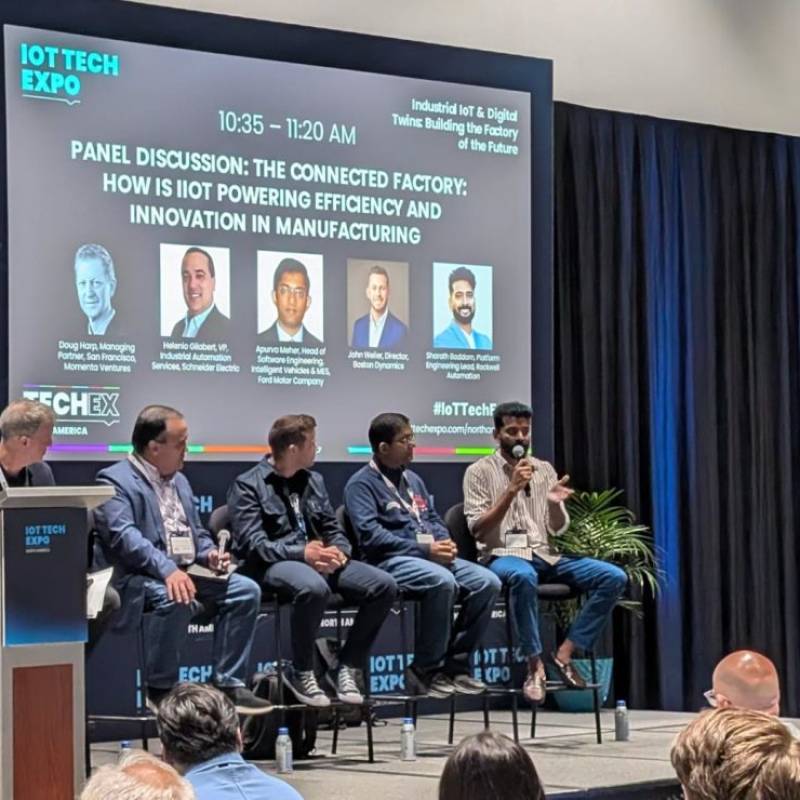
AI Power and Infrastructure Security: Key Insights from TechEx North America 2026
2026-05-21
Discover how TechEx North America explores the critical infrastructure needed around AI for enterprise success. Learn about edge computing's role in reducing latency, enhancing cybersecurity for IIoT/IT systems, and reassessing data asset value. Sessions cover scaling edge deployments across multi-site businesses, autonomous equipment decision-making, and processing speed requirements across Edge Computing, IoT, Data Centre Congress, and Cyber Security tracks.
View Detail

Nvidia H200 China Deal After Trump-Xi Summit: What Actually Happened
2026-05-21
Discover why Nvidia H200 chips aren't reaching China despite US export approvals. Major Chinese tech giants including Alibaba, Tencent, and ByteDance hold valid US export licences for up to 75,000 units each, yet no shipments have occurred. The surprising deadlock isn't caused by Washington's restrictions — it's Beijing preventing its own companies from taking delivery. Explore the complex dual-framework stalemate shaping the future of US-China semiconductor trade.
View Detail

Best Real-time Data Pipeline Platforms for AI and Machine Learning in 2026
2026-05-20
AI applications depend on the quality and timeliness of their underlying data. Even well-tuned models and carefully designed systems lose effectiveness when business data arrives late or updates inconsistently. Real-time data pipelines have become essential to modern AI architecture, bridging the gap between source system changes and what AI systems can access and act upon. Unlike earlier offline experiments, today's AI workloads power copilots, recommendation engines, fraud detection, and retrieval-driven applications requiring live business context. Delayed data significantly impacts answer quality and decision-making speed, making real-time data infrastructure critical for maintaining AI system relevance and performance in production environments.
View Detail

Amazon Replaces Rufus with New Alexa for Shopping AI Assistant
2026-05-20
Amazon launches Alexa for Shopping, merging its Rufus chatbot with Alexa+ across its app, website, and Echo Show devices. The AI assistant answers product questions, compares items, tracks prices, manages shopping reminders, and handles automated purchases. Combining Rufus' product expertise with Alexa+'s personalized context, it helped over 300 million customers in 2025. While the Rufus name is being retired from the interface, it continues powering backend features. CEO Andy Jassy reports Rufus monthly active users increased 115% with engagement up nearly 400% year-over-year, demonstrating significant growth in AI-powered shopping assistance.
View Detail

Basware AI Agents Achieve 100 Percent Automated Invoice Processing
2026-05-19
Basware launches AI agents for invoice lifecycle management, advancing toward "Agentic Finance" where AI systems autonomously handle finance tasks within controlled parameters. CEO Jason Kurtz envisions near-perfect touchless invoice processing, targeting 100% automation, compliance, and protection. The AI agents focus on accounts payable operations, working within existing invoice workflows. The AP Business Agent offers contextual guidance and recommends next steps based on transaction status, enhancing InvoiceAI platform capabilities for smarter, faster financial decisions and improved business outcomes.
View Detail

How to Deploy AI Finance Agents for Immediate Business ROI in 2026
2026-05-19
Agentic finance AI can significantly improve business efficiency and ROI when implemented with proper governance and clear investment targets. However, an FT Longitude survey reveals 61% of finance leaders across the US, UK, France, and Germany have only deployed AI agents experimentally, while 25% lack full understanding of practical applications. To move beyond experimentation, finance departments require governed systems combining language processing with business logic. Invoice Lifecycle Management platforms now feature AI agents using generative AI, deep learning, and natural language processing to automate invoice processing and accounts payable workflows, from data ingestion to reconciliation, enabling human employees to focus on strategic tasks.
View Detail

ASML High-NA EUV Lithography: Powering the Next Generation of AI Chips
2026-05-18
Discover how ASML's High-NA EUV machines are now production-ready, marking a major breakthrough in AI chip manufacturing. These next-generation extreme ultraviolet lithography tools enable chipmakers to print finer, denser circuit patterns, overcoming the physical limitations of current EUV technology. Learn how this advancement will power more efficient AI accelerators and large language models, shaping the future of semiconductor innovation.
View Detail

How AI Is Transforming Financial Services — And Why There's No Going Back
2026-05-18
AI adoption in financial services has reached near-universal status, with only 2% of institutions reporting no AI use, according to Finastra's 2026 report surveying 1,509 senior executives across 11 markets. Sixty percent of institutions enhanced their AI capabilities in the past year, with 43% identifying AI as their most critical innovation lever. AI now permeates the entire financial value chain, from fraud detection and document intelligence to compliance automation and customer engagement. However, as adoption becomes standard, mere deployment no longer provides competitive differentiation. Financial institutions face mounting pressure to move beyond experimental pilots and demonstrate tangible business value from their AI investments.
View Detail

AI-Native Networks Are Here Now: Key Takeaways From MWC 2026
2026-05-17
Discover how MWC 2026 in Barcelona marked a turning point for AI-native networks, moving beyond vision to reality. Leading telecom vendors, chipmakers, and operators — including Nvidia, Ericsson, Nokia, Deutsche Telekom, and T-Mobile — unveiled field trial results, commercial product launches, and a major coalition committed to building 6G on AI-native foundations. Learn what this architectural shift in telecom infrastructure means for enterprise and IT decision-makers, and how AI-RAN is set to transform the way connectivity is delivered, managed, and monetised.
View Detail

How to Scale Autonomous Intelligence for Real Business Growth | Deloitte Insights
2026-05-17
Discover how enterprise leaders are moving beyond generative AI to scale autonomous intelligence systems capable of independent execution. Learn why applications that traverse internal networks, execute multi-step logic, and finalize transactions without human prompting are now critical for driving real cost and revenue transformation in large organizations.
View Detail

Best Real Estate App Development Companies: Costs & Features 2026
2026-05-16
Discover the top real estate app development companies in the US for 2026, including LITSLINK, Code District, Empat, Helpful Insight, and DBB Software. These firms excel in PropTech solutions with expertise in MLS integrations, RESO Web API, tenant screening workflows, and MVP delivery. Real estate applications require complex data flows, compliance layers, and seamless connections to listing feeds, payment systems, and document workflows. Learn which vendors master essential integrations like IDX feeds and regional MLS providers, delivering reliable PropTech solutions beyond surface-level capabilities shown in marketing materials.
View Detail

Humanoid Robots in Factories: Companies Testing Physical AI for Manufacturing
2026-05-16
British technology company Humanoid will deploy 1,000 to 2,000 humanoid robots at German industrial supplier Schaeffler's global manufacturing sites by 2032. The first deployment is scheduled between December 2026 and June 2027 at two German locations, focusing on box handling in Herzogenaurach and factory testing in Schweinfurt. Humanoid will support integration into Schaeffler's existing production lines, building on their January technology partnership. The robots will perform physical tasks in production and warehouse environments, though contract value remains undisclosed.
View Detail

Laserfiche AI Agents: Automate Workflows with Natural Language Processing
2026-05-15
Laserfiche has launched AI agents that streamline content management through natural language prompts, automating tasks while adhering to integrated security and compliance frameworks. Powered by generative LLM reasoning models, these intelligent assistants bridge the gap between automated workflows and manual processes, reducing time and resource costs. CEO Karl Chan highlights that AI Agents mark a shift in information lifecycle management, enabling organizations to modernize operations without compromising governance. By analyzing document data and executing tasks based on user instructions, Laserfiche AI agents empower businesses to enhance efficiency while maintaining regulatory compliance at every step.
View Detail

San Jose Physical AI & Robotics Conference 2026: Autonomous AI Goes Mainstream
2026-05-15
Physical AI Expo North America returns to Silicon Valley on May 18–19, 2026, at the San Jose McEnery Convention Center. This premier two-day conference brings together AI innovators, robotics leaders, and enterprise technologists to explore the future of Physical AI — where intelligence meets real-world action. From industrial automation and logistics to autonomous systems and defense, discover how organizations are deploying AI that can sense, reason, and act at scale. Join the engineers and pioneers shaping the next era of robotics and intelligent machines.
View Detail

Malicious AI Models Found on Hugging Face Disguised as Official OpenAI Releases
2026-05-14
Researchers at HiddenLayer uncovered a malicious Hugging Face repository disguised as an OpenAI Privacy Filter release, delivering infostealer malware to Windows machines. The fake repo, "Open-OSS/privacy-filter," copied OpenAI's original model card and included a malicious loader.py file designed to steal credentials. It recorded approximately 244,000 downloads and gained 667 likes within 18 hours before removal, though these figures may have been artificially inflated by attackers. The incident highlights growing cybersecurity risks in public AI model registries, as developers increasingly clone models directly into corporate environments, making the software supply chain vulnerable to such attacks.
View Detail

AI Last Mile Problem: Bridging Model Capability and Cost Sustainability with Imperfect Data
2026-05-14
Contrary to popular belief, your data doesn't need to be perfect before leveraging generative or agentic AI systems. According to Joe Rose, president at JBS Dev, modern AI tooling is better than ever at handling poor-quality data, making it accessible for businesses at any stage of data maturity. While vendors often push for massive data lakes and lengthy transformation programs, the reality is far more practical. Large language models can interpret incomplete inputs with remarkable accuracy. However, businesses must implement proper guardrails to manage the inherent unpredictability of AI models, ensuring human oversight remains part of the process for reliable, high-quality outputs.
View Detail

Agentic AI Automation Market to Reach 100 Billion Dollars Says Bain Report
2026-05-13
Bain & Company projects a $100 billion US market opportunity for SaaS companies leveraging agentic AI to automate coordination work in enterprise systems. This estimate from Bain's AI software industry report series identifies significant value in eliminating manual tasks employees perform between enterprise applications like ERP, CRM, and support systems. The market potential lies in automating workflows that involve pulling data across systems, interpreting unstructured messages, and making decisions on approvals, responses, and escalations—tasks where traditional rules-based automation and robotic process automation fall short in handling ambiguity and dispersed information.
View Detail

AI Automates HR Compliance But Fails in Key Tech Industry Areas
2026-05-13
Artificial intelligence is revolutionizing corporate compliance through real-time background checks, automated payroll monitoring, and predictive analytics. HR tech now automates most regulatory requirements from GDPR to workplace safety. However, UK tech companies face a critical paradox: while building sophisticated automation tools, they cannot automate sponsor licence management for hiring international AI talent. This analogue compliance process creates immediate risks for employers and skilled workers alike, making immigration compliance the most stubborn exception in an otherwise automated regulatory landscape for technology companies.
View Detail

Santander Mastercard Launch First AI Payment Pilot in Europe
2026-05-12
Banco Santander and Mastercard have executed Europe's first live AI-initiated payment without human intervention, marking a milestone in "agentic payments." The transaction used Mastercard Agent Pay framework within Santander's regulated banking infrastructure, allowing AI software to act as an authorized payment participant. Operating under strict security, governance, and compliance protocols, the AI agent completed the end-to-end payment within predefined limits and permissions. This pilot demonstrates how AI systems can autonomously execute financial transactions on behalf of customers while maintaining regulatory standards, representing a significant advancement in automated banking services and AI-driven financial operations.
View Detail

How Physical AI Improves Customer Service ROI and Efficiency
2026-05-12
The adoption of physical AI is transforming frontline customer service by combining digital intelligence with human-like interaction, delivering measurable ROI as businesses face labor shortages. A partnership between KDDI and AVITA showcases how humanoid deployment addresses complex operational challenges that traditional automation cannot solve. Unlike conventional industrial robots limited to repetitive tasks, these humanoids handle unexpected anomalies and excel in customer-facing roles through nonverbal communication including synchronized nodding, natural eye contact, and reassuring facial expressions. By merging AVITA's avatar creation technology with KDDI's communications infrastructure, they're developing domestically-produced humanoids designed for seamless operation in real-world commercial environments.
View Detail

How AI is Transforming Forex Trading Automation in 2026
2026-05-11
Artificial intelligence is revolutionizing forex trading, with the global AI market valued at $375.93 billion and projected to reach $2.48 trillion by 2034. AI forex automation software now enables traders to analyze vast amounts of data and execute trades with millisecond precision, replacing traditional chart analysis and instinct-based decisions. The AI trading platform market has already reached $220.5 million and is expected to grow to $631.9 million by 2035. Industry experts report that over 70% of forex trading now involves AI technology, demonstrating its dominant role in modern financial markets and transforming how traders approach currency exchange.
View Detail
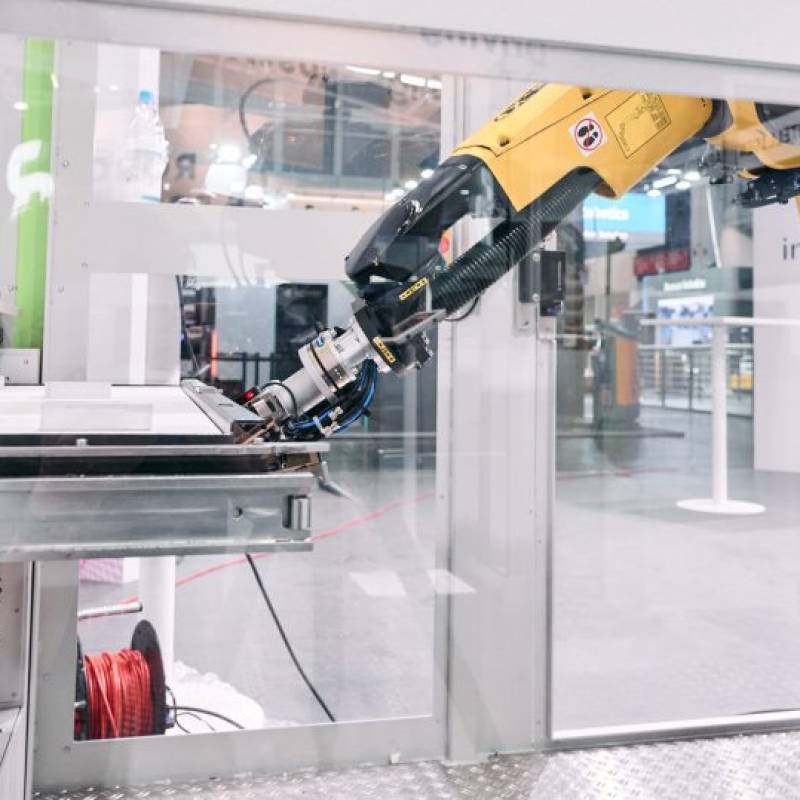
Google Launches Official Industrial Robotics AI Platform for Business Applications
2026-05-11
Alphabet's Intrinsic, which develops AI software to make industrial robotics more accessible to manufacturers, has officially joined Google as a distinct group. After graduating from Alphabet's X moonshot division in 2021, Intrinsic will now collaborate closely with Google DeepMind, leveraging Gemini AI models and Google Cloud infrastructure. This strategic integration signals Google's commitment to democratizing industrial automation by simplifying robotic programming, which traditionally requires extensive specialist engineering expertise. The move represents more than an internal reorganization—it's a significant bet on the future of AI-powered manufacturing solutions for companies lacking large technical teams.
View Detail